
Opinion
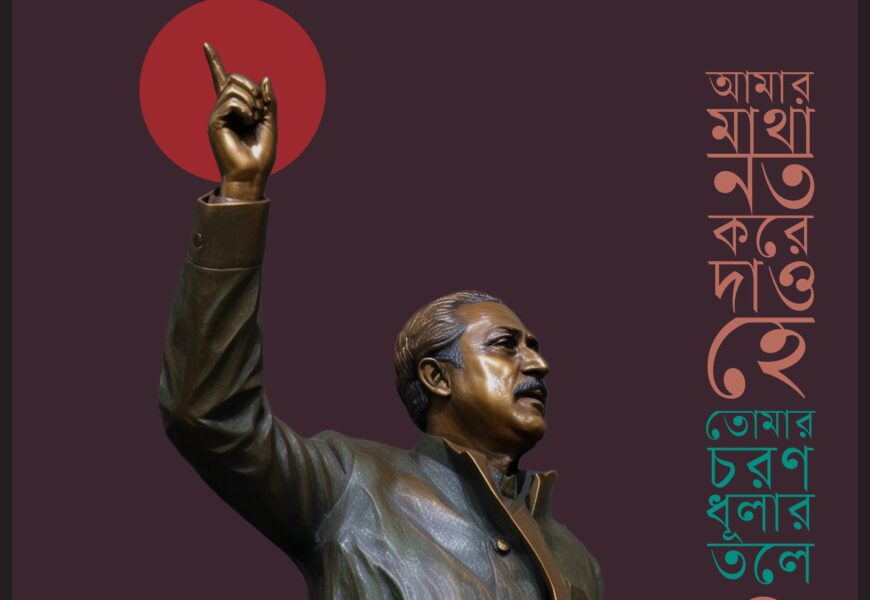
March 17 marks the birth anniversary of the Father of the Nation, Bangabandhu Sheikh Mujibur Rahman. On this day in 1920, the illustrious and miraculous leader, Bangabandhu Sheikh Mujibur Rahman, was born in Tungipara, Gopalganj, in what is now Bangladesh. He graced this world for 55 years, 4 months, and 27 days, of which 12 years, 10 months, and 2 days were spent in prison. Though his physical form is no longer with us, his shadow, his work, his heroism, his miracles, his honesty, his dedication, his courage, and his voice live on in the hearts of the Bengali people.
His genuine love for the lush landscapes of Bengal, its soil, and its people has immortalized him in the hearts of countless individuals. This extraordinary soul is eternal, indestructible, invincible, and remains a marvel. As we commemorate his birth anniversary in March 2025, I reflect on how attempts are being made to diminish his legacy. The house at Dhanmondi 32, where he once lived and which was turned into the “Bangabandhu Memorial Museum” for the public, has been bulldozed and erased. Institutions named after him have been renamed, and murals and statues erected in his honor have been destroyed. Some misguided individuals even refuse to acknowledge him as the “Father of the Nation.”
Some, influenced by colonial mindsets, claim that he did not desire independence, did not support the Language Movement, did not declare independence, did not hoist the flag, and even surrendered to Pakistan. Such statements do not surprise us. In 1957, the minds of some Bengalis were so twisted that they saw Siraj-ud-Daulah as Mir Jafar and Mir Jafar as Siraj. When Siraj-ud-Daulah was killed, his body was paraded around Murshidabad with glee by traitors. Today, we all know that Mir Jafar is synonymous with betrayal, while Siraj represents patriotism and sacrifice. Even if someone is born with English blood, you will not find anyone named Mir Jafar, but many will bear the name Siraj.
Those who today belittle Bangabandhu and distort history will one day learn the truth. They will realize the greatness of the man they now try to diminish. Those who mock him today were nowhere to be found during the Liberation War of 1971, nor will their names be remembered in the future. If they are remembered at all, it will be as traitors like Mir Jafar.
History tells us that on the evening of March 26, 1971, Pakistan’s ruler Yahya Khan, in a radio broadcast, repeatedly mentioned only one name: Sheikh Mujib. Yahya declared, “Mujib is a traitor to the nation, and this time he will not go unpunished.” Throughout the Liberation War, the global media echoed the name of Bangabandhu Sheikh Mujibur Rahman. When Bangabandhu stood at the Racecourse Maidan on March 7, 1971, and uttered the words, “Brothers of mine,” the world was mesmerized by the emotion and unity he inspired among Bengalis. Such leaders are rare in history, and the Bengali people are proud to have had a leader like Bangabandhu. Nelson Mandela never referred to Bangladesh by its name; he called it “Mujib’s Bangladesh.”
In the early hours of March 26, 1971, Bangabandhu declared Bangladesh’s independence and called on the people to join the Liberation War. Shortly after, he was arrested by Pakistan’s military ruler Yahya Khan and imprisoned in West Pakistan. After nine months of captivity, he was released on January 7, 1972, and flown to London. On January 10, he returned to Dhaka via Delhi.
In March 1980, at a meeting organized by the Bangabandhu Parishad at Dhaka University’s TSC, former Supreme Court Justice Syed Mohammad Hossain recounted, “On January 8, 1972, when Bangabandhu was released from a Pakistani prison and arrived in London, I was watching the scene on television from a hotel abroad. One image remains etched in my mind: British Prime Minister Edward Heath canceled all his engagements and rushed to 10 Downing Street to personally open the car door for Sheikh Mujib as he arrived.” This was the stature of Bangabandhu in the eyes of the world.
Before returning to Bangladesh, Bangabandhu met Indian Prime Minister Indira Gandhi in Delhi on January 9. When he asked when Indian troops would withdraw from Bangladesh, she replied, “Whenever you say.” Bangabandhu set the date for March 17. Whether he chose a week’s time or wanted to see Bangladesh free of foreign troops on his birthday, this was Bangabandhu—a leader who stood tall before the world. He was the first Bengali to address the United Nations in Bengali, earning him the title of the greatest Bengali in the world.
Today, those who belittle Bangabandhu either distort history or suffer from an inferiority complex. I respect everyone and believe in giving due respect where it is deserved. To those who hesitate to honor Bangabandhu, I say this: history will remember him as the greatest son of this land. He is a great soul, a hero, the Iron Man, and the undisputed leader of Bengal. As long as Bangladesh exists, as long as the Bengali language and culture endure, as long as the rivers Padma, Meghna, Gouri, Jamuna, Brahmaputra, Dhaleshwari, Karatoya, and Kirtankhola flow, and as long as the people of this land live with warmth in their hearts, Bangabandhu Sheikh Mujibur Rahman will remain immortal in their hearts.
On the birth anniversary of the Father of the Nation, Bangabandhu Sheikh Mujibur Rahman, I pay my deepest respects and pray for the peace of his departed soul. Your birth was meaningful, Bangabandhu. The month of your birth became the month of liberation for the Bengali people. You became the undisputed leader of Bengal and will forever reside in the hearts of Bengalis. Red salute to you, Bangabandhu.
-Ghulam Hossain
political activist.

https://stapravda.ru/20221228/reyting_samyh_populyarnyh_hostingov_v_rossii_196445.html, рейтинг хостингов России подтверждает, что выбор надежного провайдера важен для бизнеса.