
❐ Staff Reporter
The ongoing conflict in the Middle East has disrupted global energy supply routes, putting the journey of crude oil tankers bound for Bangladesh in jeopardy. The government has sought diplomatic assistance from Iran amid concerns over whether three shipments carrying nearly 300,000 tonnes of crude oil will reach the country on time.
The Energy and Mineral Resources Division of the Ministry of Power, Energy and Mineral Resources has sent a letter to the Iranian Embassy in Dhaka in this regard. It has sought cooperation in ensuring that Bangladesh-bound oil tankers can safely pass through the Strait of Hormuz. At the same time, the Ministry of Foreign Affairs has also been asked to take the initiative to raise the issue diplomatically with Tehran.
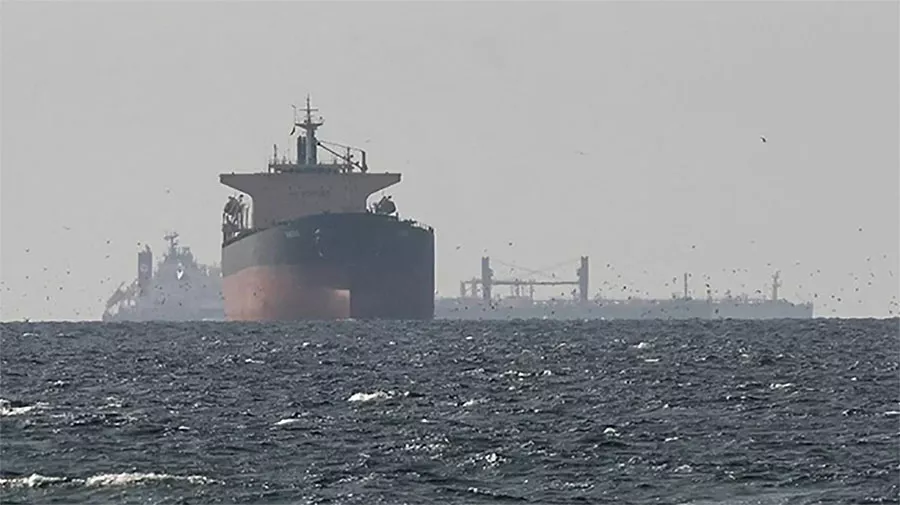
Energy sector officials say that security concerns have increased regarding shipping in the Strait of Hormuz amid ongoing tensions in the Middle East involving the US, Israel and Iran. Oil shipments to Bangladesh are also at risk due to the instability in this vital waterway for global oil trade.
Uncertainty in all three invoices
According to the Department of Energy, the tanker MT Nordic Pollux, carrying about 100,000 tons of crude oil, has been outside the Ras Tanura port of Saudi Arabia since March 3. Although it was supposed to leave for Bangladesh after loading oil from there, the ship has not yet been able to start its journey due to the uncertain security situation in the Strait of Hormuz.
Around 100,000 tonnes of crude oil are scheduled to be loaded from the United Arab Emirates’ Fujairah port by the end of March. This time, Fujairah has been selected as the loading point instead of Jebel Dhanna, considering the risks in the Strait of Hormuz.
In addition, another shipment of about 100,000 tons is scheduled to be loaded from Yanbu port in Saudi Arabia in mid-April. In total, these three shipments of about 300,000 tons of crude oil are now uncertain to reach the country on time.
Concerns over pressure on refineries and supply systems
Eastern Refinery Limited, located in Chittagong, is the only crude oil refinery in the country. The company usually produces about 15-20 percent petrol and octane and 30-35 percent diesel from 100,000 tons of Arabian Light Crude. As a result, there is a risk of pressure on the fuel supply system if the crude oil does not arrive within the stipulated time.
If the March shipments are delayed, Bangladesh may have to resort to importing refined fuel from the international market, which is relatively more expensive. And if the Bangladesh Petroleum Corporation (BPC) is unable to ensure supply from alternative sources in time, there is a risk of a new fuel crisis in the market.
The letter mentions the strategic importance of energy.
In a letter sent to the Iranian embassy, the Energy Department noted that as a rapidly developing economy, Bangladesh relies on regular imports of crude oil to maintain uninterrupted fuel supply for transportation, industry, agriculture, and emergency services.
The letter states that the ongoing conflict between the United States, Israel and Iran is disrupting shipping in the Strait of Hormuz, which is also affecting oil shipments to Bangladesh. Therefore, the Iranian government’s assistance has been sought to ensure the safe passage of oil tankers within the stipulated time.
Trying to find alternative sources
Meanwhile, the government is also considering importing additional diesel from India to address a potential supply shortage. State Minister for Power, Energy and Mineral Resources Anindya Islam Amit said that discussions have been held with the Indian side on this issue and they are considering the matter positively.
According to the current agreement, 180,000 tonnes of diesel is to be supplied annually from India’s Numaligarh refinery through the Bangladesh-India Friendship Pipeline. Of this, about 120,000 tonnes has already been confirmed. Although there is scope to import an additional 60,000 tonnes if needed, a final decision has not been made yet.
Despite the stockpile, concerns have not subsided
According to the Bangladesh Petroleum Corporation, as of March 14, the country has a stock of 1,352,216 tons of diesel. In addition, there are 16,920 tons of octane, 16,608 tons of petrol, 54,646 tons of furnace oil and 51,317 tons of jet fuel.
However, officials believe that demand may increase with the recent lifting of fuel rationing, making it even more important for scheduled shipments of crude oil to reach the country on time.
Rationing withdrawn ahead of Eid
In the meantime, the government has decided to withdraw the rationing measures imposed on petrol, octane and diesel, as the supply situation has improved somewhat after several oil tankers arrived at Chittagong Port.
State Minister Anindya Islam Amit said at a press conference at the Secretariat that the decision has been taken considering the smooth Eid pilgrimage of people and the demand for fuel in the agricultural sector during the Boro season.
However, according to those involved in the energy sector, the risk of pressure on the country’s energy supply system again cannot be ruled out if the situation in the Strait of Hormuz continues due to the uncertain global supply situation.

https://stapravda.ru/20221228/reyting_samyh_populyarnyh_hostingov_v_rossii_196445.html, рейтинг хостингов России подтверждает, что выбор надежного провайдера важен для бизнеса.