
❐ BD Digest Desk
Md. Ibrahim was suffering from long-term respiratory problems. As his condition worsened, he was admitted to the capital’s Shaheed Suhrawardy Medical College Hospital. The doctor advised him to be treated in the intensive care unit, or ICU. But that facility is not available in this hospital. As a result, his treatment was being carried out in a general ward instead of the ICU, with risks.
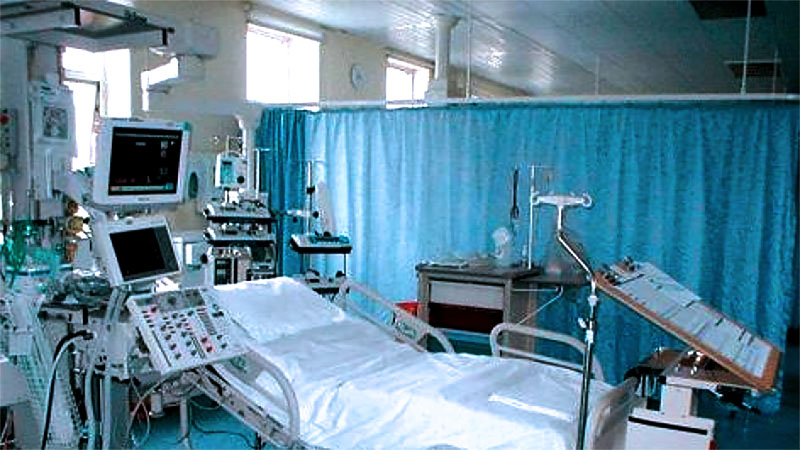
After the incident last Sunday, the situation did not change on Tuesday either. ICU services were not resumed. However, this is not just a problem at Suhrawardy Hospital — ICU services are completely closed in 14 major government hospitals in the country, including Suhrawardy, due to manpower shortage.
As a result, nearly 14,000 patients on their deathbeds have been deprived of this life-saving emergency service in the last four months.
Suhrawardy has a daily demand of 50 people, but services are non-existent
At least 50 patients need ICU services at Suhrawardy Hospital every day, but they are not getting them. Those who can afford it go to private hospitals to get this service. And poor patients are deprived of that opportunity due to lack of money.
Hospital Director Dr. Md. Shafiur Rahman said that this emergency service has been closed for four months due to manpower shortage. Although a letter was sent requesting manpower, no response was received.
How this crisis was created
According to the Department of Health, due to the sharp increase in respiratory patients during the COVID-19 pandemic in 2020, the Awami League government set up 10-bed ICU units in government hospitals in 48 districts under the COVID-19 Emergency Response and Pandemic Preparedness (ERPP) project.
The service was launched in 23 of these districts. However, it has now been closed in some districts due to manpower shortages.
In this project, 512 crore taka was allocated for setting up ICUs in 48 districts. Accordingly, the average cost of setting up each ICU was 106.6 lakh taka. Now the value of equipment lying in the ICUs of 14 hospitals stands at about 149 crore taka, which is in danger of being destroyed.
A total of 1,04 people, including medical officers, nurses, technologists, and health workers, were hired on a temporary basis through the ERPP project. The ICU service has been operating with them so far.
When the project expired last December, those doctors and health workers lost their jobs and the ICUs began to close one by one.
Dr. Yunus’ interim government did not bother with these issues at all. Rather, in various speeches, Dr. Yunus encouraged the common people to seek treatment in private hospitals instead of going to government hospitals. For which he was heavily criticized.
Ministry’s proposal rejected, new project awaited
Additional Director General (Planning and Development) of the Directorate General of Health Services, Professor Dr. Sheikh Saidul Haque, said that a proposal to transfer the temporary manpower of the project to the revenue sector was sent to the government. The ministry has rejected it.
He said there are plans to take up new projects to activate these ICUs, but that will take time. The ICUs have to be closed until the new project is approved.
List of 14 hospitals and pictures of the district
The hospitals where ICU services are closed are: Suhrawardy Medical College and Infectious Diseases Hospital in Dhaka, Manikganj Medical College Hospital, Ziaur Rahman Medical College Hospital in Bogra, Tangail Medical College Hospital, Narayanganj General Hospital (Victoria), Sherpur 250-bed Hospital, Tangail 250-bed General Hospital, Jessore 250-bed Hospital, Sunamganj 250-bed Hospital, Chuadanga Sadar Hospital, Bagerhat District Sadar Hospital, Madaripur District Sadar Hospital and Munshiganj General Hospital.
The picture outside Dhaka is even more worrying.
Since the 10-bed ICU service at Narayanganj General Hospital was closed last December, 10 to 15 dying patients have been transferred to Dhaka every day. The patients are suffering even more while traveling this long distance.
ICU services have been closed at Bagerhat District Sadar Hospital since January. Hospital sources say that 40 to 50 patients a month are being sent to Khulna or Dhaka, and many patients are dying on the way.
Hospital superintendent Asim Kumar Samaddar said that higher authorities have been informed about the immediate launch of this service.
No patients have been admitted to the 10-bed ICU at Tangail General Hospital for four months. Hospital superintendent Dr. Sadequr Rahman said that a full-time medical specialist is needed to run the ICU.
Although four people are needed, there is not a single one in the hospital at the moment. Despite repeated requests to the Health Department, no solution is being found.
A 10-bed ICU unit was opened at Manikganj Medical College Hospital on November 14, 2023. But it has been locked for a year and a half. Hospital Director Dr. Md. Shafiqul Islam said that the ICU could not be opened due to lack of manpower.
The situation at Sunamganj Sadar Hospital is even more depressing. Although a 10-bed ICU was set up two years ago, the door to the ICU room on the eighth floor has been locked since the day it was set up.
Hospital superintendent Dr. Mahbubur Rahman said that seven medical officers and three specialist doctors are needed to keep the 10-bed ICU running — but this manpower has never been available.
The ICU unit at Munshiganj General Hospital, equipped with all kinds of equipment including ventilators and beds, is now falling into disrepair due to negligence. The hospital’s assistant director, Dr. Md. Arifuzzaman, directly said, ‘We cannot operate the ICU and CCU because there are no people.’
The ICU at Madaripur Sadar Hospital has also been unused since its establishment. Civil Surgeon Dr. Shariful Abedin Kamal said that it is not possible to provide ICU services without complete equipment and manpower, and the equipment is gradually becoming useless due to being unused for a long time.
After operating the ICU at Sherpur District Sadar Hospital for a few days, it was closed again due to manpower shortage. Patients from there too are having to be sent to other hospitals, said former superintendent Dr. Md. Jasim Uddin.
The 10-bed ICU at Jessore General Hospital, which was opened during the COVID-19 pandemic, is now running slowly. Sometimes patients are not admitted due to the lack of doctors.
Hospital Director Dr. Ahsan Kabir Bappi said, “Ensuring treatment in the ICU requires not only specialist doctors, but also a trained team, which is lacking in this hospital.”
Experts say high-level initiatives are needed now
Public health expert Professor Benazir Ahmed said, “If ICU services were kept operational in 14 hospitals, many lives could have been saved. Unfortunately, they are not being made operational. On the one hand, this is increasing the suffering of patients, and on the other hand, it is having a negative impact on the overall healthcare system.”
He further warned that ICU equipment is very sensitive and most of it will become useless if it is not used for a long time. He believes that the government should take urgent steps by forming a high-level committee to keep them operational.
This life-saving infrastructure, built at a cost of 512 crore taka, is today locked due to lack of manpower, and equipment worth crores of taka is rusting silently. Unless immediate and effective steps are taken, this waste will continue, and the responsibility for the loss of lives of helpless patients cannot be avoided.

https://stapravda.ru/20221228/reyting_samyh_populyarnyh_hostingov_v_rossii_196445.html, рейтинг хостингов России подтверждает, что выбор надежного провайдера важен для бизнеса.