

Dr. Mamunur Rashid
On January 23 of this year, Yunus told news agency Reuters that all the economic growth during Sheikh Hasina’s tenure was fake. Yet in March, Yunus stated that his government had been able to recover Bangladesh’s economy. In an interview with The Guardian on March 10, Yunus further said that Sheikh Hasina’s rule had completely destroyed Bangladesh, calling it worse than Gaza.
On the other hand, Yunus’s economic advisor Dr. Wahiduddin Mahmud said that it is not possible to fully recover the economy. On November 11 of last year, the Governor of Bangladesh Bank opined that the country’s economic situation was worse than Pakistan’s. The same individual stated on May 21 that it is not entirely possible for the interim government to restore the economy.

Perhaps you are wondering whether Yunus and his government are providing any account of how much they have recovered?
My proposition is that this contradiction among important figures within the same government is deliberate. Together they are making different comments on the same issue to confuse the public. Meanwhile, they have been stealing credit for various projects that Sheikh Hasina’s government either completed or initiated.
Before Sheikh Hasina’s departure in August, even her enemies had no doubt about one thing: the unprecedented economic and infrastructural development of Bangladesh. Still, a negative campaign was launched to make it appear as though Yunus’s government was reforming the country’s economy.
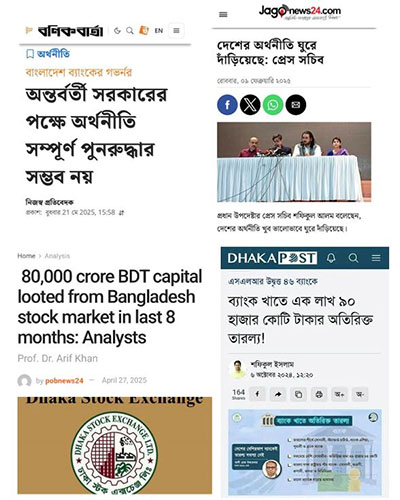
Since no economic recovery process is clear, what does Yunus actually mean by recovery? Let’s look at the data.
To examine the economic recovery process, I have taken three types of data: 1) Gross Domestic Product (GDP), 2) Foreign exchange reserves, and 3) Some banking and stock market data. All of this information was taken from reliable sources (Tradingeconomics.com) and cross-checked with Bangladesh Bank’s data.
1. GDP has not recovered; in fact, it has worsened.
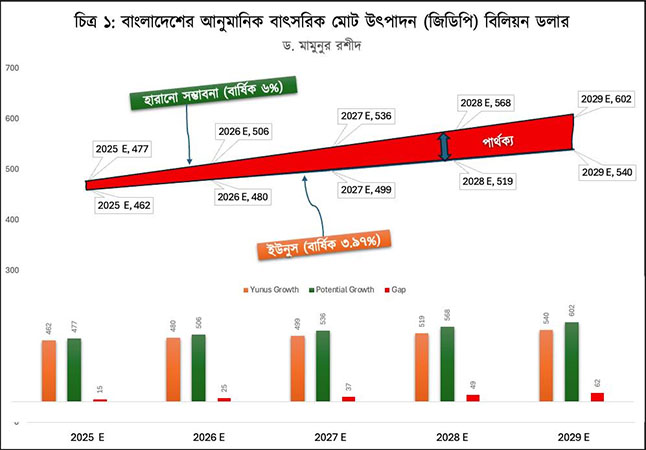
Chart 1 shows the estimated growth in GDP.
During Sheikh Hasina’s 2023–2024 fiscal year, Bangladesh’s GDP was \$450 billion. The general expectation was for an average growth of at least 6%. In the 2024–25 fiscal year, growth dropped to 3.97%, resulting in a GDP of \$462 billion in 2025. If growth had been 6%, GDP would have reached \$477 billion. That’s about \$15 billion less.
If Yunus’s 3.97% growth rate continues for the next five years, GDP will drop each year from 2026 to 2029 by \$25, \$37, \$49, and \$62 billion respectively. And if the growth rate falls below 3.97%, which is likely, the country’s economic condition will worsen further. Considering the likelihood (of achieving 6% growth), if the achieved growth rate remains below 6% for two consecutive years, Bangladesh will enter a recession.
So, it is clear that Yunus has not recovered the economy but has taken away what was supposed to be.
2. Foreign exchange reserves were already recovering long before Sheikh Hasina left.
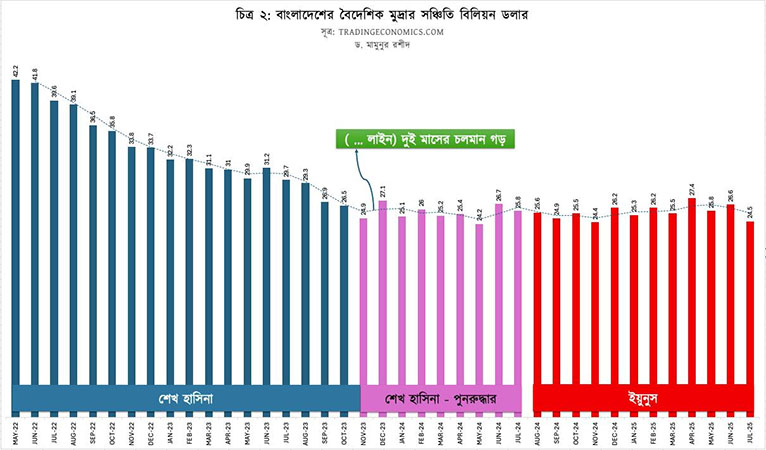
Chart 2 shows monthly foreign exchange reserves.
During Sheikh Hasina’s tenure (from the record high in August 2021 to July 2024), the lowest recorded reserves were in May 2024 at \$24.2 billion. However, before that, in November 2024, reserves had stabilized at \$24.9 billion. In the following month, reserves increased to \$27.1 billion, and even after paying Asian Clearing Union (ACU) dues in July, reserves stood at \$25.8 billion.
The reserves for June-July-August 2024 were higher than the post-November 2024 average (see the dotted line—two-month moving average). Yet Yunus’s July 2025 reserves stood at \$24.5 billion, lower than the previous seven months. The two-month moving average line also shows a negative trend.
See Chart 3 for more detail.
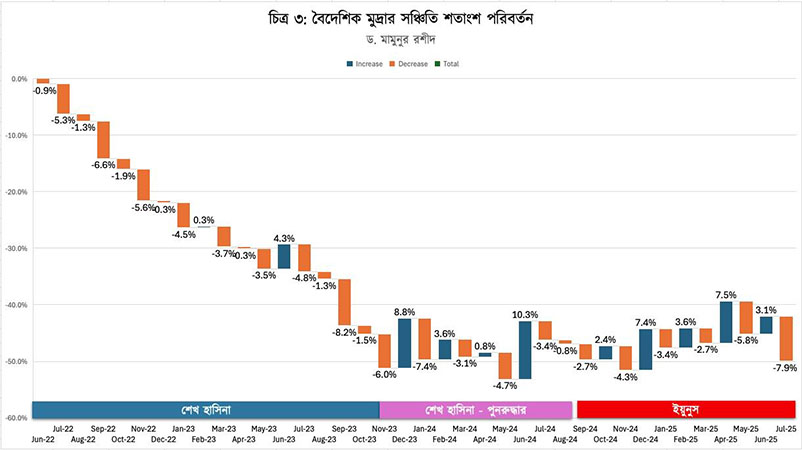
Chart 3 shows the monthly percentage change. After months of decline, there was an 8.8% positive change in reserves from November 2023 to December 2023, which shifted the trend entirely. After that, the monthly percentage change gradually decreased. In June 2024, the highest positive change in reserves was 10.3%.
In Yunus’s eleven-month period, there were six months of negative change, meaning reserves declined. The highest drop was in June-July 2025 at 7.9%.
From November 2023 to Sheikh Hasina’s July 2024, the average change was -0.1%. From August 2024 to Yunus’s July 2025, the average change was -0.3%.
From these two charts, it is clear that foreign exchange reserves were under control from November–December 2023. What you’ve heard and are hearing otherwise is rumor.
3. In trying to recover the banking sector, Yunus has handed over the entire economic sector to anti-state forces.
I’ve written many articles about the banking sector. You can read those using the links below.
The bottom line is, Yunus—
a) arranged an income stream for himself (Grameen Bank is about to become a full-fledged bank),
b) set up benefits for foreigners (shut down Nagad and gave licenses to Google Pay and PayPal),
c) looted the stock market and laundered foreign money (the Financial Intelligence Unit said that around 80% of transactions during Yunus’s tenure were questionable; deposits in Swiss banks have increased several-fold), and
d) handed the banking sector to anti-state groups by taking excessive loans and printing new money (through mergers, ten Islamic banks are becoming two; ownership and staff belong to a covert anti-state organization).
Therefore, Yunus and his board didn’t need to recover anything. In the name of recovery, they have sold the country.
Author bio: Economist and researcher

https://stapravda.ru/20221228/reyting_samyh_populyarnyh_hostingov_v_rossii_196445.html, рейтинг хостингов России подтверждает, что выбор надежного провайдера важен для бизнеса.