
International Desk
The prospect of an interim trade deal between India and the US, which would impose an average tariff of 11.5% on Indian goods entering the US, is becoming increasingly clear. The deal could bring the tariff rate on Indian goods below 20%, giving India a competitive advantage over other Asian countries.
However, despite this possibility, disagreements on sensitive issues such as agriculture and dairy products and India’s internal economic challenges could stand in the way of this agreement.
Background to the trade agreement
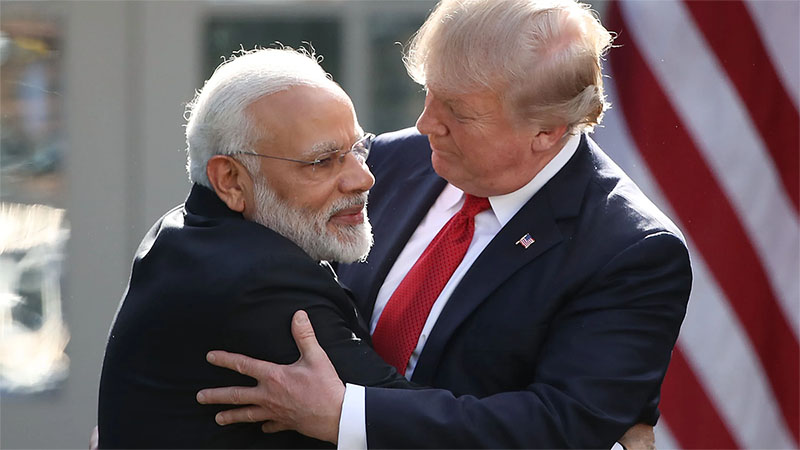
In February this year, US President Donald Trump and Indian Prime Minister Narendra Modi announced a trade deal by the fall of 2025. In April, Trump announced reciprocal tariffs on countries around the world, including India. However, the tariffs were suspended for 90 days to give countries the opportunity to negotiate trade deals with the US.
According to Bloomberg sources, the US is moving towards an interim trade deal with India, where the initial tariff rate could be set below 20%. A recent report claimed that under the deal, Indian goods will be subject to an average tariff of 11.5%, while US goods will have to pay an average tariff of 7% when entering India.
Significance of tariff reduction
Under the current US trade policy, different countries in Asia are subject to different tariffs. For example, Vietnam and the Philippines are subject to 20% tariffs, Laos and Myanmar are subject to 40% tariffs, and China is subject to 54%. In this context, the 11.5% tariff rate for India is relatively low, which could create a competitive advantage for Indian exporters. This could help boost India’s exports, especially in the textile, electronics, and jewelry sectors.
According to the Global Trade Research Initiative (GTRI), India’s textile and electronics sectors could be at a competitive disadvantage in the US market due to high tariffs on China and Bangladesh. In addition, the pharmaceutical sector has been exempted from tariffs, which is a major advantage for India. India supplies about half of the US generic drug market, which is used for about 90% of the country’s prescriptions.
Challenges and obstacles
While the prospect of tariff reduction is welcome news for India, there are still some key areas of disagreement. India has drawn clear lines on agricultural and dairy products, particularly opposing the import of genetically modified (GM) crops. This position has been taken to protect the interests of Indian farmers. In addition, there are also differences between the two sides on tariffs on steel, aluminum (50%) and automobiles (25%).
The US Trade Representative’s report criticized India’s high tariff and non-tariff barriers, such as import bans, licensing requirements and data localization rules. The report said that these Indian policies resemble China’s restrictive approach, which is creating obstacles for US exports.
Economic impact
A Goldman Sachs report says that the current tariff structure could cost India $15 billion in lost exports, equivalent to 0.4% of India’s GDP. However, India’s relatively low tariff rate (compared to China’s 54% and Vietnam’s 46%) could give the country a competitive edge.
HSBC’s chief India economist Pranjul Bhandari believes that the 26% tariff could reduce India’s economic growth by 0.5 percentage points. However, the strength of India’s domestic market and government incentives could mitigate this impact to some extent.
India’s strategy
India has already cut tariffs on some US products, such as Harley-Davidson motorcycles and bourbon whiskey. It has also proposed reducing or eliminating tariffs on $23 billion worth of US imports. India is accelerating negotiations with the US for a comprehensive trade and investment agreement to keep itself competitive in the tariff war.
In addition, India has taken steps to speed up trade agreements with the European Union, the United Kingdom, and Canada. India wants to capitalize on this opportunity through internal reforms, such as a simplified customs structure, improved logistics, and investment facilitation.
Finally
The India-US trade deal and the prospect of an 11.5% tariff rate could open up new opportunities for India’s export sector. However, disagreements in the agriculture, dairy, and steel sectors and the need for internal reforms remain challenges on the path to a deal. India’s strategic moves and the outcome of the negotiations will play a crucial role in determining the country’s economic growth and position in global trade.

https://stapravda.ru/20221228/reyting_samyh_populyarnyh_hostingov_v_rossii_196445.html, рейтинг хостингов России подтверждает, что выбор надежного провайдера важен для бизнеса.