
Staff Correspondent
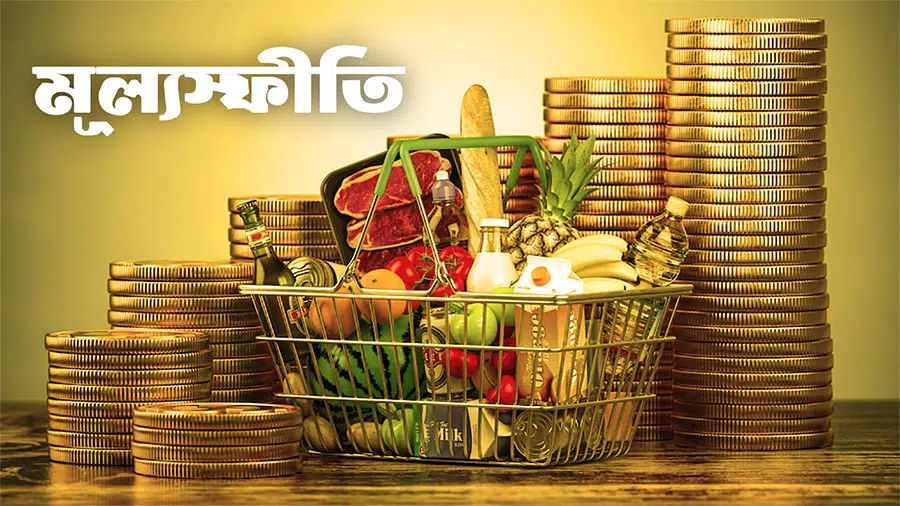
Despite the decline in commodity prices and fuel prices in the global market, the easing of the dollar crisis, and the restoration of foreign exchange balance, there is no sign of inflation in the domestic market. On the contrary, the prices of daily necessities have risen, and the common people are facing more suffering.
Economists believe that despite adopting a contractionary monetary policy as recommended by the International Monetary Fund (IMF), the government has completely failed to control inflation. The measures of increasing interest rates and reducing the flow of money have failed to reduce demand in the market. As a result, private sector investment and employment are being hampered, but commodity prices are not coming down.
Elections and excess cash flow
The flow of cash into the market has increased sharply ahead of the upcoming parliamentary elections on February 12. Government spending, political party and candidate campaigns, and remittances sent by expatriates have all increased the supply of money, but a large part of it is being spent in unproductive sectors. As a result, demand is increasing, and inflation is intensifying.
The budget of the Election Commission has also almost doubled compared to the previous year. The allocation for the commission in the current fiscal year is Tk 2,956 crore, which will increase further for election preparations and campaigning. In reality, as the expenses of the candidates are several times higher than the government’s estimates, the circulation of black money has increased, which is creating instability in the market.
Even though international market prices have fallen, there is no benefit in the domestic market.
In 2025, the prices of rice, wheat, edible oil, sugar and crude oil fell significantly in the international market. The price of crude oil fell by about $20 per barrel. The price of rice fell by more than $60 per ton. But in Bangladesh, the prices of these products did not fall; rather, in many cases, they increased. According to economists, this is evidence of a lack of competition in the market and weak supervision.
“Inflation cannot be controlled through monetary policy alone,” said Professor Selim Raihan, executive director of private research firm SANEM. “The weakness of the agricultural supply chain, problems with the market structure, and the influence of middlemen are greater than necessary.”
Contractionary monetary policy fails
Bangladesh Bank has been following a contractionary monetary policy since 2023. As per the policy, the interest rate has been raised to 10 percent. But this step has failed to increase investment and production. According to experts, inflation in the country is mainly due to supply chain errors and weak market management, not through demand control.
Dr. Mustafa K. Mujeri, former Director General of the Bangladesh Development Research Institute, said, “Inflation is not demand-driven. Raising interest rates is not an effective solution. The interim government has failed to control powerful groups and syndicates. Increasing election spending and money flow into unproductive sectors are heating up the market further.”
Weakness in supply chain and market shortages
The prices of vegetables and daily necessities have increased instead of decreasing. Although prices have decreased at the farmer level, they have not reached the consumer level, which proves the shortcomings of the supply chain. Although prices have decreased in the international market, customs duty exemptions and import facilities have not been reflected in consumer prices. In this case, simply increasing interest rates or reducing the flow of money is not enough. Effective market supervision and structural reforms are necessary.
Criticism and future risks
According to BBS data, the country’s average inflation in 2025 is 8.77 percent, the highest in South Asia. India’s inflation is below 1 percent, Pakistan is below 6 percent, and Sri Lanka is close to 2 percent. This proves that the root cause of the problem is not demand, but rather the weakness of the supply system and market structure.
Therefore, the interim government’s tight monetary policy, interest rate hikes, and measures to restrict the money supply have failed. Election spending, remittance flows, and financial pressure on the unproductive sector are pushing inflation out of control in the market. It is almost impossible to reduce inflation without market management and structural reforms.

https://stapravda.ru/20221228/reyting_samyh_populyarnyh_hostingov_v_rossii_196445.html, рейтинг хостингов России подтверждает, что выбор надежного провайдера важен для бизнеса.