
Despite an effective foot-and-mouth disease (FMD) vaccine being developed in Bangladesh in 2018, why does the country still rely on imports? Who is desperate to secure vaccine supply contracts?
Staff Reporter | May 19, 2025
The Department of Livestock Services is purchasing FMD vaccines for cattle, buffalo, sheep, and goats from the same company—yet, for the same quantity of vaccines, the cost increased by Tk 14.47 crore within two months. Despite the presence of the lowest bidder in the tender, questions have been raised over transparency and accountability in government spending after the contract was awarded to the preferred company, OMC Limited, at a higher price.
Under the project, 1.42 crore doses of FMD vaccines are being procured under the “PPR Eradication and FMD Control” project.
Initially, OMC offered to supply the vaccines for Tk 82.5 crore, but their proposal was rejected. Later, in the third tender, OMC increased its bid to Tk 96.97 crore and secured the contract. However, another company, GenTech, had submitted the lowest bid, offering to supply the same vaccines for Tk 20 crore less.
Sources reveal that GenTech had previously successfully imported and supplied these vaccines from Russia. Another reputed company, Renata, maintained its previous bid but was also overlooked. Meanwhile, OMC significantly increased its bid in the second proposal, with allegations of influence from powerful quarters behind the decision.
Acting Director General of the Department of Livestock Services, Abu Sufian, admitted that an individual had visited the office but claimed no discussions regarding vaccines took place. Sources indicate that this individual was a student coordinator linked to an “influential” figure in the interim government.
Project Director Amar Jyoti Chakma stated that tender conditions were relaxed, allowing OMC to win the contract. When asked which conditions were relaxed, he replied, “I don’t recall.”
Responding to concerns over vaccine safety, he claimed that GenTech’s vaccines could risk animal miscarriages or deaths—though he provided no written or scientific evidence.
Despite the Tk 14.5 crore cost increase for the same quantity within two months, why was there no re-evaluation or price reduction effort? Abu Sufian argued that quality, not just price, was considered. However, he did not explain why GenTech, with a proven record of supplying high-quality vaccines at lower prices, was excluded.
Following allegations, the Anti-Corruption Commission (ACC) raided the Department of Livestock Services on March 24. Since the project director was absent, officials spoke with administrative staff and collected records. The ACC’s verified Facebook page stated that the matter is under investigation.
Economist and Research Director of CPD, Khondaker Golam Moazzem, termed the tender process a “questionable example of transparency and public spending.”
He said, “The way tenders were canceled and conditions relaxed to award contracts at higher prices shows improper use of state funds.”
Notably, the issue came to light after social media reports in March claimed that OMC was being favored to procure vaccines from an unregistered Argentine manufacturer at inflated prices, allegedly under the directives of coordination officer Nusrat Tabassum.
OMC Limited did not respond to requests for comment.
Background on FMD
FMD is a highly contagious disease affecting livestock, including cattle, buffalo, goats, sheep, and pigs. It is caused by the FMD virus (Aphthovirus of the Picornaviridae family). In Bangladesh, three serotypes (O, A, and Asia1) are prevalent. Annual economic losses due to FMD amount to USD 125 million.
Why Dependence on Imports Despite Local Vaccine Development?
In 2018, a team of researchers led by Professor Md. Anwar Hossain from the University of Dhaka’s Microbiology Department developed an effective FMD vaccine under the Higher Education Quality Enhancement Project (HEQEP). A patent application was filed for this innovation.
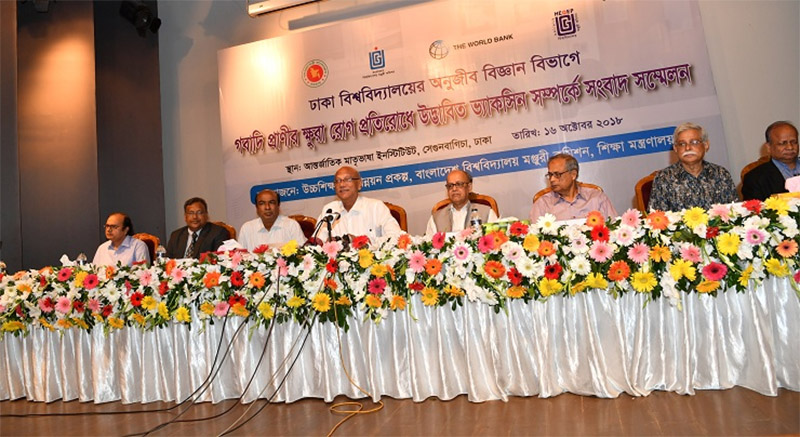
The then Awami League government allocated Tk 10.45 crore for two sub-projects under the Microbiology Department. Seventeen researchers were involved in the breakthrough.
Experts noted that imported vaccines often use virus strains different from those circulating in Bangladesh and lack sufficient antigens, reducing effectiveness. The locally developed vaccine protects against all three prevalent FMD virus strains and was expected to cost only Tk 60-70 per dose for farmers.
Despite this, why does Bangladesh still rely on foreign vaccines? The question remains unanswered by authorities.

https://stapravda.ru/20221228/reyting_samyh_populyarnyh_hostingov_v_rossii_196445.html, рейтинг хостингов России подтверждает, что выбор надежного провайдера важен для бизнеса.