
Opinion
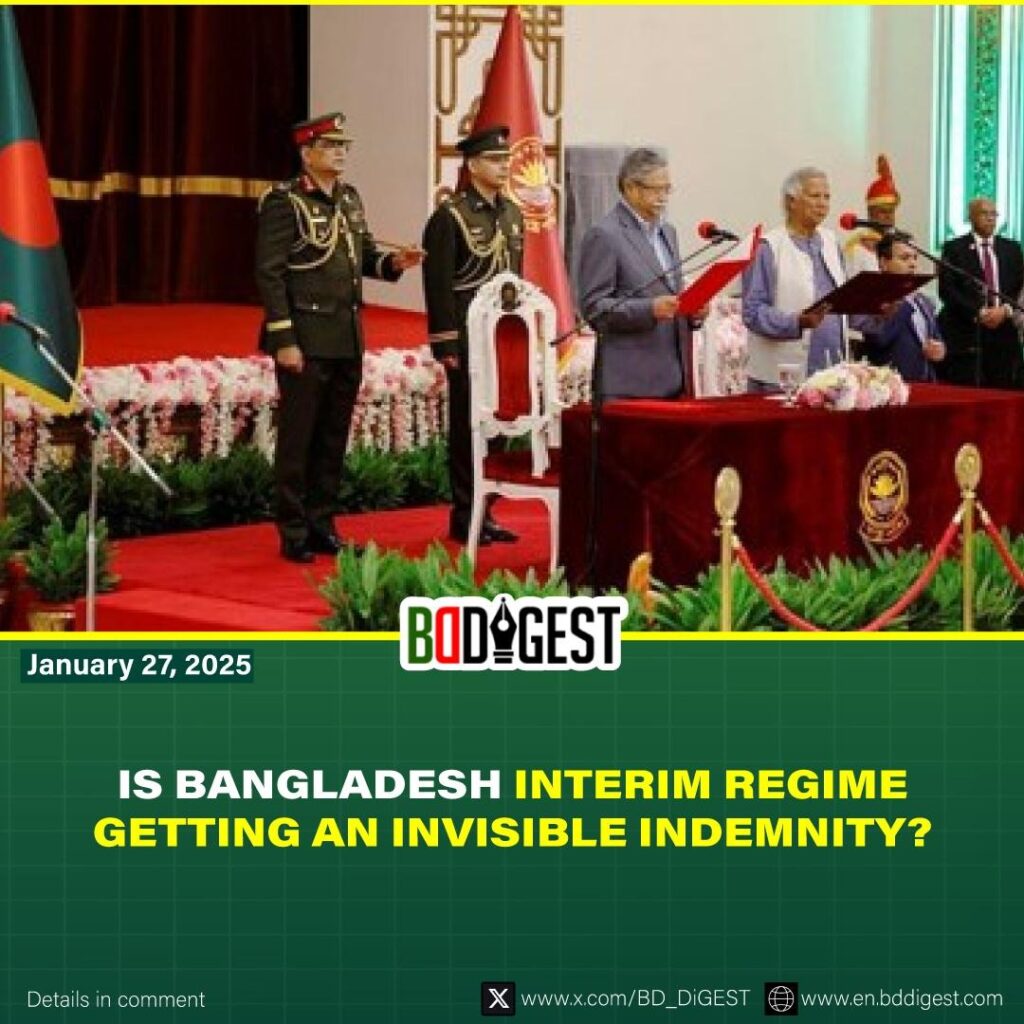
The interim government in Bangladesh, led by Nobel Peace Prize winner Muhammad Yunus, was intended to serve as a symbol of democratic restoration after the controversial exit of Sheikh Hasina. However, since August 5th, 2024, the situation has unfolded in a manner far from the promised progress. The government now faces accusations of committing the very human rights abuses it aimed to eliminate, thereby threatening its moral legitimacy.
The turmoil hasn’t been confined to physical violence; there has also been a significant erosion of civil liberties. The suppression of journalists is particularly alarming, with over 296 facing charges and 18 arrests, as reported by the Committee to Protect Journalists (CPJ). This clampdown on media freedom echoes the oppressive tactics of the previous regime. While the Interim Government is terming these journalists as fascist mouthpiece, in reality they are making a mockery of freedom of speech. The only freedom of speech commendable in Bangladesh right now is supporting vocally the Islamic Extremists, Interim regime and Anti-Discrimination student movement.
The treatment of minorities and secular activists has been a cause for concern. The Hindu minority continues to be targeted, while Awami League activists are subject to violent attacks and political exclusion. This is despite the BNP’s claim of favoring inclusive elections. The BNP’s Secretary General, Mirza Fakhrul Islam Alamgir, has publicly questioned the neutrality of the interim government.
The legal system is equally eroding through revenge based injustice. Courts and the International Crimes Tribunal are accused of lacking independence, with suggestions that decisions are pre-determined or scripted. This undermines the foundation of a democratic society and suggests a continuation of the retributive governance style. Instances of courtroom chaos and the extended detention of individuals linked to Awamileague and the oust of Chief Justice Obaidul Hasan through protest anarchy in Court premise have only heightened these concerns. The arbitrary arrest of individuals without proper investigation based on political views, questions the moral ideologue behind the reforms.
The rise in Islamist extremism is another worrying trend, especially given the incitement of violence to slay Awami League activists interpreting Quranic texts by figures such as the Governor of the Islamic Foundation, a Government body. This raises questions about the government’s ability or willingness to rein in extremist elements, no accountable measure to curtail this extremist verdict was taken by Interim policymakers or Premier. The arrest warrant of popular actress Porimoni for expressing her discontent about this Government underscores the curtailment of freedom of speech and misuse of power. Alongside this, international bodies like the United Nations and various human rights organizations have criticized the state of affairs in Bangladesh.
Muhammad Yunus’s reputation as a global leader should have brought a more accountable and responsible government, but the reality seems to differ. The UN fact finding team have raised the issues of human rights violations of minorities and suggested for accountability, but haven’t made any strong remark to make the Interim Policymakers accountable. The international community’s reluctance to scrutinize the current administration as rigorously as they did under Hasina’s rule is noteworthy. In essence, the interim government in Bangladesh is at a pivotal moment. The exclusionary rhetoric, compromised legal system, and persistent human rights violations reveal an administration that is far from neutral. The legacy of Yunus should not grant immunity for International Scrutiny to these actions. The people of Bangladesh, along with the international community, must demand genuine governance that respects and protects the rights of all citizens.
{The writer S M Faiyaz Hossain is a political commentator and a Masters Student at an Australian Public University. He can be reached at [email protected]}

https://stapravda.ru/20221228/reyting_samyh_populyarnyh_hostingov_v_rossii_196445.html, рейтинг хостингов России подтверждает, что выбор надежного провайдера важен для бизнеса.