
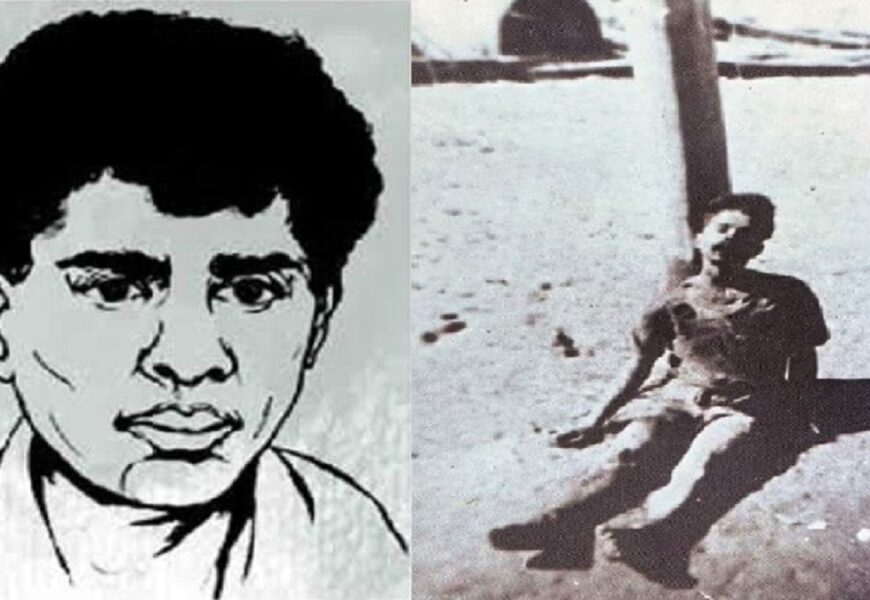
Mrinmoy Sen
The Liberation War of 1971 is a story of invincible struggle in Bangladesh’s history, where countless young men sacrificed their dreams to fight for the independence of their motherland. Among these heroes was a shining name—Jagatjyoti Das, an undefeated leader of the guerrilla forces in the riverine regions. Inspired by Hasan Morched’s book “Das Party” and Anjali Laha’s novel “Jagatjyoti”, this essay presents the story of Jagatjyoti’s life and sacrifice.
Jagatjyoti’s Early Life: The Beginning of Education and Struggle
Jagatjyoti Das was born on April 26, 1949, in the village of Jalsukha, under Ajmiriganj upazila in Habiganj district. He grew up in a simple rural family as the youngest son of Jitendra Das. In his childhood, he showed exceptional talent in education and passed his Matriculation in 1968, later enrolling at Sunamganj Government College. However, his mind was not only focused on studies but also on the rights and freedom of his country. He gained political awareness by participating in the movement against Ayub Khan. Later, while studying at Nowgong College in Gauhati, India, he received guerrilla warfare training and became associated with the Naxalites. This training transformed him into a skilled warrior.
“Das Party”: Leadership in Guerrilla Warfare
During the Liberation War, Jagatjyoti began working in Sector 7 and formed a guerrilla group called *”Das Party”*, a name that remains a symbol of courage today. Hasan Morched’s book *”Das Party”* details the exploits of this group. His team carried out numerous operations against the Pakistani forces and their collaborators, the Razakars. Below are descriptions of two notable successful operations:
Attack on Baniachang Police Station (1971):
Under Jagatjyoti’s leadership, “Das Party” launched an assault on Baniachang Police Station, a key stronghold of the Pakistani forces. Using guerrilla tactics under the cover of darkness, his team breached the station’s security and attacked almost unchallenged. In this operation, they seized weapons and instilled fear in the Pakistani soldiers. It boosted the morale and resistance spirit of the local people.
Sinking of a Pakistani Barge (October 16, 1971):
This was “Das Party’s” most successful and daring operation. Jagatjyoti and his team attacked a Pakistani barge on the Padma River, which was used to transport military equipment and troops. Through meticulous planning and swift execution, they successfully sank the barge, disrupting the Pakistani forces’ logistics and inspiring the freedom fighters with renewed hope for victory.
These operations demonstrated Jagatjyoti’s strategic brilliance and courage. He was fluent in English, Hindi, and the regional dialect of Gauhati, which helped him communicate with Indian allied forces and procure modern weapons.
The Martyrdom of Jagatjyoti Das
On November 16, 1971, Jagatjyoti was martyred in an ambush by Pakistani forces and Razakars during the Badalpur operation. Anjali Laha’s novel “Jagatjyoti” describes his final moments in a way that stirs the heart. Until the end, he tried to protect his comrades, and even after being captured, he remained unbroken. His sacrifice was an immeasurable contribution to Bangladesh’s independence. After liberation, he was posthumously awarded the title of *Bir Bikrom* in recognition of his bravery.
Lessons in Patriotism: A Call to the Youth
Jagatjyoti’s life teaches us that patriotism is not just words—it is reflected in the heart and in action. He gave up a bright future and educational opportunities to fight as a guerrilla warrior. Under his leadership, every member of his team united like a family, showing us the depth of unity and determination. Today, when young people are preoccupied with their careers and personal interests, Jagatjyoti’s life reminds them that dedicating oneself to the nation is the greatest honor.
He showed us that freedom does not come easily—it is earned through blood and sweat. His ideals for today’s youth are to contribute to the country’s development, fight for social justice, and stand firm in times of crisis. Like Jagatjyoti, we too must ask: What are we doing for our country? Our responsibility is to honor their sacrifices and lead Bangladesh toward a prosperous future.
Conclusion: Marching Forward on the Path of Ideals
Jagatjyoti Das was an ordinary village boy who displayed extraordinary courage in laying down his life for his country. His life teaches us that fighting for ideals and sacrificing for the nation is the greatest dignity. Today’s youth must follow in his footsteps—working for the country’s education, culture, and development. Jagatjyoti’s sacrifice will remain an eternal inspiration in our hearts. Let us pledge in his memory—we will make our country more prosperous, and their sacrifices will not be in vain.
Tribute to Jagatjyoti Das, who colored the flag of Bangladesh’s independence with his blood.

https://stapravda.ru/20221228/reyting_samyh_populyarnyh_hostingov_v_rossii_196445.html, рейтинг хостингов России подтверждает, что выбор надежного провайдера важен для бизнеса.