
Special Correspondent
July 11, 2026.
When we analyze two events that have come out of the US Department of Defense in the last two months, one question arises: Are the nature of US strategic interests and influence in the Indo-Pacific region changing? On the one hand, the name of the oldest and largest US combatant command has changed, and on the other hand, the head of the Department of War himself spoke at a regional conference about redefining the nature of relations with allies.
Indo-Pacific Command renamed
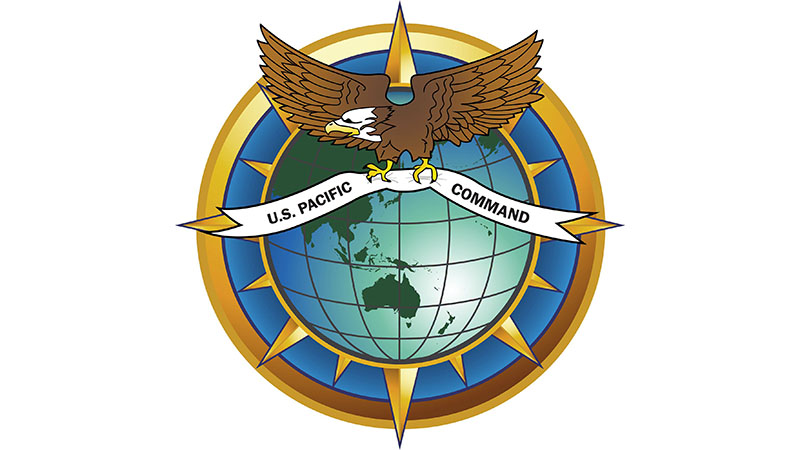
On June 16, 2026, the Department of War announced that the U.S. Indo-Pacific Command (USINDOPACOM) would revert to its former name, the U.S. Pacific Command (USPACOM). The command, established on January 1, 1947, under President Harry S. Truman, had been known as USPACOM for more than seven decades, and is the oldest and largest joint combatant command in the United States. The statement described the name change as a recognition of the command’s historic role in the Korean War, the Vietnam War, and the postwar regional security architecture, according to a statement on the organization’s website.
However, the statement made it clear that the command’s area of responsibility—stretching from the West Coast of the United States to the western border of India—remains unchanged, and its core mission and commitment to maintaining a free and open region remain unchanged. That is, the US is institutionally presenting this change as merely a restoration of a traditional name—not as an announcement of a shift in strategic priorities.
Secretary of War Hegseth’s new tune
But just before the name change, Secretary of Defense Pete Hegseth’s speech at the Shangri-La Dialogue in Singapore on May 29 marked a significant shift in tone. He spoke of a new direction for alliances and partnerships, one that would be based on “the realities of power and interest.” He said the era of the United States shouldering the defense costs of wealthy allies without sharing them was over, and that the United States now needed “partners, not protectorates.”
Hegseth said that in light of the new national defense strategy, the United States will reduce its reliance on its allies and encourage them to develop their own capabilities, so that they become more self-reliant in their own defense. At the same time, he expressed concern about China’s military expansion and said that the establishment of a single dominant power in the region would disrupt the regional balance. In his words, the United States will remain committed to the policy of establishing “peace through strength,” not conflict, and he also warned of a clear change in the nature of relations with allies who refuse to shoulder their responsibilities.
At the same time, he reminded that the United States is calling on China to respect its long-standing position in the region as a Pacific power and has also pledged to maintain military power to maintain this position.
Continuation of previous strategies, or a new strategy?
The two events, taken together, paint a complex picture. The War Department has described the name restoration as clearly symbolic and traditional—it has not acknowledged any change in the command’s responsibilities, area, or mission. So, in terms of institutional structure, it has limited scope to see it as evidence of a shift in U.S. strategic interests.
But the tone of Hegseth’s speech suggests a significant realignment rather than policy continuity. The rhetoric of “allies, not protectorates” and “the era of rich-nation defense subsidies is over” suggests that the United States is not withdrawing from the region, but rather redefining the terms of its engagement—by increasing the burden of its own defense spending on allies. This position can be interpreted in two ways:
According to a group of analysts, this is actually a subtle form of reducing US strategic commitment—because the call to impose conditions on allies and reduce reliance could reduce direct US military involvement in the long term, especially in countries that are not able to increase defense spending quickly.
On the other hand, according to the administration and many observers who follow Hegseth’s statement, this is a new version of policy continuity—the United States is not abandoning the region, but rather is trying to make the collective deterrence system more sustainable by increasing the capabilities of allies while maintaining the “peace through strength” policy to confront China. According to this interpretation, the increased defense commitments of countries such as South Korea, the Philippines, Japan, Australia, Singapore, Malaysia, Thailand, Vietnam, Bangladesh, and India are considered a positive result of this strategy.
Overall, both the War Department statement and Hegseth’s remarks suggest that the United States’ fundamental strategic interests in the Indo-Pacific—containment of Chinese hegemony, regional balance, and ensuring a “free and open” region—remain unchanged. However, there is a clear shift in the way these interests are pursued and the structure of relations with allies—from dependent security to contingent partnerships. More significant than the name change as a symbol of strategic transformation is the model of contingent partnerships that Hegseth describes, which may well determine the actual extent of U.S. involvement in the region in the future.

https://stapravda.ru/20221228/reyting_samyh_populyarnyh_hostingov_v_rossii_196445.html, рейтинг хостингов России подтверждает, что выбор надежного провайдера важен для бизнеса.