
Staff Reporter
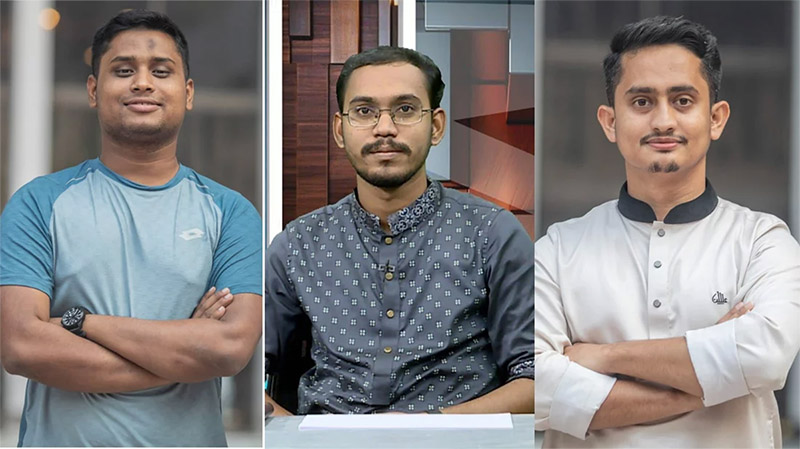
Ten days after a meeting with Army Chief General Aziz Ahmed, National Citizens’ Party (NCP) organizer Hasnat Abdullah posted on his Facebook account on March 21. Following the post, the party’s northern region chief organizer, Sarjis Alam, has also shared his perspective.
On March 23, Sunday, Sarjis wrote in his Facebook post that he did not find it appropriate for such discussions to be made public on social media, as it could undermine trust in future dialogues with stakeholders.
In the comments section of Sarjis’s lengthy post, another party leader, Abdul Hannan Masud, wrote, “What is this, brother? I’m saying this publicly—one of the two is lying. This cannot continue. Despite holding important positions in the party, you are roaming around personally and making NCP controversial. When people are dreaming about NCP, who is behind this agenda to tarnish its image? Sorry, I couldn’t stay silent anymore.”
His comment has sparked fresh controversy, with many replying and raising questions.

Sarjis Alam’s Facebook Post:
“Some clarifications, additions, and corrections from my side regarding the March 11 meeting with the Army Chief:
That day, Hasnat and I went to speak with the Army Chief. Another important member of our party was supposed to join us, but due to personal reasons, he couldn’t make it. Let me clarify that we were not summoned to the cantonment; rather, we had been in touch with the Army Chief’s military advisor, and the meeting was arranged based on mutual communication.
When the Army Chief made strong remarks on the Pilkhana massacre anniversary, saying ‘Enough is Enough,’ I asked the military advisor if they saw any unwanted developments. He then suggested we speak directly with the Army Chief, which led to the meeting.
People interpret statements differently. Hasnat shared his interpretation of the Army Chief’s remarks on Facebook, but I have some differences with his perspective.
I don’t see the Army Chief’s statements as formal proposals but rather as direct opinions. There’s a difference between expressing an opinion and making a proposal. While the Army Chief was straightforward, I didn’t feel there was any pressure regarding the ‘refined Awami League.’ Instead, he confidently explained the long-term implications if the refined Awami League didn’t return.
Topics like the refined Awami League, Saber Hossain, Shirin Sharmin Chaudhury, and Sohel Taj were discussed. We talked about whether the Awami League would return, the impact of their participation or absence in the elections, and the potential stability or instability in the country.
However, I don’t think the conversation was as extreme as Hasnat’s post suggests. It was straightforward and confident, but not confrontational. The Army Chief emphasized the importance of the refined Awami League’s participation for the country’s stability.
Hasnat also mentioned a heated exchange where he questioned how the Army could forgive a party that hasn’t apologized for its crimes. The Army Chief responded, ‘You people know nothing. You lack wisdom and experience. We have been in service for at least 40 years, longer than your age.’ While this conversation did happen, it wasn’t as confrontational as portrayed. It occurred as we were leaving, and the Army Chief spoke in a tone of seniority, not anger.
I don’t support the narrative of ‘Hasnat vs. Waker.’ Hasnat and the Army Chief have different roles. It’s not relevant to pit the NCP or the public against the Army. Similarly, calls for the Army Chief’s resignation are not our stance.
I also want to share a personal opinion. During the interim government, political parties often maintained communication with the Army, keeping it private. While we may disagree with the Army Chief’s points, we could have discussed them within our party forum or coordinated with other political parties to take a unified stand against any version of the Awami League.
However, making these discussions public on Facebook wasn’t appropriate. It could jeopardize trust in future dialogues with stakeholders.
My statement differs from Hasnat’s in several areas. Some may criticize me, but I believe our integrity has never been about going with the flow. That’s why we stood against Hasina’s regime despite the risks.
If anyone points a gun at Hasnat today, we will stand in front of him. But when I feel the need to correct a fellow comrade, I will do so. This sense of conscience is what keeps us on the right path. Self-criticism will lead us to our desired destination.
Our fight against any version of the Awami League, responsible for the July massacre, BDR massacre, and Shapla Square killings, will continue.”
Hasnat Abdullah’s Facebook Post:
March 11, 2:30 PM.
A few days ago, I informed you about a conspiracy to bring back a ‘refined Awami League.’ This plan is entirely orchestrated by India, with Saber Hossain Chowdhury, Shirin Sharmin Chaudhury, and Tapas at the forefront.
On March 11, this plan was presented to me and two others at the cantonment. We were offered seat adjustments in exchange for accepting this proposal. We were told that several political parties had already conditionally agreed to the Awami League’s rehabilitation. They argued that having a weak Awami League alongside multiple opposition parties is better than having no opposition.
We immediately opposed the proposal, insisting that instead of rehabilitating the Awami League, they should focus on holding the party accountable for its crimes. In response, we were told that obstructing the Awami League’s return would lead to a crisis, and we would be held responsible. They insisted, ‘The Awami League must come back.’
During the discussion, I asked how they could forgive a party that hasn’t apologized for its crimes. The response was, ‘You people know nothing. You lack wisdom and experience. We have been in service for at least 40 years, longer than your age. Besides, there can be no inclusive election without the Awami League.’
I replied, ‘There can be no inclusivity with the Awami League. If you try to bring them back, it will be over our dead bodies. You will be responsible for the crisis that ensues.’
We left the meeting unfinished.
During the July movement, we were pressured to follow various prescriptions from agencies and the cantonment. We resisted and placed our trust in the people, ultimately bringing down Hasina’s regime.
Today, I again place my trust in you, rejecting the pressure from the cantonment. I don’t know what will happen to me after this post. I may face multiple pressures or even danger. But there is no room for compromise on banning the Awami League.
During the July movement, we rejected all prescriptions from the cantonment and agencies, relying on the people’s support. If we have your support again, we can thwart this Indian conspiracy to rehabilitate the Awami League.
Let us unite against the Awami League, setting aside all ‘ifs’ and ‘buts.’ If the Awami League is allowed back into politics, July will have been in vain. As long as there is a drop of blood in our bodies, we will not let our martyrs’ sacrifices go in vain. After August 5, there is no place for the Awami League in Bangladesh. They must be banned.”

https://stapravda.ru/20221228/reyting_samyh_populyarnyh_hostingov_v_rossii_196445.html, рейтинг хостингов России подтверждает, что выбор надежного провайдера важен для бизнеса.