


—A.S.M. Shariful Hassan
(International Relations and Political Analyst)
To understand a person’s political position, it is not enough to listen only to what they say today. One must also look at their political and family history. This is particularly important in a country like Bangladesh, where the Liberation War of 1971 is directly tied to the birth of the state. In assessing the political position of an intellectual, therefore, it is important to consider where they themselves, or their close family members, stood during 1971.
It is from this perspective that Dr. Dilara Chowdhury’s position on Bangabandhu Sheikh Mujibur Rahman and the independence of Bangladesh needs to be examined. Her views appear to have deeper roots, and it is difficult to overlook the connection between her family history and the question of the territorial integrity of the state of Pakistan.
Dr. Dilara Chowdhury’s husband was G. W. Chowdhury, or Golam Wahed Chowdhury. He was a professor in the Department of Political Science at the University of Dhaka.
When the Liberation War began in 1971, he sided with the Pakistani government. Until the cabinet was dissolved, he served as Minister of Communications in the Yahya Khan government. Even before that, he had held several important positions in the Pakistani government. Golam Wahed Chowdhury was among the ministers and advisers in the government of Yahya Khan, the Pakistani military ruler at the time.
The government of the People’s Republic of Bangladesh revoked G. W. Chowdhury’s citizenship in 1972 due to his Role Against Independence.
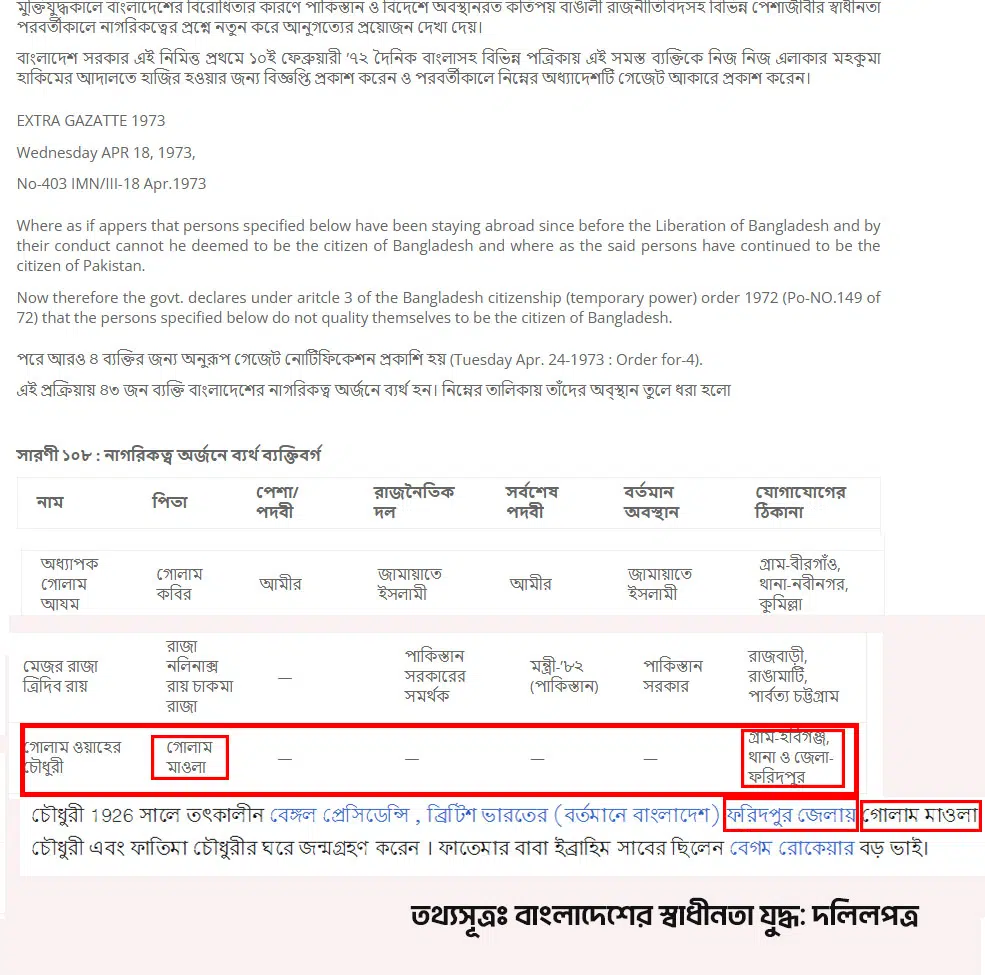
The name of Golam Wahed Chowdhury appears on the 1973 gazette notification’s list of individuals whose citizenship was revoked. (Due to a typographical error, his name appears as “Golam Waher”; his identity as Golam Wahed Chowdhury was confirmed based on his father’s name and district of birth.)
After Bangladesh gained independence, he was so deeply distressed by the country’s liberation that he did not want to return to Bangladesh. Instead, he left Pakistan with his wife and moved to the United States. Given his political position at the time, however, returning to Bangladesh was not an easy option for him either.
G. W. Chowdhury’s The Last Days of United Pakistan
In The Last Days of United Pakistan, published by Golam Wahed Chowdhury in 1974, his support for a united Pakistan is clearly reflected. Drawing on his personal experiences, the book examines Pakistan’s political crisis from 1969 to 1971, the failure to transfer power, and the events surrounding the breakup of Pakistan.
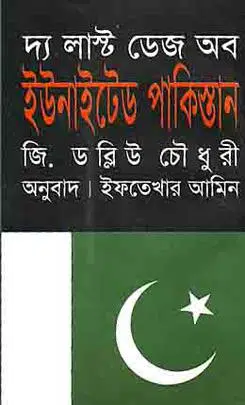
Professor Chowdhury also accompanied then-President Yahya Khan on a visit to China. In the book, he provides significant insights into China–US relations and Pakistan’s geopolitical position. According to Dr. Chowdhury’s analysis, then-US President Richard Nixon and Henry Kissinger placed greater emphasis on their geopolitical interests than on human rights violations or the genocide in East Pakistan.
He further writes:
“The US administration feared that if Pakistan broke apart, Soviet influence in the region would increase dramatically, since the Soviet Union was supporting India.”
The most significant aspect of the book, however, is that the author himself was a participant in Pakistan’s central governing structure, and therefore his interpretation of the events of 1971 is largely presented from the perspective of a united Pakistan.
In the book’s narrative, Bengali nationalism, the Six-Point Programme and Bangabandhu’s political strategy are portrayed as threats to Pakistan’s state structure. He writes that if the Six Points had been implemented in full, the central government of Pakistan would effectively have been left with little power beyond defence and foreign affairs. In his view, this would have paved the way for the breakup of Pakistan.
In other words, G. W. Chowdhury’s political outlook remained aligned with the preservation of Pakistan’s state structure as a united country. Consequently, in The Last Days of United Pakistan, the desire to preserve Pakistan’s unity receives far greater emphasis than the aspirations of Bengali nationalism and the struggle for Bangladesh’s independence.
The book also contains several critical and negative assessments of Bangladesh’s independence movement and Bangabandhu Sheikh Mujibur Rahman.
G. W. Chowdhury did not view Bangladesh’s Liberation War as the logical culmination of the Bengali people’s long-standing aspiration for national liberation. Instead, he regarded it as a “historical tragedy”—the tragedy of the breakup of Pakistan.
In the book, he presents Bangabandhu’s Six-Point Programme as a fundamental challenge to Pakistan’s unity and portrays Bangabandhu’s political position as one of the major causes of the crisis.
It can be argued that Chowdhury failed to fully appreciate why Bangabandhu remained uncompromising on the question of the Six Points after the Awami League secured an absolute majority in the election, and why he regarded that position as a mandate from the people.
He also sought to portray Bangabandhu as a “rigid” politician who was unwilling to compromise his position in the interest of preserving Pakistan’s unity. According to Dr. Chowdhury, Sheikh Mujib’s uncompromising stance ultimately narrowed the scope for resolving the political crisis through negotiations.
But this is where another historical question arises.
The Awami League won a majority in Pakistan’s National Assembly in the 1970 election. Any explanation of the 1971 crisis that focuses solely on Bangabandhu’s “intransigence” while overlooking the broader political reality—that the demand for a transfer of power was based on that electoral mandate, and that Pakistan’s military rulers failed to implement it—remains incomplete.
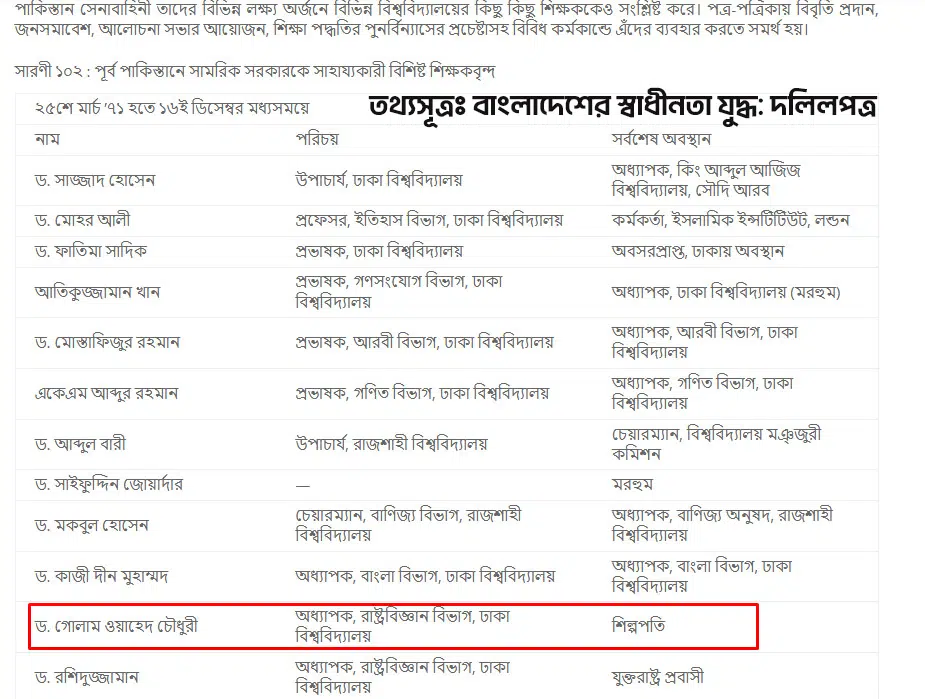
G. W. Chowdhury Among the “Collaborators” Who Assisted the Pakistani Military in East Pakistan During the Liberation War
In the aftermath of the 1970 election, the intense popular uprising and explosion of Bengali nationalism in East Pakistan were portrayed by Dr. Chowdhury in his book as a form of extreme emotionalism. In his view, this intense emotion and public pressure prevented the Awami League leadership from making rational and pragmatic decisions and pushed the situation toward war.
Like the Pakistani ruling establishment, Dr. Chowdhury’s account also tended to portray India’s role in Bangladesh’s Liberation War in a highly negative and deliberate manner. He presented India’s longstanding plans and direct military intervention as major factors behind the breakup of Pakistan. As a result, the spontaneous and long-standing Bengali aspiration for national liberation, as well as the role of armed resistance, received comparatively less emphasis in his narrative.
Although G. W. Chowdhury strongly criticized Yahya Khan for the March 25 massacre and Zulfikar Ali Bhutto for the political crisis, he himself, as a Pakistani bureaucrat and central minister, had been part of the political structure that he was writing from. From that position, he regarded Bangabandhu’s uncompromising leadership and Bangladesh’s armed struggle for independence as among the factors that contributed to the destruction of Pakistan’s unity.
His account can therefore be read as a Pakistan-centric and one-sided interpretation of the history of 1971.
As a staunchly pro-Pakistan bureaucrat and academic, G. W. Chowdhury viewed the surrender on December 16 as the darkest and most tragic day in the history of united Pakistan.
According to him, the United States and China had supported the cause of a united Pakistan because of their geopolitical interests and Pakistan’s diplomatic efforts. However, he argued that this support created a kind of “False Hope” among the Pakistani generals, encouraging them to continue the war rather than pursue a political settlement and ultimately contributing to Pakistan’s downfall.
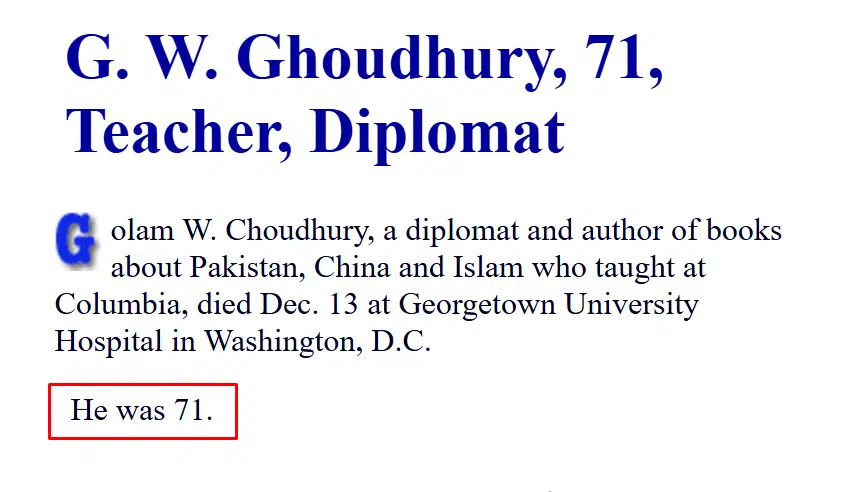
Golam Wahed, Who Described Pakistan’s Defeat in 1971 as a “Historical Tragedy,” Died at the Age of 71
This is an important point. How a person views 1971 depends, to a considerable extent, on whose eyes they are looking through—whether they see 1971 as a crisis of Pakistan’s territorial integrity or as a war for the national liberation of the Bengali people.
In 1975, Bangabandhu was assassinated along with most of his family. Three years later, in 1978, G. W. Chowdhury returned to Bangladesh with his wife and family under a special general amnesty during the rule of Ziaur Rahman. Golam Azam also returned to the country at the time.
Soon after returning to Bangladesh, Dilara Chowdhury began teaching in the Department of Political Science at Jahangirnagar University. It is at this point that her present-day statements need to be considered alongside this earlier political history of her family.
In a podcast, Dilara Chowdhury said that after Sheikh Mujib returned to Bangladesh in 1972, he had stopped the broadcasting of the azan on radio and television—a claim that is entirely false.
There is evidence that after Bangladesh gained independence in 1971, far from stopping the broadcasting of the azan on radio and television, various Islamic programmes continued to be broadcast under state supervision. At the time, radio and television did not operate around the clock as they do today. Programmes were broadcast at specific times during the day. If the time for the azan fell within a scheduled broadcast period, it was aired.
Therefore, a claim that Bangabandhu had stopped the broadcasting of the azan on radio and television requires reliable evidence. More importantly, Bangabandhu’s government did not pursue any policy of severing ties with Islam or the Muslim world.
In 1974, Bangabandhu travelled to Pakistan to attend the Organisation of Islamic Cooperation (OIC) summit and secure Bangladesh’s membership in the organisation. He met Zulfikar Ali Bhutto there. After Pakistan recognized Bangladesh on February 22, 1974, Bangabandhu attended the OIC summit in Lahore, and Bangladesh became a member of the organization.
In other words, Bangabandhu’s participation in an OIC summit on Pakistani soil just three years after independence at least calls into question the simplistic narrative that he “did not want to maintain relations with Islam or the Muslim world.”
In 1975, he established the Islamic Foundation. Historical sources associate the present institutional form of the Islamic Foundation with its establishment or inauguration in 1974; a U.S. diplomatic document from March 1975, however, also refers to Bangabandhu’s establishment of the Islamic Foundation.
It is therefore difficult to reconcile the historical record with Dilara Chowdhury’s claim that Bangabandhu had stopped the broadcasting of the azan.
The issue of the Hajj is also important. After independence, Saudi Arabia did not recognize Bangladesh for an extended period. This created practical diplomatic difficulties for Bangladeshi citizens wishing to perform Hajj. One study notes that Bangabandhu’s government arranged for Bangladeshis to travel for Hajj using Indian visas and also provided government assistance to pilgrims.
Pakistan’s recognition of Bangladesh in 1974 and Bangladesh’s subsequent admission to the OIC also demonstrate that Bangabandhu’s foreign policy was not limited to relations with India or the Western world; establishing ties with the Muslim world was also an important component of his state diplomacy.
The question, then, is: why does an academic like Dilara Chowdhury present the history of Bangabandhu and Bangladesh’s Liberation War in this manner?
To seek an answer, it is necessary to look not only at her own political position but also at her husband’s political past.
- W. Chowdhury was a man who supported Pakistan’s state structure in 1971 and later interpreted the breakup of Pakistan largely from the Pakistani perspective in his book The Last Days of United Pakistan. His book takes a sharply critical view of Bangabandhu’s Six-Point Programme, Bengali nationalism and the movement for independence.
It is therefore not impossible to view Dilara Chowdhury’s present statements not merely as isolated opinions, but also in the light of her family’s political and intellectual legacy.
Perhaps Dilara believes that the chapter of Bangladesh’s Liberation War has ended and that the historical questions surrounding it are no longer important; perhaps she believes that there is once again an opportunity for the pro-Pakistan political narrative she espouses to return.
But Dr. Dilara, you will be proven wrong again and again, as you have been before. The fact that those who stand on the side of the Liberation War are somewhat politically cornered at this moment does not mean that you can revive the old narrative and thereby secure a place for yourself in history. You are seeking to reclaim a place in history because you know that, in the Bangladesh born out of the Liberation War, you and your family will remain forever condemned because of your true identity and history.
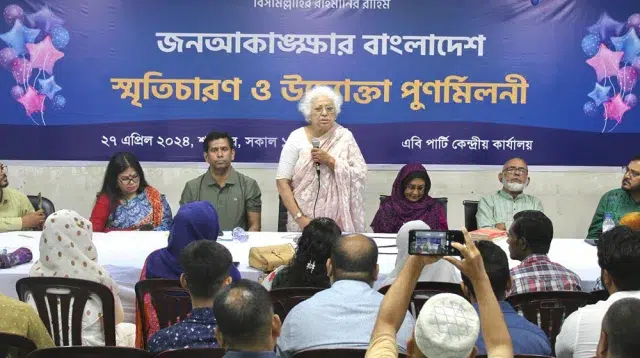
Dilara Zaman as the chief guest at a reunion of the organizers and a commemorative event marking the declaration of “Bangladesh of the People’s Aspirations,” organized by Amar Bangladesh Party (AB Party) at the party’s central office. April 2024.
The Liberation War will never become irrelevant in this country.
Because the Liberation War is not the property of any single political party. It is the history of the birth of Bangladesh as a state. There may be political debates over Bangabandhu Sheikh Mujibur Rahman; his mistakes and shortcomings in office may be discussed; his economic and political decisions may be criticized; even his policies concerning religion may be subjected to strong criticism. But using such criticism as a pretext to distort the history of 1971 or to establish unsubstantiated claims is an entirely different matter.
To understand the views of a senior intellectual, it is important to examine not only their present-day statements but also their role in 1971. Where did they stand at the time? Which state did they support? What did they write and what did they say? These questions matter.
If it is found that someone, despite being a young adult at the time, held a position on the question of 1971 that ran counter to the aspirations for Bangladesh’s independence, then that history must be taken into consideration when evaluating their subsequent political views.
Whether you choose to call that person anti-Bangladesh is your decision. But history leaves behind its own testimony.
And often, as long as people are able to conceal their political positions, they may appear neutral. But over the long arc of history, that façade eventually breaks down.
On the question of 1971, therefore, the central issue is not love or hatred for any particular individual. The real question is: through which historical lens do we view the birth of Bangladesh? As the tragedy of the breakup of Pakistan, or as the history of the Bengali people’s national liberation? These are not the same narrative. Nor do they represent the same side.
That is why, when tracing the roots of Dilara Chowdhury’s opposition to Bangabandhu, it is impossible to overlook her husband’s political position in 1971 and the narrative presented in The Last Days of United Pakistan.

https://stapravda.ru/20221228/reyting_samyh_populyarnyh_hostingov_v_rossii_196445.html, рейтинг хостингов России подтверждает, что выбор надежного провайдера важен для бизнеса.