
Staff Correspondent | April 19, 2025
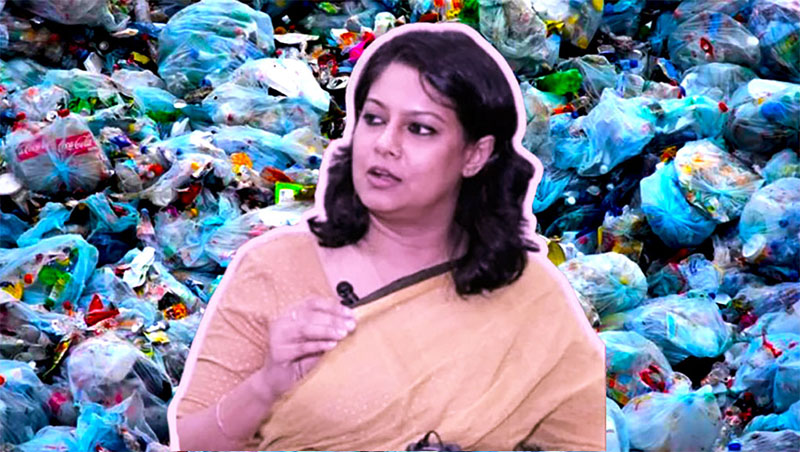
Despite a high-profile campaign by interim government advisor Syeda Rizwana Hasan to ban plastic bags, both their usage and production have increased over the past six months, according to consumers and vendors.
The ban, announced in October, aimed to curb the environmental damage caused by plastic bags. However, inspections and penalties have failed to halt their widespread availability in markets. Instead, reports suggest that these measures have led to clashes with law enforcement, with mobile courts and joint task forces facing resistance.
Vendors cited the affordability of plastic bags as a key reason for their continued use. Buyers are reluctant to pay for alternatives like paper or jute bags, which are costlier. Experts argue that banning usage without addressing production has rendered the restrictions ineffective.
Professor Ahmad Kamruzzaman Majumdar of Stamford University noted that a lack of accessible alternatives has contributed to the issue. “There is a methodological flaw in the enforcement of the ban,” he added.
The current situation reflects challenges similar to those faced during the initial plastic bag ban introduced by the Awami League government in 2002, which also failed to establish viable alternatives.
While some supermarkets offer eco-friendly options, their higher cost deters widespread adoption. Customers are charged between 8 and 20 taka for reusable bags, with some stores encouraging repeated use to offset expenses.
Critics have described the government’s measures as superficial, noting that the advisor’s campaign generated media coverage but little tangible impact.

https://stapravda.ru/20221228/reyting_samyh_populyarnyh_hostingov_v_rossii_196445.html, рейтинг хостингов России подтверждает, что выбор надежного провайдера важен для бизнеса.