
Staff Correspondent
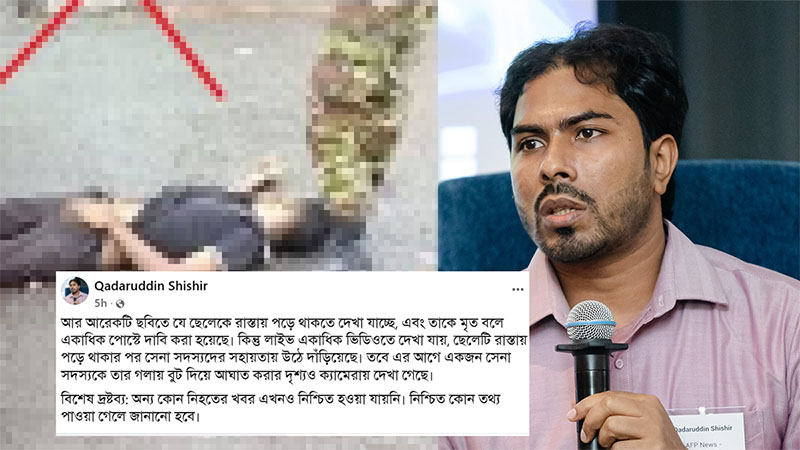
A controversy has erupted over a Facebook post by fact-checker and former Shibir leader Kadruddin Shishir regarding the incidents during the army deployment and protests against the NCP in Gopalganj. He claimed in the post that no deaths were confirmed yet in the clashes. However, hospital sources and local journalists confirmed the deaths of at least four people on the day of the incident.
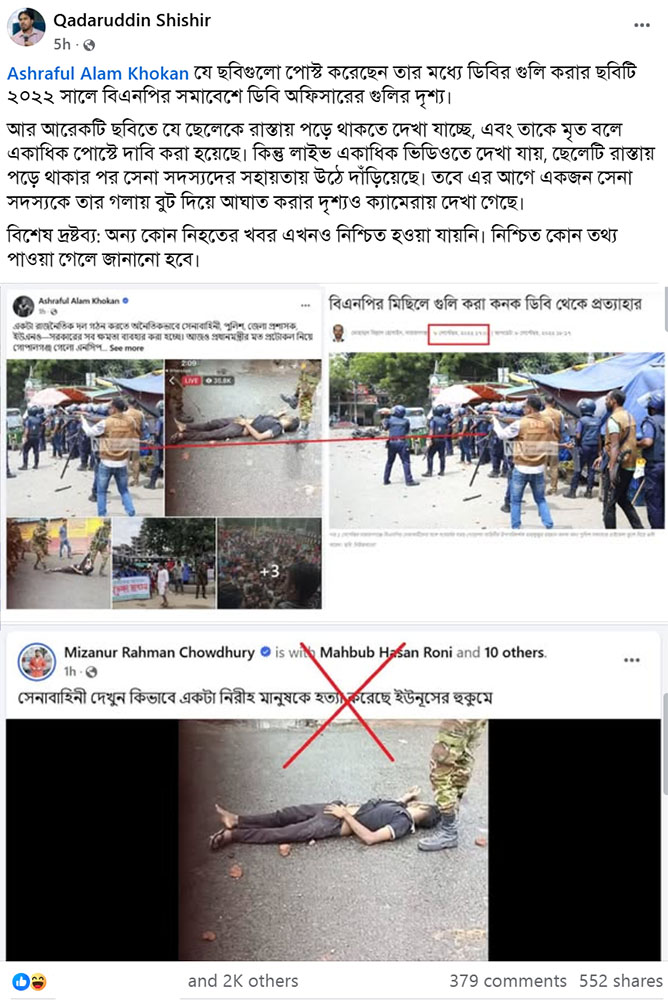
The former leader of the secret organization wrote, “The news of the death has not yet been confirmed. We will inform you if any confirmed information is available.”
In the same post, he also claimed that two photos were misleading. One of them was a scene of a DB officer firing pellets during a BNP rally in 2022, and another photo showed a fallen youth being helped to his feet by army personnel.
Later, as it became clear that the deceased were killed, Shishir, citing a report by Prothom Alo Online, said in her post that two people died in the clash.
However, it is known on the ground that at least four people have died. The deceased include Deepta Saha, son of Shuvo Saha of the Post Office area, Ramzan Kazi, Mohammad Sohel of Tungipara, and Emon Talukder of Verabazar.
In this context of information confusion, the question arises: how can someone engaged in sensitive work like Fact Check create confusion in the public mind by commenting “not sure” in the absence of confirmed information?
Security analyst Aminul Haque has raised questions about these. In an interview with online media outlet BD Digest, he said that Kadruddin Shishir fact-checks with a one-eyed perspective.
“If someone close to the Awami League makes a mistake or exaggerates, they immediately fact-check, but they remain silent about misleading information related to those close to the Yunus government or the NCP,” he said.
The security analyst also said that Shishir was a former activist of the underground organization Chhatra Shibir. From that ideological foundation, he is using ‘fact-checking’ as a tool in his anti-Awami League campaign.
There has been no official response from Shishir yet to this controversy. However, this is not the first time—questions have been raised in the past about the bias of his fact-checking on social media.
According to analysts, impartiality and reliability are the greatest assets for fact-checkers. Biased positions call into question the acceptability of information, which can be a threat to media transparency and democracy.

https://stapravda.ru/20221228/reyting_samyh_populyarnyh_hostingov_v_rossii_196445.html, рейтинг хостингов России подтверждает, что выбор надежного провайдера важен для бизнеса.