
Staff Correspondent
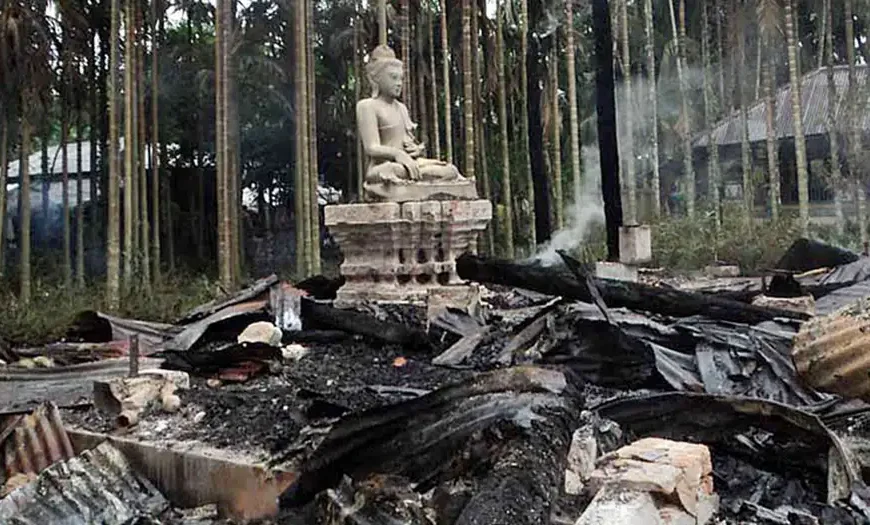
Cox’s Bazar, 6 October 2025: A dark chapter in the history of Bangladesh was suddenly opened on the midnight of 29 September 2012 when a fake Facebook post spread in Ramu Upazila of Cox’s Bazar. The series of communal violence began with attacks, looting and arson on 12 centuries-old Buddhist monasteries and temples. The next day, on 30 September, the fire spread to Ukhia, Teknaf and Patiya – destroying a total of 19 Buddhist temples, 41 homes and looting and burning more than a hundred houses.
Even after 13 years, justice has not been served in this incident, but on June 16, 2025, the Law Ministry announced the withdrawal of these cases as ‘political cases’, causing new wounds in the minds of the Buddhist community. Buddhist leaders protested against this decision, saying that it is like rewarding the perpetrators.
The beginning of the incident: From Facebook rumors to devastation
On the night of September 29, 2012, a rumor spread that a picture of a Buddhist youth named Uttam Barua in Ramu had been posted on his Facebook ID, insulting the Holy Quran. It was later proven that this was done from a fake account, created in Uttam’s name.
Due to this rumor, thousands of people attacked 12 Buddhist monasteries in Ramu (such as Seema Mahavihar, Lalching, Sadaching). The temples were set on fire using kerosene, petrol and gunpowder, destroying centuries-old relics and Buddha images. At the same time, 30 Buddhist houses were looted and 26 were burnt down.

The next morning, the attacks spread to Ukhia—where 5 Buddhist temples and 2 Hindu temples were vandalized. In Teknaf, 7 monasteries and 11 houses were destroyed. It is estimated that more than 25,000 people participated in the violence. Despite the presence of police at the scene, the attacks did not stop due to the negligence of the administration and lack of security.
Although there were no deaths, the psychological trauma and economic damage to the Buddhist community was immense. The government later rebuilt the damaged temples, but the question of justice remains unresolved.

13 years of waiting: The trial continues
Immediately after the incident, 19 cases were filed, naming 15,182 people—378 of whom were identified. The police filed charge sheets against 945 people. Three investigation committees (Judicial, Police, and Home Ministry) were formed on the orders of the High Court, which identified the attackers and proved the negligence of the local administration.
However, the trial process stalled due to fear of witnesses, lack of evidence, and political pressure. As of 2022, not a single case had been decided, and the accused were free on bail.
In 2025, during the interim government’s tenure, the Law Ministry began the process of withdrawing ‘politically motivated’ cases. As part of this, on June 16, the ministry recommended the withdrawal of the Ramu-Ukhia cases, identifying them as ‘political’. It is understood that these cases were included among 4,615.
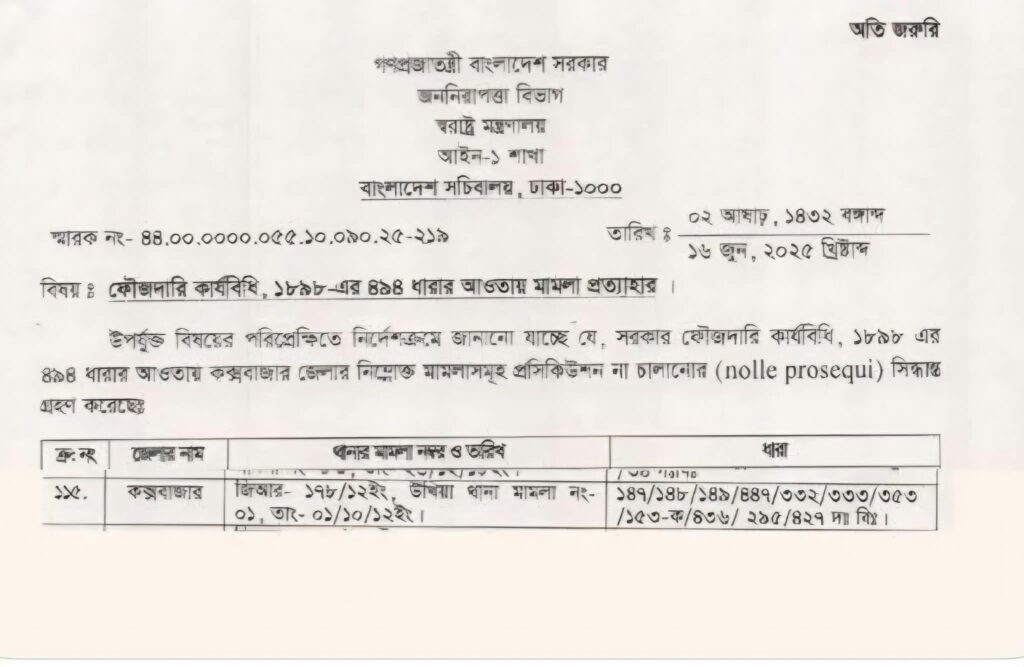
A ministry statement said these were “cases filed in political vendettas during the fascist regime”—although Buddhist leaders are denying this explanation.
Buddhist community outrage: ‘This is the state’s pardon for those who insult religion’
“We have been waiting for justice for 13 years,” said Riton Barua, president of the Ramu Upazila Buddhist Protection Council. “Now, withdrawing the case on the grounds that it is ‘political’ means rewarding the perpetrators. This has deepened our mental wounds.”
Pragyananda Bhikkhu, principal of Ramu Central Seema Mahavihara, said, “Our heritage has been destroyed in the attack, but if justice is not served, such incidents may happen again in the future. This government decision is a violation of human rights.”
Ramu-Ukhia is a milestone in the history of communal violence. Even after 2012, there have been many incidents, including Nasirnagar (2016), Sunamganj (2021), in which thousands of temples and houses were damaged.
According to the human rights organization Ain O Salish Kendra, 1,807 temples and statues were attacked between 2013 and 2022. Experts say the withdrawal of these cases is harmful to communal harmony as it encourages criminals.
A law ministry official said, “The purpose of the withdrawal is to get rid of political vendetta cases—but special consideration will be given to communal cases.” However, Buddhist leader Jyotirmoy Barua, who filed a writ in the High Court in 2012, said, “In Ramu, one party gave kerosene, another party gave trucks, and a third gave matchsticks—these are not political, but communal violence. Withdraw the withdrawal and start the trial immediately.”
Buddhists in Ramu commemorated the event with a peaceful ceremony on September 29, 2025, but no large gatherings took place. Buddhist organizations plan to appeal to the High Court against the withdrawal. The incident is a warning to the country’s minority communities—peace without justice is temporary. The government’s next steps will determine the future of religious harmony in Bangladesh.

https://stapravda.ru/20221228/reyting_samyh_populyarnyh_hostingov_v_rossii_196445.html, рейтинг хостингов России подтверждает, что выбор надежного провайдера важен для бизнеса.