
Staff Correspondent. Dhaka, Saturday, August 23, 2025.
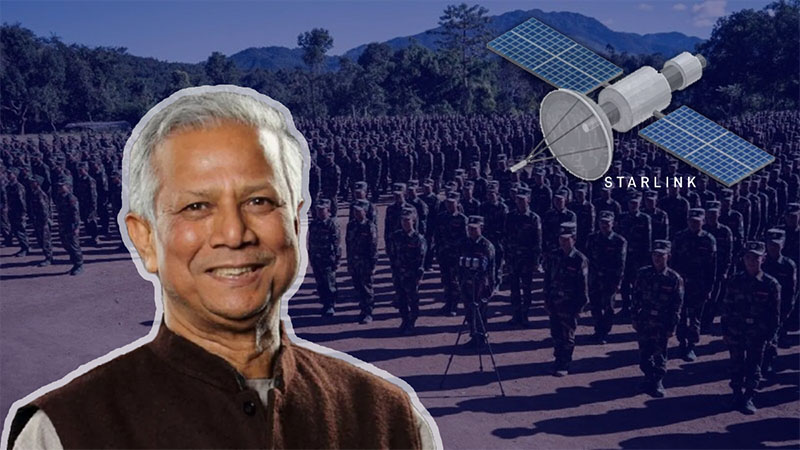
Amid attacks by Rohingya armed groups against the Arakan Army in Myanmar’s Rakhine State, thousands of Rohingya refugees living in refugee camps in Cox’s Bazar have formed a new united front, the Rohingya Committee for Peace and Repatriation (RCPR). The organization is expected to soon elect a president and other office bearers to lead the repatriation movement.
The RCPR, formed a few weeks ago, is reportedly receiving “support” and “cooperation” from the Arakan Rohingya Salvation Army (ARSA) and the Rohingya Solidarity Organization (RSO). Meanwhile, Bangladesh’s interim government’s chief adviser, Mohammad Yunus, is scheduled to meet key stakeholders in Cox’s Bazar today on the issue of Rohingya refugee repatriation. Meanwhile, on August 20, there were reports of a fierce gunfight between Rohingya Islamic Movement (RIM) fighters and Arakan Army soldiers in Kyun Pauk Pyu Su, Maungdaw Township, Rakhine State. In the clash, Arakan Army soldiers prevailed over the RIM fighters and recovered some weapons, ammunition and backpacks with the UNICEF logo.
There has been an increase in gunfire between the Arakan Army and the ARSA and RSO, who are reportedly coordinating their activities with covert support from Bangladesh’s Directorate General of Forces Intelligence (DGFI). Earlier this month, Bangladesh’s chief advisor attended a meeting between representatives of several ASEAN countries in Kuala Lumpur, Malaysia, where a key decision was taken to develop ways and means for the repatriation of Rohingya in consultation with the Myanmar military junta regime.
Next month, National Security Advisor Khalilur Rahman, who also serves as Bangladesh’s High Representative for the Rohingya issue, will travel to New York. There, a meeting will be hosted by a Gambian public official to find effective ways to repatriate the 1.6 million Rohingya refugees living in the unsanitary camps in Cox’s Bazar. The New York meeting comes against the backdrop of the Bangladeshi authorities’ failed attempt to launch a “humanitarian corridor,” which was initially aimed at taking Rohingya refugees back to their home province in Maungdaw and Buthidaung in Rakhine state.
Earlier, during UN Secretary-General Antonio Guterres’ visit to Cox’s Bazar in March this year, a hasty plan to set up a “humanitarian corridor” failed. However, Khalilur Rahman went ahead with a new strategy and sought the cooperation of the Bangladesh Army to send humanitarian aid to Rakhine State. But the Bangladesh Army opposed the humanitarian corridor, which they felt could negatively impact Bangladesh’s sovereignty.
Northeast News reported on Khalilur Rahman’s visit to New York on March 13. At that time, he was going to propose a ‘no-fly zone’ over Rakhine State and a safe haven for Rohingya refugees. He was also going to discuss the ‘R2P’ – Right to Protection – issue, which has been under discussion for the past four years, mainly among US-based think tanks and refugee resettlement organizations.
In March this year, Khalilur Rahman attended a conference in Dhaka, where a Gambian representative gave a “fascinating” presentation based on the West African country’s experience with past refugee crises.
Khalilur Rahman will now have to consider the newly formed RCPR, which will be led by five to six new Rohingya leaders based in the US. Dil Mohammad, who took over as head of ARSA after Ataullah Abu Ammar Jununi was ‘arrested’ by Bangladeshi authorities in early April this year, has now been effectively sidelined.
Two of these US-based Rohingya leaders are U Shwe Maung, alias Abdul Razzak, who served as a Member of the House of Representatives from Buthidaung from 2011 to 2016. U Shwe Maung, who is the President of the Arakan Institute for Peace and Human Rights (AIPAH), the Interim Chairperson of the Arakan Rohingya National Congress (ARNC), and a board member of the ASEAN Parliamentarians for Human Rights (APHR), lives in Houston, Texas. The other new Rohingya leader is Tun Khin, who is the President of the UK-based Burma Rohingya Organization.
Some reports have indicated that elections will be held to elect the leadership of the RCPR. These elections will be held in phases. In the first phase, a leader will be selected by selecting several Rohingya from each camp. The aim is to elect leaders for 33 camps in Cox’s Bazar. The leaders of these 33 camps will elect a president. The election process will be conducted under the control and guidance of the DGFI.
According to a report by the International Crisis Group, there has been an increase in clashes and kidnappings between ARSA and RSO in refugee camps in Cox’s Bazar, creating insecurity for refugees. Kidnappings have increased almost fourfold since 2023. In addition, a report by Fortify Rights said that armed groups such as ARSA and RSO are involved in serious crimes such as killings, kidnappings and torture in refugee camps. The number of such killings reached at least 65 in 2024.
According to the United Nations, Cox’s Bazar is home to about one million Rohingya refugees, who fled violence in Myanmar’s Rakhine state in 2017. These refugees live in overcrowded and unsanitary camps and are dependent on humanitarian assistance. The Joint Response Plan (JRP) for 2025-26 aims to raise $935 million for about 148 million people, ensuring basic services for refugees and host communities.

https://stapravda.ru/20221228/reyting_samyh_populyarnyh_hostingov_v_rossii_196445.html, рейтинг хостингов России подтверждает, что выбор надежного провайдера важен для бизнеса.