
❐ BD Digest Desk

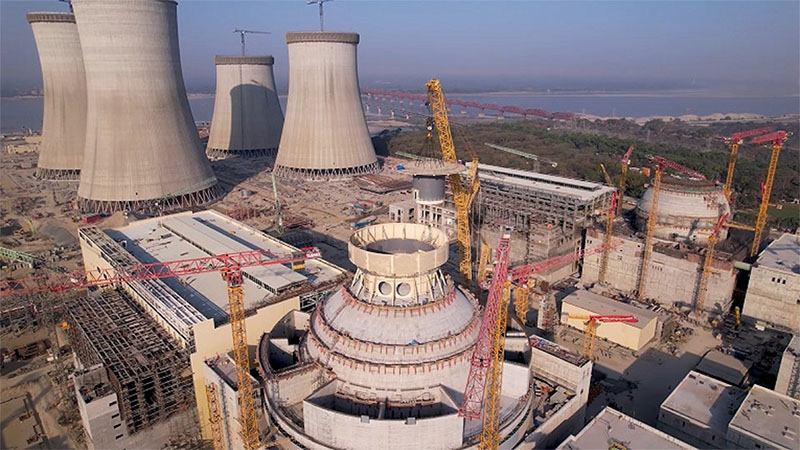
Just as Bangladesh’s most ambitious project, the Rooppur Nuclear Power Plant (NPP), is about to start its production operations in Ishwardi, Pabna, news of the death of a Russian engineer came from there. A talented engineer named Churkin Vladimir (40) passed away today in the government.
Nearly 7,000 Russian engineers and workers are working on the project, which began in 2017 under the supervision of the Russian state-owned company Rosatom. But a dark shadow is gradually looming over this dream journey of lighting the electric light.
At least 25 foreign engineers have died on the project in the last eight years. Five deaths were recorded in 2025 alone. And two more names were added in the first five months of 2026.
After each death, the police said it was “preliminarily a natural death.” Autopsies were done, reports came in — but questions remained.
Many concerned are reluctant to accept these incidents as mere coincidences, and instead serious allegations of murder have already been raised.

When the death list is long
An incident in 2022 caught everyone’s attention for the first time. In just one week, five Russian engineers died. Some fell down stairs, some in their sleep.
The police started an investigation, an autopsy was performed — but the file was closed with the statement “nothing suspicious was found.” Being a foreign citizen, it was not possible for the law enforcement agencies of Bangladesh to go much further, due to diplomatic conditions and rules.
Two deaths occurred within a span of just 6 days in January 2025. On January 4, Pashataruk Xenella (40) jumped from a high-rise building in Green City.
The police cited “a quarrel with her husband” as the reason, but the question remains — in a safe residential area, among familiar colleagues, what mental stress became so unbearable that death seemed the only way out for her?
Ivan Kitmazov (40) went missing on January 10. Five days later, he was found dead in a ninth-floor bathroom. The investigating police officer said, “Suicide is suspected, cause unknown.” The phrase “cause unknown” has been repeated in the investigation of each of these deaths.
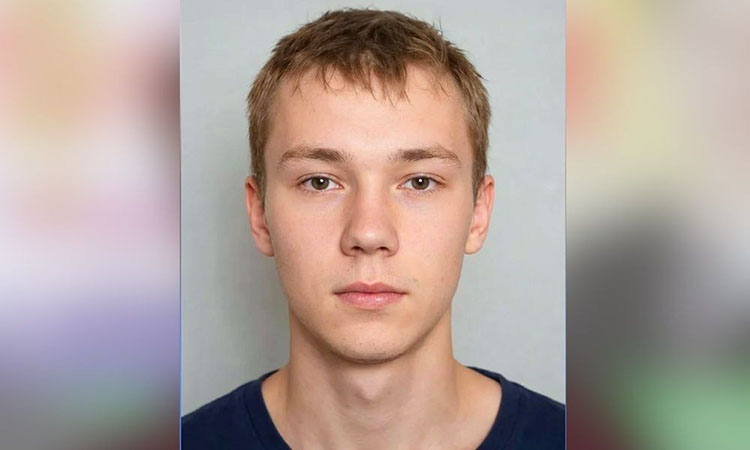
Engineer Rybakov Maxim
In September, Karpov Kril (26), a young electrician, was found dead face down in his rented house in Jigatola, Dhaka. His family was not answering their phones. Security guards broke down the door and entered. Initial suspicion was a brain stroke. He was only 26 years old. Colleagues say he had been suffering from depression for a long time.
October added a different dimension. Anwar Ahmed (52) — a Bangladeshi national, interpreter for the Russian company Nikimart — died. The man who had been building bridges between the Russian and Bangladeshi sides was also found dead in a rented house. His death proves that this trend of deaths is not limited to foreign workers.
In early 2026, Rybakov Maksim (30) was found unconscious on the floor of the Green City building of the Rooppur NPP. His roommate saw this scene after returning from a vacation in Cox’s Bazar.
And just a few hours ago — today, May 2, 2026 — Churkin Vladimir (40) collapsed while exercising. He died on the way to the hospital.
Is the pattern a coincidence?
When reviewing these deaths, some similarities emerge.
In almost every death, the deceased was alone — at home, in the bathroom, or while colleagues were away. In each case, the cause of death was given as a heart attack, stroke, or suicide — causes that are difficult to prove or disprove from the outside. The age range is relatively young — 26 to 52 years old. And the autopsy reports following each death are often not made public.
The biggest thing is that all of the deceased were nuclear scientists and highly skilled engineers.
Is it possible to dismiss these repeated incidents as just “bad luck”? At least 25 deaths in 8 years on a project — is this statistically normal?
Experts say that some deaths in the long term among 7,000 workers may be normal, but repeated deaths occurring at the same time, like a cluster, demand surveillance.
Explanation: Three possibilities
The first possibility: mental and physical stress. Life for foreign workers in Bangladesh is extremely difficult. The language barrier, distance from family, different culture and climate — all of these factors combine to create long-term mental stress. The workload at the nuclear project is also incredibly high. “The workload here is a lot. No one talks about mental health,” said one worker, who asked not to be named. This explanation may be the most likely, but if it is true — then why have the authorities been indifferent for so long?
Second possibility: Management negligence. Every worker at a nuclear power plant is supposed to be regularly monitored for their health and mental state. As is known in the case of Karpov Kryl — he had been suffering from depression for a long time and had also received treatment in Dhaka. Despite that, he was still allowed to live alone in a rented house. Ivan Kitmazov was missing for five days — no one looked for him. This is a serious failure of management.
Third possibility: sabotage or external interference. Several quarters believe that foreign forces interested in disrupting the Rooppur project may be behind these deaths. Russia’s geopolitical rivals, especially the West, see Rosatom’s success in Bangladesh against their strategic interests. There is a history of sabotage in nuclear projects in various countries. However, this possibility is still completely unproven and no evidence of external interference has been found in the autopsy. In particular, during the Yunus government, a mysterious fire at the cargo village of Shahjalal International Airport in Dhaka destroyed important equipment for the NPP, which had come from Russia at a huge cost. Various international monitoring organizations have claimed a conspiracy by Ukraine behind this.
What you need to know, but aren’t being told
The most worrying aspect of this entire investigation is the lack of transparency. Rosatom authorities have yet to make any official statement. The autopsy report has not been made public. No detailed cause-based statistics on the 25 deaths over eight years have been officially published.
How much secrecy is acceptable in a nuclear project? The public has a right to know about the deaths of people working on a project that is directly linked to the national interests of Bangladesh.
Experts are demanding that each death be investigated independently, from outside both Rosatom and the Bangladesh government. Measures need to be taken now to provide mental health care for workers, regular health monitoring, and special surveillance for workers living alone.
Latest incident
Today, May 2, Vladimir Churkin collapsed while exercising. Maybe it really was a heart attack. Maybe it really was a coincidence. But when the same kind of death happens over and over again in the same project, the same vague answers are given, the same kind of investigation fails to reach the same kind of conclusion — then the question can no longer be ignored.
Rooppur is a symbol of Bangladesh’s future. But those who are losing their lives in the process of building that future have the right to know the truth about their deaths, their families, the people of this country, and history.

https://stapravda.ru/20221228/reyting_samyh_populyarnyh_hostingov_v_rossii_196445.html, рейтинг хостингов России подтверждает, что выбор надежного провайдера важен для бизнеса.