
❐ BD Digest Desk
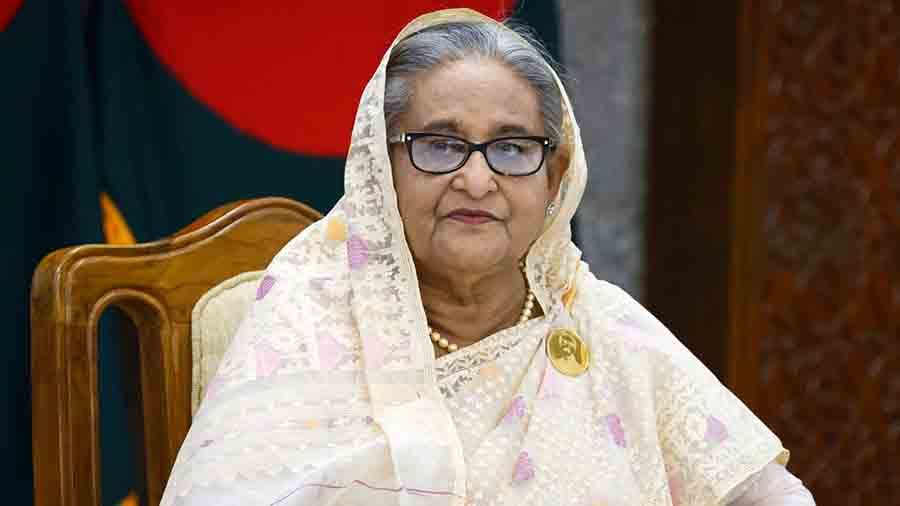
In an exclusive interview with ‘The Print’, Sheikh Hasina warned Yunus, the former interim government’s chief advisor, against thinking of him as a ‘puppet’. She also said she plans to return to Bangladesh in December and challenged Tarique Rahman to hold fresh elections.
Former Bangladeshi Prime Minister Sheikh Hasina in an interview described Yunus as a “beneficiary and active participant” of a political conspiracy aimed at destroying Bangladesh, while also alleging that militants, religious extremists and other evil forces had exploited the situation to oust him.
In an interview with ‘The Print’, Sheikh Hasina described the current situation in Bangladesh as a “national crisis” and demanded a full and impartial investigation into the anti-quota movement, which forced her to leave power in August 2024.
Sheikh Hasina, 78, who is based in New Delhi from Dhaka, said she intends to return to Bangladesh in December and face legal challenges to the cases pending against her, including a death sentence handed down in absentia by Bangladesh’s International Crimes Tribunal.
Stating that he did not think he would reach India, he challenged the current Tarique Rahman-led BNP government to lift the ban on his party, Awami League, and hold general elections later.
Sheikh Hasina told The Print, “I have said that I intend to return to Bangladesh around December. The specific date, time and route will be announced in due course. Bangladesh is currently going through a terrible national crisis. The democratic environment has been shut down. The judiciary is being used as a tool for political revenge. Media freedom has been curtailed. The law and order situation has weakened. Minorities are suffering from insecurity.”
He added, “This is no longer just an Awami League issue. This is a national crisis. One of the largest political forces in the country has been banned. Millions of their supporters have been deprived of normal political rights. A country can never return to stability by excluding such a large part of its own country.”
The former prime minister hinted that he “cannot sit on the sidelines” when the people of Bangladesh are “going through such a painful and dangerous time”.
Sheikh Hasina left Dhaka for New Delhi in August 2024. She was forced to leave the country to avoid bloodshed, mainly due to a political protest and violence. Initially, the movement began against the quota reserved for the families of freedom fighters, but later it turned into a one-off demand for her resignation.
Sheikh Hasina told The Print, “A death sentence handed down in absentia for political reasons cannot be called a trial. I was not given a real opportunity to defend myself through a normal, impartial and acceptable trial process.”
He added, “The illegitimate interim government has changed the legal framework, restructured the tribunal, appointed politically biased prosecutors and judges, and conducted a farce trial in which basic legal protections were ignored. So yes, I will fight this verdict legally. I will fight the case through the law, but the law is about justice, not political revenge.”
‘I had no plans to come to India’
Sheikh Hasina said, “I had no plans to come to India.” According to her, the events of August 5, 2024, and the desire to “avoid further bloodshed” forced her to reach New Delhi.
“The situation was changing very quickly and my main concern was not to spill more blood in a dangerous situation. I am not preparing to return because the situation has eased. I am preparing to return because Bangladesh cannot be left in the face of fear, retaliation and instability. The main question is, can Bangladesh restore its democracy, secular character, law and order, economy and future?” Sheikh Hasina said.
He added, “The security situation has not improved. In many ways, it has worsened. Law and order has weakened, extremist groups have gained new courage, minorities feel insecure, and torture against Awami League leaders and activists continues.”
The former prime minister’s stay in India and his series of speeches from there have created discontent in Dhaka. While relations between India and Bangladesh had begun to normalize somewhat over the past six months, they suffered a major setback after his press conference in New Delhi on August 5.
Tarique Rahman was expected to visit India in August or September. But now it seems that the visit has been postponed indefinitely, as Dhaka has made it clear that Sheikh Hasina’s return is a prerequisite for any future visit.
Sheikh Hasina warns against calling Yunus a ‘puppet’
Sheikh Hasina has advised people to refrain from calling Yunus a “puppet.” She described the label as a “simple” comment and highlighted the dangerous reality behind it. She said Yunus was actually “both a beneficiary of a political project that harmed Bangladesh and an active participant in the destruction of the country.”
Sheikh Hasina said, “During Yunus’s rule, Bangladesh was pushed towards the control of extremists and terrorists. Extremist groups rose again. Anti-liberation forces were emboldened. The secular foundation of the state was attacked. Minorities, cultural activists, journalists and the common people who wanted to fight the liberation war became insecure.”
He further said, “Who benefited from Yunus’ rule? Those who wanted to erase the Awami League from politics. Those who wanted to weaken the spirit of the liberation war. Those who wanted to give a chance to extremist forces again. And those who wanted to see Bangladesh in a state of instability, dependency and easy influence.”
Asked whether any foreign organization was behind the movement that led to her ouster, Sheikh Hasina insisted, “A credible and impartial investigation is needed to provide a full answer.”
“But the pattern behind it is quite clear. What started as a movement for quota reform turned into a one-off demand to overthrow an elected government. Well-organized violence was unleashed. Police stations, government infrastructure, media, government offices and symbols of national development were targeted. Weapons were looted, prisons were stormed and extremists were allowed to escape. Misinformation was spread with some strange speed and discipline,” he said.
He added, “Yunus himself described the movement as ‘very well planned’ and spoke of a ‘mastermind’. This was no ordinary spontaneous movement. Several groups benefited from that campaign: opposition political parties, extremist groups, militant networks, those who wanted to wipe out the Awami League, and those global powers who wanted to see a weak, divided and unstable Bangladesh.”
The former prime minister firmly stated that a stable Dhaka is very important for geopolitics due to Bangladesh’s geographical location between India and Myanmar.
“This is why there should be a full investigation into the truth. The people of this country have the right to know who planned, financed, encouraged and condoned this violence,” he said.
The interim government took power on August 8, 2024. Yunus governed the country until February 2026, after which Tarique Rahman and his party came to power through general elections.
Sheikh Hasina’s challenge to BNP
Sheikh Hasina has completely rejected the results of the February election, calling them neither free, fair, inclusive nor acceptable. She cited the ban on the Awami League from participating in the election, saying it had “deprived voters of a real choice.”
“I do not accept the February elections as free, fair, inclusive or acceptable democratic elections. An election held while banning one of the country’s major political parties can never reflect the opinion of the common people… If the BNP thinks they have the public verdict, then lift the ban, release the political prisoners, drop the false cases and hold an inclusive election. Let the people of the country decide freely. That will be the only outcome that can carry democratic legitimacy.”
When the Yunus government banned all political and cyber activities of the Awami League under the Anti-Terrorism Act in May 2025, Sheikh Hasina called that day “a black day for democracy.”
‘Stable relations are no favour to India’
Sheikh Hasina remains optimistic about the future of India-Bangladesh relations. She said the relationship “is not based on any one government or temporary tensions. It is deeply rooted in history, geography, the Liberation War, security, trade, rivers, culture and the daily lives of people on both sides of the border.”
“Maintaining stable relations with India is not a favor to India. It is necessary for Bangladesh’s own national interests. India is our biggest neighbor. Our rivers, borders, markets, energy cooperation and security issues are deeply intertwined. The responsible leadership in Dhaka must handle this relationship with maturity and confidence, not with any cheap slogans or hostility,” Sheikh Hasina said.
He added, “I will follow the same path in the case of infiltration or migration: joint verification, regular communication between the authorities of the two countries, strict measures against human trafficking gangs and fake documents, and effective cooperation between border guards.”
The former prime minister called for resolving illegal immigration issues “quietly, legally and responsibly.”
India has long raised the issue of illegal immigration, while Bangladesh has highlighted the complexities of citizenship verification. Consular talks between the two countries have been suspended for a long time, including the entire period of Sheikh Hasina’s rule.

https://stapravda.ru/20221228/reyting_samyh_populyarnyh_hostingov_v_rossii_196445.html, рейтинг хостингов России подтверждает, что выбор надежного провайдера важен для бизнеса.