
Special Correspondent
The country’s economic situation has become increasingly complex since the political upheaval that took place in July last year. The impact of the new power structure that ushered in with the overthrow of an elected government is now clearly reflected in everything from the macro economy to the daily lives of ordinary people.
According to critics, the change was driven by a conflict of domestic and foreign interests, the long-term price of which the people are now having to pay.
The biggest controversy surrounding the current government’s economic management has been over inflation and the cost of living. Economists and the general public are questioning how consistent the official figures for reducing inflation are with reality. The prices of daily necessities, transportation costs, and rent have increased faster than the income of the general public. This is gradually putting low- and middle-income people in crisis.
The pressure on the labor market is also evident. Wage growth has not kept pace with the cost of living.
According to economic analysts, this gap between income and expenditure poses a risk of increasing poverty in the long term, with industrial workers and those in the informal sector being hit the hardest.
The state of the youth is also worrying. Recent surveys and studies show that a significant number of young people are currently not engaged in education, employment or any kind of training. The expansion of this ‘NEET’ population is emerging as a major challenge for future human resources and social stability.
The investment climate is also not promising. Declining credit flows to the private sector, policy uncertainty, and a crisis of confidence in the future are keeping investors away from new projects.
Business organizations and economic analysts say the lack of clear direction and dialogue from the government is deepening this uncertainty.
The banking sector has further complicated the situation. Depositor confidence is being shaken by an abnormal increase in the amount of non-performing loans.
According to experts, the lack of effective action against defaulters and the weakness of financial governance are posing major risks to the overall economy.
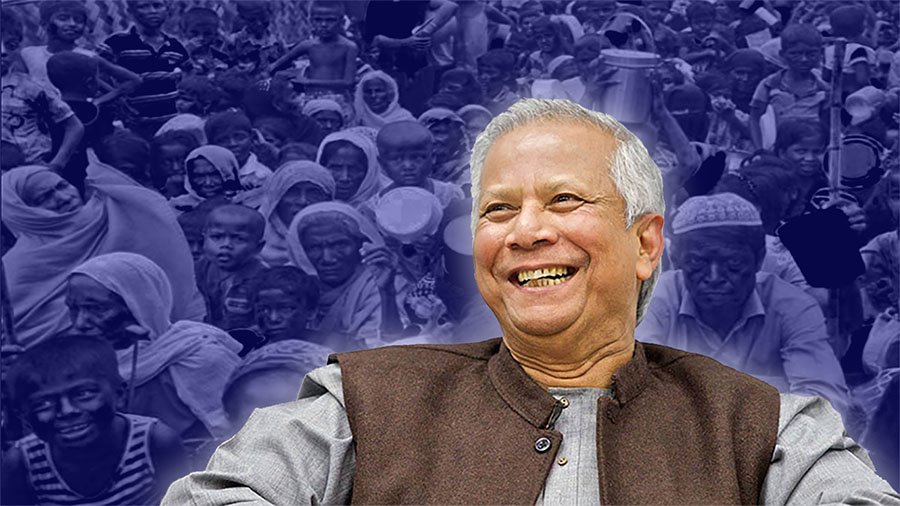
In this context, there is also a debate about the past role and philosophy of the government’s chief advisor. New questions have been raised about the application and impact of the model of poverty alleviation through microfinance, which once received international recognition.
Critics claim that the limitations of that model are now being reflected in the broader economy.
Overall, analysts believe that the current crisis is not just economic, but also deeply political and institutional. Without investment, employment, banking discipline, and rebuilding social trust, it will be difficult to overcome this situation. At the same time, the question of political stability and democratic processes is also closely linked to economic recovery.
Ultimately, it is the common people who are paying the biggest price for this crisis. Uncertainty about the future, devaluation of savings, and a decline in the quality of life are pushing them into silent distress.
The answer to the question of whether the economy will turn around now largely depends on political trust, policy transparency, and inclusive decision-making.

https://stapravda.ru/20221228/reyting_samyh_populyarnyh_hostingov_v_rossii_196445.html, рейтинг хостингов России подтверждает, что выбор надежного провайдера важен для бизнеса.