
Staff Correspondent
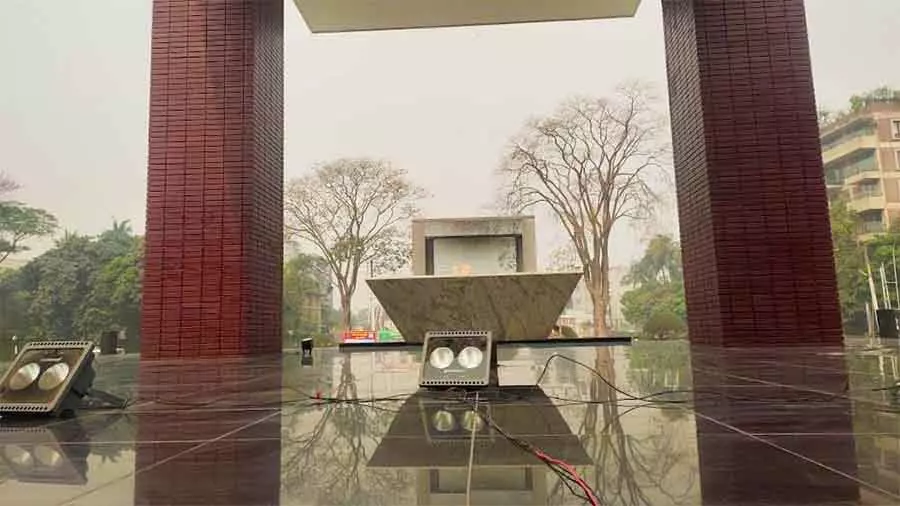
Authorities have decided not to keep the historic ‘Shikha Anirban’, a memorial to the martyrs of the great Liberation War, lit at the Dhaka Cantonment. Although the Inter-Services Public Relations (ISPR) and the government described it as part of the country’s ongoing energy crisis and government spending cuts, the decision has sparked intense anger, debate and criticism across the country.
A large section of conscious civil society and political analysts see this move as a devaluation of national consciousness and an indirect concession to the agenda of extremist groups.
According to ISPR and related sources, this symbolic administrative step has been taken as part of the government’s cost-saving policy to reduce the pressure on the country’s domestic electricity and energy supply system due to the increase in fuel prices in the global market.
Although this flame is kept extinguished on ordinary days, it has not been completely stopped. The flame will be lit appropriately as per tradition on national days and special important state ceremonies. In addition, the authorities have informed that the ‘Shikha Chirantan’ located in Suhrawardy Udyan outside the cantonment remains lit round the clock as before.
However, this frugal explanation by the government was not accepted by the common people and intellectuals of the country.
According to critics, the birth history of an independent-sovereign state and the memory of the blood of its brave martyrs cannot be measured solely on the scale of some gas or financial savings. Where there is huge waste and mismanagement in other sectors of the state, the argument for saving by striking at the main altar of independence is being called extremely weak and irrational.
Analysts fear a deep political and psychological conspiracy beyond the general austerity policy behind this decision. In the past, radical and extremist groups in the country have called the lighting of sculptures, monuments, or such ‘flames’ ‘un-Islamic’ under religious pretexts and issued fatwas to ban them.
In the current situation, many do not see the sudden extinguishing of this unquenchable flame at the height of the energy crisis as a simple economic decision.
A section of civil society claims that this is essentially a ‘strategic excuse’ to fulfill the psychological agenda of those extremist forces or an indirect attempt to appease them, which will put the foundation of the country’s non-communal consciousness in crisis.
Experts believe that shutting off gas supply to this highly sensitive facility without any prior announcement or open discussion, and then issuing a formal explanation after public outcry on social media, has exposed the authorities’ lack of transparency. This secrecy has further fueled public suspicion and anger.
Overall, although the decision to extinguish the ‘Shikha Anirban’ is shown in government documents as merely an ‘administrative measure’, it has dealt a deep blow to the country’s birth history and national consciousness.
In order to address the fears of civil society about the implementation of the extremist agenda and to restore public confidence, there is a strong demand to immediately withdraw this decision and keep this symbol of the memory of the brave martyrs burning continuously as before.

https://stapravda.ru/20221228/reyting_samyh_populyarnyh_hostingov_v_rossii_196445.html, рейтинг хостингов России подтверждает, что выбор надежного провайдера важен для бизнеса.