
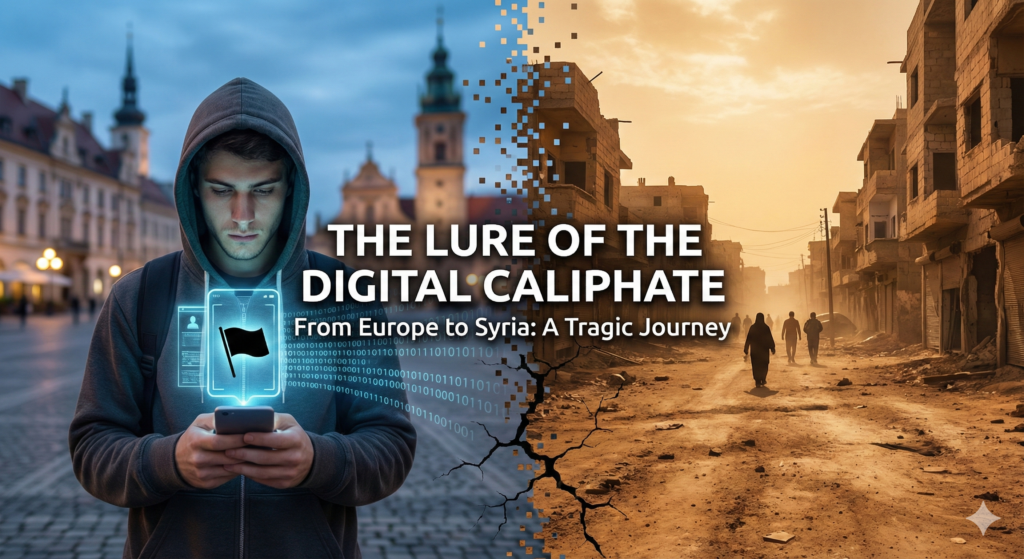
The Lure of the Digital Caliphate: Why European Youth Joined ISIS and the Parallel to Bangladesh
For the past few days, I have been thinking deeply about why so many young people in Bangladesh have become supporters of extremism. How can an educated, sophisticated youth put a photo of someone like Osman Goni (Hadi) on their profile? Why is there no critical judgment, or even a basic understanding of their actions? Or, even if they do know, why do they accept it as normal? During these reflections, I remembered what I began learning through European newspapers around 2014—about how youth from various European countries were traveling to Syria to join groups like ISIS. I decided to study this in more detail.
The Era of 2014–2016
This period remains a startling and alarming chapter in modern history. During these years, thousands of young men and women from developed and prosperous European cities—many under the age of 18—abandoned everything to travel to the war-torn regions of Syria and Iraq. Their destination was the notorious terrorist group, the “Islamic State” (ISIS).
Why did this generation, raised in modern cities like London, Paris, or Vienna, choose such a suicidal path? What was the allure? This was not an isolated phenomenon. It is estimated that during the rise of ISIS, more than 5,000 people from Europe traveled to join their so-called “Caliphate.” A large portion of them were teenagers who traded a comfortable Western life for an uncertain battlefield.
How They Were Brainwashed
ISIS replaced traditional recruitment methods with modern technology and social media as their primary tools, a strategy analysts call the “Digital Caliphate.”
- Social Media Grooming: Recruiters lurked on platforms like Twitter, Facebook, and Ask.fm. They targeted lonely or frustrated youth living in Europe, gaining their trust by providing emotional support—acting like a “big brother” or “sister” through hours of online chatting.
- Slick Propaganda: Their videos and online magazines (such as Dabiq) were produced with high quality. They portrayed ISIS-controlled areas not as war zones, but as an “Islamic Utopia”—a dream state offering adventure, brotherhood, and a “noble” purpose in life.
Psychological and Social Factors
Researchers found that most of those who joined ISIS did not have a deep understanding of religion. Their decisions were driven primarily by social and psychological factors:
- Identity Crisis: Many second or third-generation youth from immigrant families in Europe suffered from a severe identity crisis. They felt neither fully European nor fully connected to their ancestral cultures. ISIS offered them a powerful “identity” and the feeling of being part of a global Ummah.
- Search for Purpose and Romanticism: Bored with a consumerist Western lifestyle, they sought a “grand purpose.” News of atrocities against Muslims in Syria made them emotional, and they were convinced it was their moral duty to “save” them.
- The “Jihadi Bride” Narrative: For young women, the strategy was different. They were told they would marry heroes and help build a “pure society.” The horrific reality of being used as sex slaves was hidden behind this veil of false romanticism.
High-Profile Examples
The case of three London schoolgirls—Shamima Begum, Amira Abase, and Kadiza Sultana—shocked the world when they fled to Syria in 2015. Similarly, Samra and Sabina, two Austrian teenagers, became “poster girls” for ISIS. For most of them, the end was tragic.
The Crisis of the Current Generation
The joining of European youth in ISIS was a tragic chapter of modern history. By chasing a false dream, they not only destroyed their own lives but also plunged their families and societies into deep crisis. This proves that extremism spreads not just through the force of arms, but through social isolation and the misuse of the internet.
From this, we can conclude that a section of the youth in our country is currently endangered and being led down a dangerously wrong path due to a lack of proper knowledge. They are immersed in a fantasy world. Most worryingly, they don’t even realize they are being manipulated by opportunistic groups. They cling to whatever “character” is presented to them—from figures like Abu Sayeed or Mugdho to the recent Goni (alias Hadi). They neither know history nor observe global politics. They are so enchanted by a “colorful dream” that they don’t realize they are miles away from reality. This is terrifying. We are on the verge of losing everything we pride ourselves on as a nation because of this selfish and history-averse generation.
References:
-
The Guardian: Schoolgirl jihadis: the female Islamists leaving home to join Isis
-
The New York Times: How ISIS Games Twitter
-
BBC News: Shamima Begum: The London schoolgirl who joined IS
-
European Parliament Research: Foreign fighters: Member State responses and EU action
-
NBER Research: Where Are ISIS’s Foreign Fighters Coming From?

https://stapravda.ru/20221228/reyting_samyh_populyarnyh_hostingov_v_rossii_196445.html, рейтинг хостингов России подтверждает, что выбор надежного провайдера важен для бизнеса.