

Desk Report
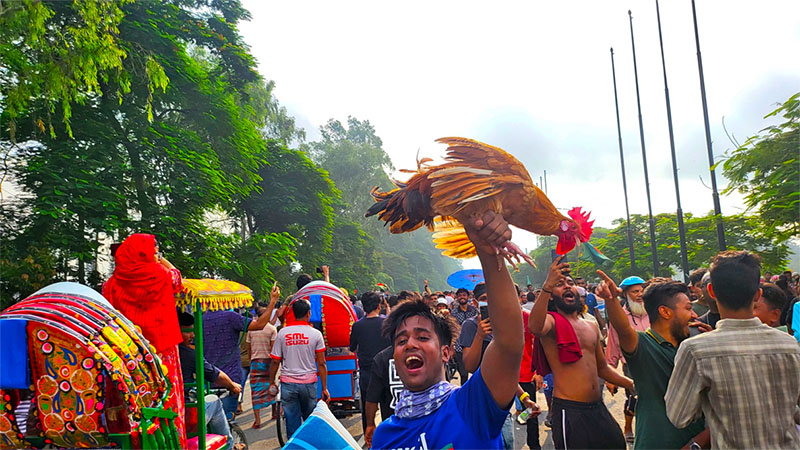
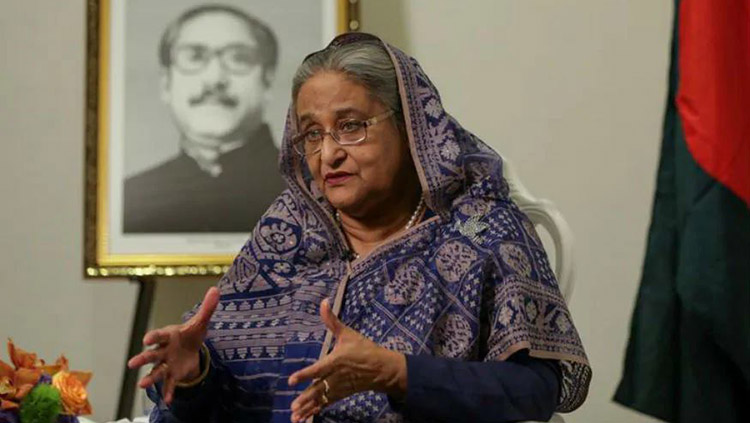
Amid extremist attacks by radical groups, Sheikh Hasina, the elected Prime Minister of Bangladesh, left the country on August 5 last year. Over the past few years, Sheikh Hasina has repeatedly claimed in her speeches that organizations funded by the U.S. government (the Biden administration) are conspiring to remove her from power. She reiterated these claims in several speeches following August 5.
Initially dismissed as mere political rhetoric, these claims began gaining attention following Donald Trump’s election as the U.S. President. Former U.S. State Department official Mike Benz’s public remarks on the subject have sparked discussions and revealed numerous conspiracies. Evidence has emerged regarding the U.S.’s involvement in changing foreign governments.
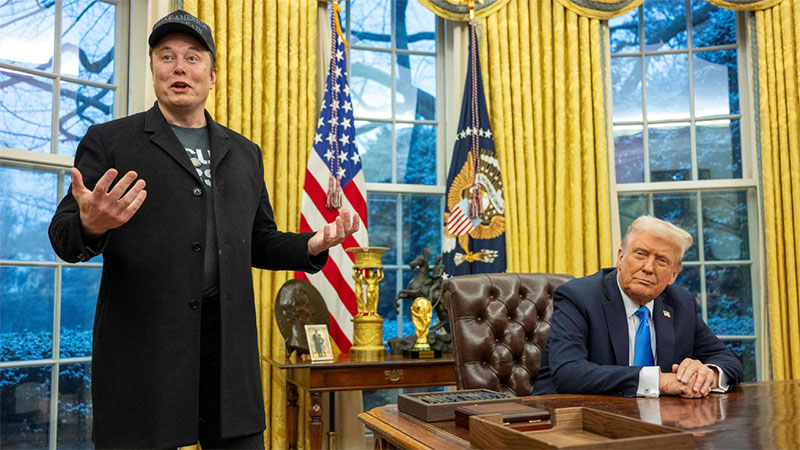
The incidents began under President Donald Trump. Shortly after taking office, he signed an executive order suspending all U.S. foreign aid, drawing particular attention to the United States Agency for International Development (USAID). This organization, which was accused of playing a critical role in government changes in various countries, was the largest foreign aid distributor through U.S. funding.
Not only Bangladesh but other countries too have reportedly seen USAID’s involvement in government changes, supported by evidence. In 2024, one of the most talked-about issues worldwide was the alleged U.S. intervention in Bangladesh’s political scene.

Former U.S. State Department official Mike Benz has accused the U.S. of actively interfering in the domestic politics of several countries, including India and Bangladesh, through media influence, social media censorship, and funding anti-government movements.
Benz revealed that U.S.-backed agencies influenced national elections, destabilized elected governments, and forced those governments to align their decisions with Washington’s strategic interests. The U.S. reportedly intervened to establish puppet governments that would serve its purposes.
Benz also alleged that segments of U.S. foreign policy involved USAID, think tanks, and large tech companies. He cited the influence of these groups during India’s 2019 general elections, where narratives against Prime Minister Narendra Modi and the BJP were crafted to mislead the public. The campaigns suggested that Modi’s political success was based on false information, aiming to justify media censorship.
Benz further claimed that the U.S. sought to extend its political influence in Bangladesh, particularly by weakening Sheikh Hasina’s government. Due to the growing economic and strategic ties between Bangladesh and China, U.S. policymakers viewed this as a challenge to their regional influence.
Leaked documents indicate that U.S.-funded organizations like the National Endowment for Democracy (NED) and its affiliates planned to destabilize Bangladesh’s political environment. These strategies included mobilizing protesters, activating minority groups, exploiting cultural and ethnic tensions, and creating social divides among different communities.

Reports also reveal that U.S. taxpayers’ money funded Bangladeshi rap music promoting anti-government sentiments. These songs, with lyrics and compositions supported by these organizations, were designed to inspire large-scale protests.
Benz stated that these groups implemented their strategies using networks of think tanks, media outlets, and social media platforms. They operated without direct oversight from political leaders, making it difficult for the government to identify their plans as conspiracies.
Accusations against U.S.-funded organizations like USAID have surfaced in the past. They were allegedly involved in government changes in Mongolia (1996), Haiti (2001), and Uganda (2021). The International Republican Institute (IRI) was reportedly a significant player in these activities, working towards NED and USAID’s broader objectives, including attempts to weaken ties between Bangladesh and India.
NED funds organizations like IRI, which claim to strengthen democratic institutions and processes. Registered as an NGO and reliant on U.S. congressional funding, NED was established in 1983. Though independent of government control, it receives annual financial support through the U.S. State Department. Meanwhile, USAID is a government agency responsible for foreign aid and development programs.
A report by The Sunday Guardian states that in March 2019, IRI began a project funded by USAID and NED to remove Sheikh Hasina from her position as Bangladesh’s Prime Minister. This program, named “Promoting Accountability, Inclusivity, and Resiliency Support Program” (PAIRS), ran for 22 months and concluded in January 2021.

The program aimed to increase political participation among Bangladeshi citizens and strengthen anti-government activities. Grants for advocacy were provided to artists, musicians, and others to highlight social and political issues, reaching nearly 400,000 people. Identified activists and leaders were trained to take on leadership roles.
During the COVID-19 pandemic, efforts were made to destabilize Sheikh Hasina’s government. Groups like Netra News spread rumors to create unrest. However, these plans failed due to Sheikh Hasina’s foresight, which kept mortality rates low and prevented economic collapse. Controlled lockdowns and health policies allowed the economy to recover swiftly.
Another project, operational from February 2021 to September 2022, received $900,000 in NED funding. Its goal was to bring marginalized groups, particularly youth and women, into anti-government positions. IRI worked to enhance the skills of female political leaders, representatives, and potential candidates to compete in the December 2023 national elections. Student leaders on university campuses were also included in these activities.
The report mentions fabricated stories of corruption against the Awami League, linking India to these alleged cases. Specific student leaders were invited to roundtable discussions to instill scripted narratives of Awami League corruption.
Senior U.S. officials overseeing Sheikh Hasina’s ouster plan were named in the report, including South Asia Subcommittee member Chris Murphy (D-CT), National Security Council’s South Asia Director Sumona Guha, Assistant Secretary of State Donald Lu, Sarah Margon, and Senior Advisor (EAP) Francisco Bencosme, who previously worked on Bangladesh at Amnesty International.
The PAIRS program employed multifaceted strategies similar to other U.S.-supported movements globally. Religious extremist groups, including Jamaat-e-Islami, and U.S.-funded members of Bangladesh’s civil society were involved, leading to violent protests and heated situations. Civil society members acted as public faces of the movement, bolstering anti-Hasina political parties aligned with U.S. interests.
The exposure of these incidents under Donald Trump’s administration has drawn significant criticism of NED domestically and internationally. Former U.S. Congressman Ron Paul accused NED of misusing taxpayers’ money.
He stated, “This money was spent to aid foreign politicians loyal to U.S. interests. It interferes in foreign elections under the guise of promoting democracy, often undermining local democracies and stability.”
NED’s controversial activities have faced criticism for years. In the 1980s, Congressman Barney Frank proposed reducing its funding, arguing against using taxpayers’ money for political purposes in foreign countries.
The New York Times reported that NED destabilized Haiti’s democratically elected government. Former journalist Stephen Kinzer wrote in the New York Review of Books that NED supported rebel groups against governments opposing U.S. policies, collaborating with the CIA and USAID.
Beyond Bangladesh, NED has engaged in covert activities worldwide. In 2022, it partnered with Taiwan’s Democratic Progressive Party to host a global assembly promoting democratic alliances, which heightened tensions with China.
In July 2023, NED President Damon Wilson awarded Taiwan’s President Tsai Ing-wen the “Democracy Service Medal,” further demonstrating NED’s role in supporting political movements aligned with U.S. interests.
Despite its claims of non-political funding, NED has secretly influenced national elections in Nicaragua, Mongolia, and Eastern Europe. It has also supported opposition parties in Venezuela.
International media have implicated NED and other organizations in efforts to overthrow Sheikh Hasina’s government.
The Financial Express reported on February 10 that Hungarian-American billionaire George Soros’s organizations received $260 million from USAID for political influence and destabilization in countries like India and Bangladesh.
A source close to Donald Trump stated on social media platform X, “George Soros received $260 million from USAID. This money was used to create instability, overthrow governments, and pursue personal gains in countries including Sri Lanka, Bangladesh, Ukraine, Syria, Iran, Pakistan, India, the U.K., and the U.S.”
Over the past 15 years, USAID has provided more than $270 million to Soros-linked organizations like the East-West Management Institute, which is associated with Soros’s Open Society Foundations. This revelation has raised questions about the U.S. government’s role in international political movements.
India’s ruling party, Bharatiya Janata Party (BJP), has long accused Soros of supporting opposition parties and funding critics of Prime Minister Narendra Modi. BJP leaders claim that Soros’s initiatives aim to destabilize India’s government and interfere in national politics.
Sources: Times of India, Financial Express, X, The Sunday Guardian, The New York Times

https://stapravda.ru/20221228/reyting_samyh_populyarnyh_hostingov_v_rossii_196445.html, рейтинг хостингов России подтверждает, что выбор надежного провайдера важен для бизнеса.