
❐ BD Digest Desk
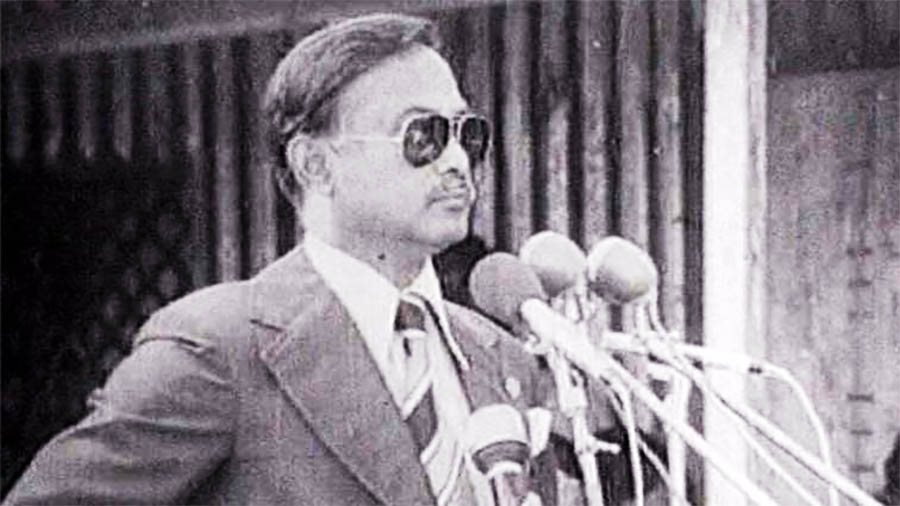
Two completely different judicial outcomes occurred in the same murder case in 1981. After the assassination of President Ziaur Rahman, the trial of the accused army officers in the military court was completed quickly and 13 of them were executed. However, the civilian murder case filed at the Kotwali Police Station in Chittagong did not reach the charge sheet even after 20 years of investigation; the case finally ended with the submission of the final report.
The arrest of fugitive Major (Retd.) Muzaffar Hossain after 45 years has brought this dual judicial process into question again.
Two parallel processes, two different outcomes
After Ziaur Rahman was killed at the Chittagong Circuit House in the early hours of May 30, 1981, the army began its own court-martial to try officers involved in the mutiny, in which 13 army officers were executed. In parallel, a murder case was registered under the criminal law at the Chittagong Kotwali Police Station, with the newly arrested Muzaffar Hossain as the sixth accused.
While military trials are completed quickly, civilian cases are subject to delays. The police’s Criminal Investigation Department (CID) failed to submit a chargesheet despite 173 rounds of time from 1981 to 2001.
Ultimately, a final report was submitted to the court on October 24, 2001, effectively settling the case without any of the accused being brought to trial.
What is in the documents: ICC meeting decision
According to the case file, in a letter sent to the Chief Metropolitan Magistrate of Chittagong on October 3, 2001, the police stated that it was decided at an Inter-Agency Coordination (ICC) meeting held on June 16, 1981 that if the army took over the investigation, there would be no need for the police to proceed with the investigation.
In reality, the civilian investigation was effectively bypassed as the army began its own court-martial. After 20 years, the CID submitted its final report citing a lack of witnesses and evidence, although in fact the file had effectively been closed in 1981.
However, there is no specific name in the case documents regarding who was behind the decision of the ICC meeting. Mofizul Haque Bhuiyan, the public prosecutor (PP) of the Chittagong Metropolitan Sessions Judge’s Court, believes that many questions can be answered if the case documents are recovered.
For this, Seresta, Kotwali Police Station and the Chief Metropolitan Magistrate’s Court have been contacted.
The then Metropolitan PP Advocate Mohammad Fakhruddin said that the CID submitted the final report without consulting him. The next PP Advocate Abdus Sattar said that the documents had gone to the record room before he took charge.
Although multiple officers served in the 20-year investigation, reliable information about their identities and current whereabouts is still not public.
Unknown location of evidence and documents
There is no verifiable public information about where the weapons used in the murder, forensic reports, or autopsy documents are currently stored.
Eleven submachine guns, three rocket launchers, and three grenade-firing rifles are known to have been used in the attack, but there are no public records of how they were subsequently seized or stored.
Since the case later fell under military authorities, it is believed that the evidence may be in the custody of the army—but there is no official confirmation on this.
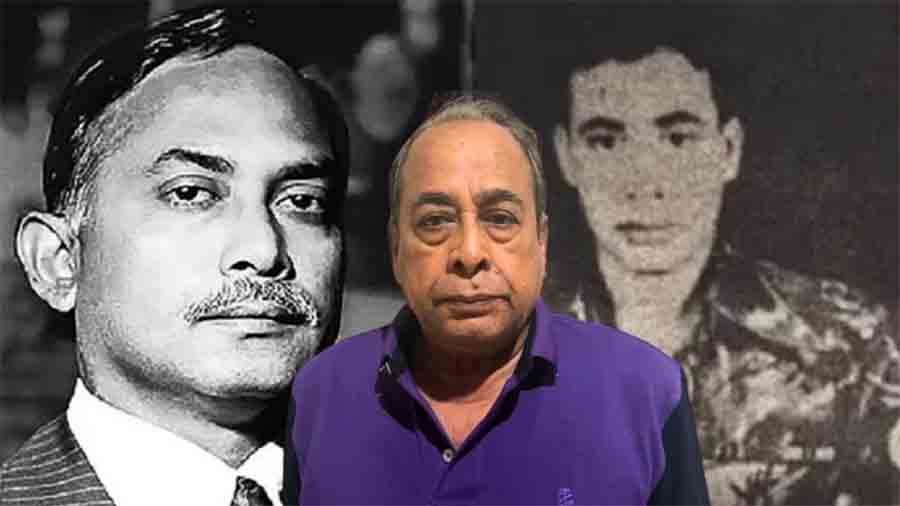
Major Muzaffar
Has Major Muzaffar been convicted in the Zia assassination case?
Major Muzaffar is being identified in various media outlets as the death row convict in the Zia murder case. However, he has not been sentenced in the Zia murder case. The case was filed at the Kotwali Police Station in Chittagong by the then Assistant Police Commissioner (Detective) of CMP, Mokarram Hossain. Case No. -2(6)81, Section-120 (B)/121/122/302, Date: 01-06-1981.
The accused in the case were – 1. Major General Md. Abul Manjur, 2. Colonel Delwar Hossain, 3. Lt. Colonel Delwar Hossain, 4. Major Monir, 5. Major Dost Mohammad, 6. Major Mozaffar, 7. Major Rezaul Karim, 8. Captain Rafiq, 9. Captain Elias, 10. Captain Jamil, Sarbsang-Chittagong Cantonment and many others.
The plaintiff himself later lost his job due to negligence in performing his duties during the President’s stay at the Circuit House. The investigation into the civilian murder case filed at the Kotwali Police Station in Chittagong went on for 20 years, but the CID was unable to file a chargesheet despite taking 173 points of time. In the end, the CID submitted the final report citing lack of evidence.
The then Metropolitan PP Advocate Mohammad Fakhruddin said that the CID submitted the final report without consulting him. The next PP Advocate Abdus Sattar said that the documents went to the record room before he took charge.
As per the rules, the dates of the Zia assassination case were falling every few months. On September 12, 1997, the then Chief Metropolitan Magistrate (CMM) AKM Kamal Uddin gave an order in this case, which presented a long observation and analysis, and brought to the fore an issue of public importance.
-
What the court said
Here is a summary of the court’s observations (the statement remains unchanged):
‘The memorandum of the Home Ministry, which has already been notified to the court, was not submitted to the CMM court before 13-01-1997. Nothing was submitted to the court regarding the said ICC meeting and decision. At the time of the incident and later during the pendency of this case, the Constitution of the country and the courts constituted under the Constitution were in force under the prevailing law. This massacre was an attempt to rebel against a legitimate government of the Republic of Bangladesh and to temporarily separate one part of the country from the rest. A large number of civilians were or are involved in this incident as victims, killed, injured or witnesses. Rather, it has been shown that those concerned have tried to show arbitrariness and contempt for the rule of law. This case alleges rebellion against the state and the civil administration, radio and television were involved in this process. Only through proper investigation could the actual persons involved in the incident and the extent and depth of the crime committed could be known. One more thing to mention here is that all the laws of the country are formulated in accordance with one another. The Army Act has been formulated in accordance with Section 554 of the Criminal Code. But in this case, there has been a deviation in following the rules. After all, the General Causes Act takes precedence over all the existing laws of the country. Here too, no attention has been paid to it. According to the above discussion and analysis, it appears that the process of proceeding in this case according to the existing laws and rules and the pace of the investigation have been disrupted and stopped through illegal interference.
Analysts say that although the two accused in this case, Major Dost Mohammad and Captain Elias, were acquitted in a military tribunal under military law, the others were hanged on the orders of the military tribunal. Major General Manzur died in custody at the Chittagong Cantonment. Major Muzaffar was sentenced to death under military law for the crime of mutiny, not for the Zia assassination case.
However, in light of the government’s press note, news published in various media outlets is constantly calling Major Muzaffar the defendant sentenced to death for Zia’s murder. Not a single journalist in the country asks how the defendant in a case whose trial has not even begun in court received the death sentence?
Security Failures: Unanswered Questions
How the president’s security at Circuit House was breached so easily is still unclear, even after 45 years. According to researcher Ziauddin M. Chowdhury, a judicial and a military investigation committee were formed after the assassination.
Although the trial was based on a military investigation, the judicial investigation report was never made public, so it remains officially unknown who was responsible for the security failure.
The attackers were able to enter the Circuit House unhindered, suggesting that either the Presidential Guard Regiment’s security perimeter was not providing effective resistance, or that one of the attackers was someone familiar with the security arrangements.
Muzaffar’s commentary and account of the incident
Recent investigations have revealed that before the killings, a secret meeting of rebel officials was held in Kalurghat, Chittagong, where Muzaffar Hossain was present.
According to the investigation, during interrogation, he said that about 20 officers were present at the meeting. According to Muzaffar, he became angry with Ziaur Rahman and the army leadership due to his anger at being denied promotion in the army administration.
The operation on the night of the assassination was led by Lt. Col. Matiur Rahman (Moti). Captain Sattar and Fazle Hossain were given the specific responsibility of striking the sleeping Zia’s room.
After the attack, it was Muzaffar Hossain who sent a short message in English to GOC Major General Abul Manzur—”The President has been killed.” It was through this message that Manzur learned of the assassination and later, in a radio address, dismissed Army Chief Ershad and announced Mir Shawkat Ali as the new Army Chief.
However, many questions remain unanswered about the final timing of the plan, the specific date of the meeting, and the individuals involved. Investigators believe that new information may emerge from ongoing interrogations.
Suppression of the rebellion and its consequences
After the murder, a temporary curfew was imposed in Chittagong under the leadership of Major Manjur and the rebels took control of the city. However, within a day, forces sent from Dhaka suppressed the rebellion. Manjur tried to escape, but was later surrounded near Hathazari police station and at one point was killed.
Lt. Col. Matiur Rahman was also killed in a gunfight on June 1 as he fled towards the border. The remaining accused were tried by a court martial, where 13 were sentenced to death and summarily executed. A few, including Muzaffar Hossain, managed to escape abroad at that time.
Newly raised questions
After the arrest of Muzaffar Hossain, new questions have arisen as to whether it is possible to take any new legal action by retrieving documents from civil cases that have been in the record room for a long time.
Ekramul Karim was the leader of the Chittagong Metropolitan Youth League in 1981. The now 72-year-old veteran politician said, “I personally believe that there was a foreign conspiracy behind this murder. The trial of this murder must be completed. All those involved must be brought to justice.”
Chittagong Metropolitan Sessions Judge Court Public Prosecutor (PP) Mofizul Haque Bhuiyan said, “If it is felt that a retrial in the Ziaur Rahman murder case is necessary in a civil court, then legal proceedings can be initiated in that regard. We are already looking for the case documents. We will also talk to the Police Commissioner in this regard.”

https://stapravda.ru/20221228/reyting_samyh_populyarnyh_hostingov_v_rossii_196445.html, рейтинг хостингов России подтверждает, что выбор надежного провайдера важен для бизнеса.