
Staff Correspondent
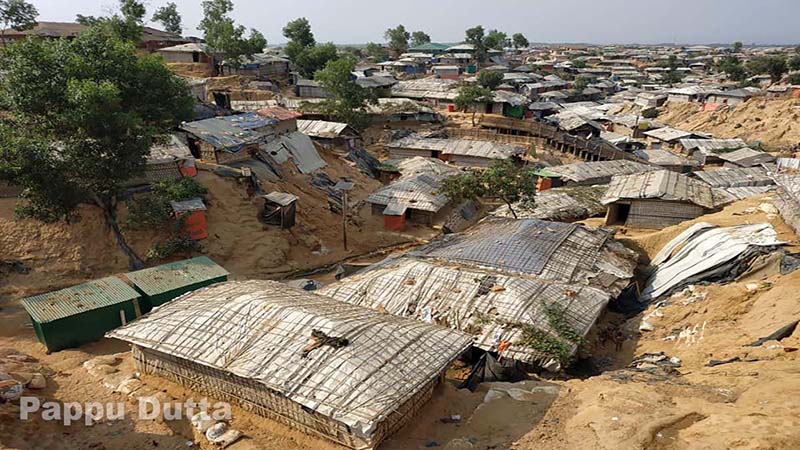
The United States, the largest international donor to humanitarian aid for the more than 1.3 million Rohingya refugees in Bangladesh, has cut aid by almost half this year, making it difficult to provide food, education and healthcare to the displaced Rohingya living in camps in Cox’s Bazar and Bhasan Char. Bangladesh is facing a looming crisis.
The United Nations Office for the Coordination of Humanitarian Affairs (OCHA) said that the United States provided only 23.7%, or $85.3 million, of the humanitarian assistance that reached Bangladesh in 2024 through August—less than half the amount received the previous year. In 2023, the United States alone provided $356.7 million, or 52.7% of the total assistance at that time.
This economic crisis has already caused hundreds of Rohingya children to drop out of education, and many UNICEF-run schools have closed. Health, nutrition and sanitation services are being severely disrupted. Various NGOs and aid agencies have expressed concern about the increasing incidence of malnutrition, disease and crime in the Rohingya camps.
Although Bangladesh sheltered a large number of Rohingya who fled the Myanmar military crackdown in 2017 on humanitarian grounds, with international aid dwindling over time, this population has now become a huge social and economic burden for Bangladesh. They are involved in various crimes and are tarnishing Bangladesh’s reputation. They are destroying nature and the stability of the country.
BRAC Executive Director Asif Saleh fears that the situation could become “horrific” next year if US aid stops.
He said UNICEF has had to close schools in host communities and other organizations are also limiting their activities.
Refugee Relief and Repatriation Commissioner Mohammad Mizanur Rahman said that currently only $12 per person per month is being provided in food assistance to the Rohingya. This could be further reduced from November, as the WFP faces a funding crisis.
At the same time, the education and health sectors have also been hit hard. About 50 percent of schools have already closed. Many NGO workers have lost their jobs, and healthcare has been limited.
Rohingya activist Yunus Arman said that if there is a food shortage, the Rohingya will leave the camps in search of work, which will increase conflicts and unrest with locals. He also said that the trend of drug smuggling across the border is increasing.
The Bangladesh government and related agencies have been expressing concern over the Rohingya crisis. A Foreign Ministry official said that without international assistance, it will become impossible to run the refugee camps. Then a terrible disaster will occur.
In this context, Bangladesh has planned to organize three international conferences, the first of which began today in Cox’s Bazar. The most important conference will be held in New York in the last week of September. The aim of these conferences is to put the Rohingya crisis back on the world stage and call for renewed support.
Refugee expert Asif Munir said the US may realign aid in some areas, but the overall downward trend will continue.
Human rights organizations say the Rohingya issue has lost international priority due to the Ukraine war, the Gaza crisis, and other global conflicts. However, without a long-term political solution to the crisis, it is no longer possible for Bangladesh to bear the burden of the crisis by relying solely on humanitarian aid.
The United Nations, the European Union, and some Arab countries have provided limited assistance, but it is far from sufficient. The indifference towards the Rohingya is only adding to the burden on Bangladesh.

https://stapravda.ru/20221228/reyting_samyh_populyarnyh_hostingov_v_rossii_196445.html, рейтинг хостингов России подтверждает, что выбор надежного провайдера важен для бизнеса.