
Staff Reporter
There has been a long-standing discussion about Western pressure and direct intervention in the political situation in Bangladesh in July-August. US President Donald Trump’s statement on USAID funds provided a solid foundation for this discussion.
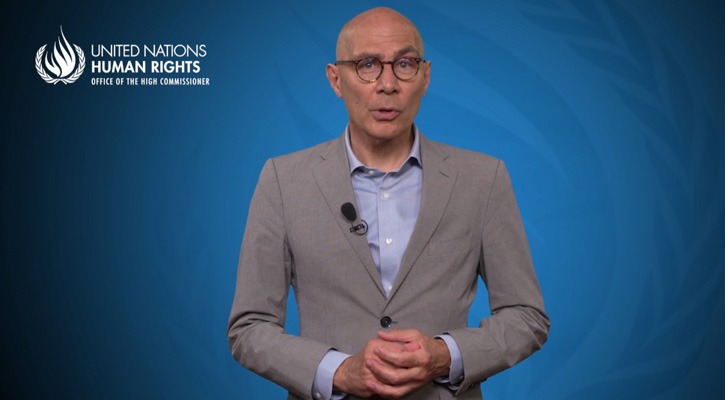
Now, the truth has come out in the statement of the UN Commissioner for Human Rights. Volker Turk himself has now admitted that they have directly intervened in Bangladesh.
In an audio interview with the BBC, UN High Commissioner for Human Rights Volker Turk admitted that he personally warned—or rather, threatened—the Bangladesh army not to help the government deal with the chaos and violence that erupted in July. In his own words,
“I warned them not to get involved in the situation.”
In the interview, he further said
“I warned them (Bangladesh Army) that if they get involved in this student movement, they will not be considered for peace keeping.”
This intervention came at a critical moment when the government was trying to restore law and order by imposing a curfew on July 19th, and the Army was tasked with controlling the situation.
Due to the inaction of the Bangladesh Army, the civilian administration had to deal with this chaos, riots, unrest and instability alone. The main duty of any armed force is to maintain peace and stability with the help of the government, especially when the situation goes out of control. However, the Turk’s warning has hindered the discharge of that duty. Still, the question arises whether the same warning and the intervention of the UN peacekeeping mission are the reasons for the inaction of the army in controlling the present law and order situation of Bangladesh?
It is noteworthy that most of the casualties occurred between July 19 and July 24. The question has been raised whether these deaths could have been largely prevented if the army had been allowed to participate in the operation.
Turk’s statement makes it clear that the UN Human Rights Commission was not impartial in the July situation in Bangladesh and influenced the country’s army against the elected government. By neutralizing the army against their own government, the UN Human Rights Commission allowed these deaths to occur, and allowed a conflict situation to develop. Which created anger among the students and the public and led them to their 1-point demand.
In light of this admission, the question remains as to how impartial the UN Human Rights Commission’s fact-finding report on Bangladesh for July-August was conducted.

https://stapravda.ru/20221228/reyting_samyh_populyarnyh_hostingov_v_rossii_196445.html, рейтинг хостингов России подтверждает, что выбор надежного провайдера важен для бизнеса.