

❐ Staff Reporter
Today (March 8) is International Women’s Day. Like other countries around the world, Bangladesh is celebrating the day with various events under the theme ‘Today’s action, tomorrow’s justice, protect the rights of women and girls’.
The main message of the day is to commemorate the long-standing struggle for women’s rights, dignity, and equality, as well as to pledge to build a more secure and just society in the future.
But does this day have any significance for women from remote areas of Bengal who migrated to various countries, including the Middle East, in the hope of a better life, only to return home destitute after being subjected to physical, mental, and sexual abuse?
The history of International Women’s Day is primarily associated with the rights movement of working women.
On March 8, 1857, female workers in a needle factory in New York, USA, went on strike to demand a reduction of the 12-hour workday to eight hours, fair wages, and safe working conditions. During that strike, many female workers were arrested and tortured. Later, on the same day in 1860, the ‘Women’s Workers Union’ was formed.
Then, in 1908, about 1,500 women workers in the garment and textile industries in New York again took to the streets with the same demand and ultimately won the right to an 8-hour workday.
In continuation of this struggle of women workers, German leader Clara Zetkin proposed to celebrate March 8 as International Women’s Day at the International Socialist Conference held in Copenhagen, Denmark in 1910. Since then, the day has been celebrated as a symbol of the women’s rights movement in various countries around the world.
The United Nations first began celebrating March 8 as International Women’s Day in 1975, marking International Women’s Year. Later, in 1977, the organization officially recognized the day as International Women’s Day.
But has a safe working environment been ensured for women in Bangladesh even after all these years? Bangladeshi women are subjected to extreme torture at home and abroad.
Today, Women’s Day is not only a day of celebration, but also a day to renew our commitment to ensuring women’s rights, equality, and security. The main message of the day is to honor women’s achievements by eliminating discrimination in all areas, including ethnic, linguistic, cultural, economic, and political.
By celebrating the day around the world, women remember their long history of struggle and express their commitment to building a more equal society in the future.
Some experiences of Bangladeshi women returning to the Middle East
Alekha Banu (pseudonym) from Kurigram went to Saudi Arabia as a domestic worker in the hope of changing her fate. There, she was raped by her landlord and became pregnant. Later, she took refuge in the Bangladesh Embassy in Riyadh to save her life and returned home after about two months.
Mosherefa Begum (pseudonym) from Rangpur said that after the death of her husband, she went to Saudi Arabia to make ends meet. But in the house where she worked, not only the householder but also men from outside tortured her. At one point, she was set on fire when she protested.
Bilkis Akhtar (pseudonym) from Jessore, a woman, alleged that she was sexually assaulted by her husband, his son, and his son’s friends.
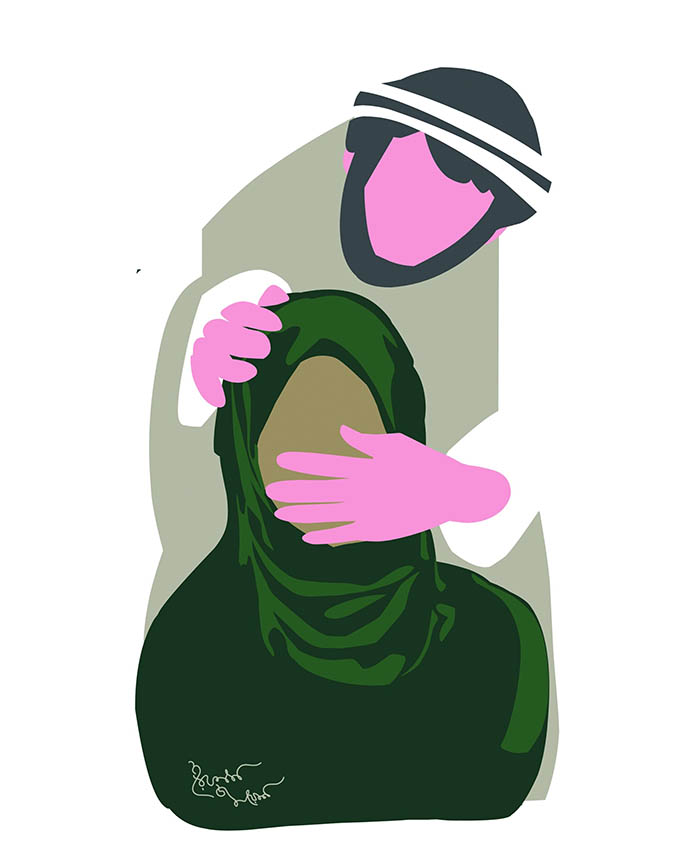
Such incidents have now become almost regular. Statistics show that while the number of Bangladeshi female migrants has increased in the past decade, the number of those returning home with allegations of torture has not decreased.
According to the Bureau of Manpower, Employment and Training (BMET), more than one million Bangladeshi women are currently working abroad. However, there is no accurate information on how many of them have returned home.
According to data from the migration program of the non-governmental development organization BRAC, at least 70,000 women have returned to the country in the last seven years. Of these, 49,022 returned in 2020 during the COVID-19 pandemic. According to airport data, several thousand women are returning to the country every year, even as prisoners.
Most of the returned women have complained of physical, mental, and sexual abuse.
Many said they were made to work longer than the stipulated time, were not given proper food, and were not paid according to their contracts.
BRAC said at least 121 of the women who returned had lost their mental balance, and they provided treatment and support to them.
Rizia Begum, a resident of Baralekhar, Moulvibazar, went to Saudi Arabia as a domestic worker six years ago. She fell ill due to excessive work pressure and torture there and lost contact with her family. After being missing for almost five years, she was rescued at Dhaka airport in February this year in a mentally unstable condition. Later, with the help of BRAC and the police, she was identified and returned to her family.
Experts say it is essential to ensure proper training and safety for female workers going abroad. According to them, the state needs to take effective initiatives to ensure the rehabilitation and legal assistance of women who return home after being subjected to torture abroad.
Meanwhile, Prime Minister Tarique Rahman issued a message on the occasion of Women’s Day. In the message, he said that the government is giving top priority to ensuring the safety of women. A strict stance has been taken to stop cyberbullying and online harassment against women.
He congratulated the women and said that the development of a country is sustainable only when women’s rights, education, health, security, and participation are ensured.
He said, “Our goal is to implement election promises by introducing free education up to postgraduate level, increasing women’s participation in higher education, providing free school uniforms for girls, digital learning facilities, and expanding the modern education system.”
To mark the day, various programs have been taken up at the government and private levels across the country, including the capital Dhaka.

https://stapravda.ru/20221228/reyting_samyh_populyarnyh_hostingov_v_rossii_196445.html, рейтинг хостингов России подтверждает, что выбор надежного провайдера важен для бизнеса.