
❐ District Representative
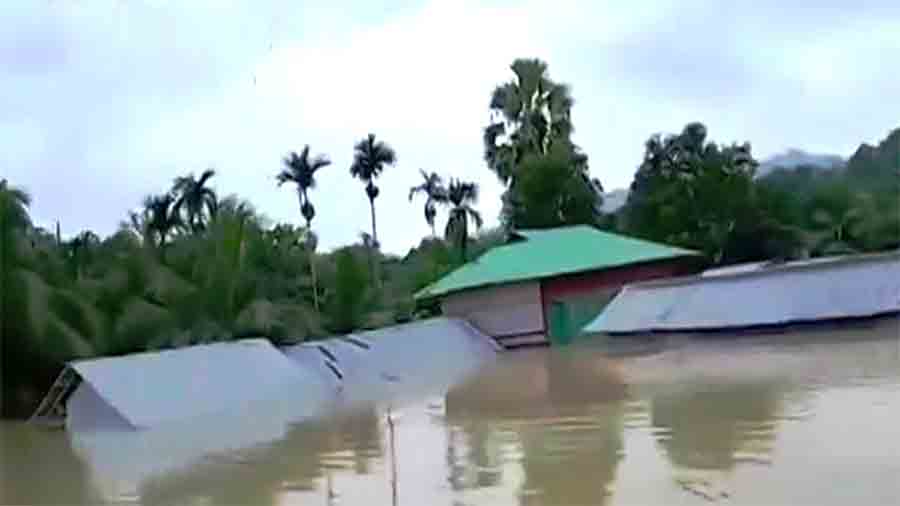
Continuous rains and landslides have caused the worst floods and landslides in Rangamati district in recorded history. This has disrupted the overall public life of the district. According to official estimates, landslides have occurred in at least 135 places across the district, killing 3 people and severely affecting a total of 1 lakh 8 thousand 717 people.
However, there have been allegations that the relief allocated by the government for this large number of affected people is extremely inadequate and nominal compared to the needs.
An analysis of the information provided by the district administration has shown that only 3.5 million taka and 295 tons of rice have been distributed by the government to more than 1 lakh 8 thousand affected people.
Apart from this, 2,314 packets of dry food have been provided, of which only 32,546 people have benefited. This means that about 76,717 people living in the district have not yet come under the ambit of any kind of government assistance.
The most surprising information is that if the 3.5 million taka and 295 tons of rice allocated by the district administration are divided equally among the total affected people, the per capita allocation stands at only 32 taka and only 270 grams of rice! Residents have expressed anger and disappointment at such an inadequate picture of relief.
Currently, as flood waters have started receding from Farua Unions of Baghaichhari and Bilaichhari, the affected people are busy rebuilding their houses. However, road communication has not been fully restored yet. Due to the creation of large holes and potholes in various places on the road due to the strong flow of water, the road communication between Baghaichhari and Khagrachari is still completely cut off.
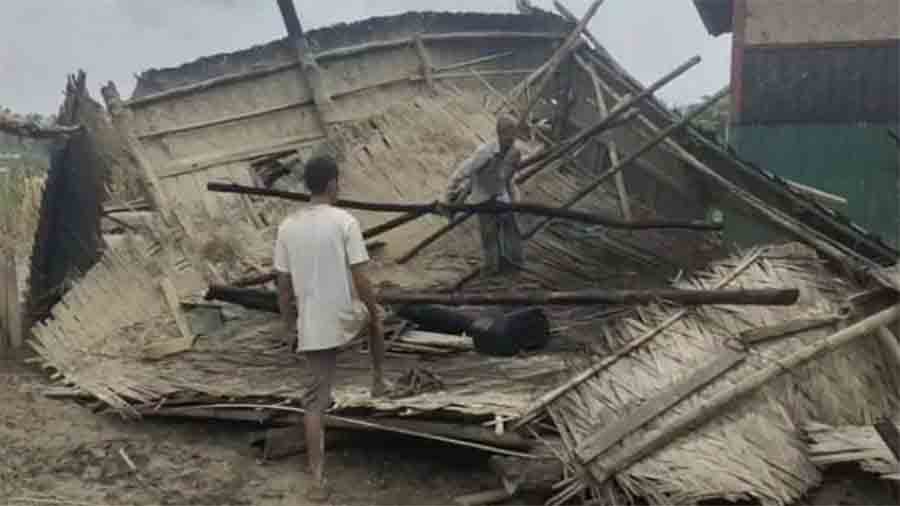
District Project Implementation Officer Md. Saiful Islam said that an estimated 483 homes, 32 educational institutions, 25 bridges-culverts, and 546.5 kilometers of roads have been severely damaged in the flood. In addition, 3,675 hectares of cropland in the agricultural sector and about 39.432 million taka in the fisheries sector have been damaged.
Bilaichhari Upazila Nirbahi Officer (UNO) Md. Zakir Hossain said that 72 shops and 1,982 houses in Farua Bazar were submerged in flood water, out of which 274 establishments were severely damaged. Local traders have demanded that the market be shifted to a safer place for a permanent solution, but it is stuck due to legal complications with the Forest Department.
On the other hand, 80 percent of Baghaichhari Upazila was submerged under water, and 20,000 families were stranded, said Baghaichhari UNO Amena Marjan. Currently, 295 people are staying in two shelters.
According to administration sources, as a plan, proposals have been made to build flood shelters in every upazila, provide fiber boats to the affected people, and provide corrugated tin and cash for rehabilitation.
However, Rangamati’s Conscious Citizens’ Committee (SANAK-TIB) member Md. Ali criticized the administration’s distribution process, saying, “There was some mismanagement in the shelters. Many people did not go to the shelters due to public shame; they did not receive any benefits. Only those who lost everything and came to the shelters, helpless, received some benefits, but the food and allocation were by no means sufficient.”
Rangamati Press Club President Anwarul Haque mentioned the severity of the flood and said, “Never before have so many people suffered from floods and landslides in the three hill districts. As the Prime Minister is taking the issue seriously, ministers and state ministers from several ministries have visited the area. However, the information we have received about the relief from the district administration is very disappointing. It is important to increase government assistance in the reconstruction of houses more quickly and extensively.”
Even though the water from the mountain slopes has receded, hundreds of families are still living in inhuman conditions in mud and water. These people, who have lost everything, are now demanding not just nominal rice and money, but also sustainable and effective government assistance for rehabilitation.

https://stapravda.ru/20221228/reyting_samyh_populyarnyh_hostingov_v_rossii_196445.html, рейтинг хостингов России подтверждает, что выбор надежного провайдера важен для бизнеса.