
Opinion
The recent diplomatic encounter between Chief Adviser Muhammad Yunus and the Acting U.S. Ambassador in Dhaka, which was publicized as focusing on enhancing the relationship between the two countries and addressing developmental issues as well as counter-terrorism efforts, has sparked significant interest among political analysts. The meeting’s real intentions, however, seem to diverge from its official narrative and ground realities linked to growing concerns of radicalization in Bangladesh. There is growing speculation about whether Muhammad Yunus, known for pioneering microfinance, is unknowingly or intentionally being utilized to advance the agendas of extremist groups that pose a significant threat to the nation’s secular and diverse nature. The recent events on August 5th 2024 that have unfolded subsequent to the removal of the Awami League government have given credibility to their earlier cautions regarding the infiltration of radical elements within the protester ranks. What was once brushed aside as mere political jargon during the July protests now emerges as an alarmingly conceivable reality.
The religious landscape of Islam in Bangladesh further complicates the situation. The majority of Muslims in the country adhere to the Hanafi jurisprudence, which is divided into three main follower divisions: Barelvis, Deobandis, and Maududis. The Barelvis, followers of Ahmed Raza Khan Barelvi, practice a peaceful form of Islam that is often focused on mysticism and the veneration of holy figures. Unfortunately, their practices have made them targets of extreme groups who consider them un-Islamic. Violent incidents against Barelvi shrines and leaders have been on the rise, illustrating a worrying trend of intolerance towards minority Islamic denominations and other religious communities.
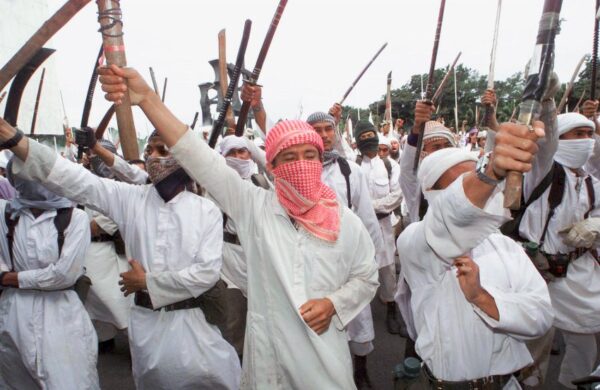
Deobandi organizations, like Hefazat-e-Islam and Islami Andolan Bangladesh, on the other hand, promote a strict interpretation of Islam, mirroring the ideology of the Taliban in Afghanistan. The Maududi-inspired Jamaat-e-Islami aspires to establish an Islamic state by undoing the secular framework of Bangladesh’s constitution and they prefer to use democracy as a tactic like Muslim brotherhood and Hamas to fulfill their agenda of electoral autocracy. The ideology of Jamaat and Muslim brotherhood is banned in countries like Saudi Arabia for its radical tendencies, has given rise to a climate of hostility towards secular governance and religious diversity. The student of wing of Jamat Islam known as Islami Chatra Shibir has been part of the July protest, which was even openly acknowledged by Anti-Discrimination protest Coordinators after forming the interim government. Hizb-ut-Tahrir, a more global group, advocates for a universal caliphate through non-democratic methods also made public demonstrations and propagations in rallies in Institutions since August 5th 2024. These organizations, empowered by the political unrest following Sheikh Hasina’s removal, are openly or covertly pushing for a religious state, which was never a priority in the July protest based initially on Job Quotas.
Moreover, the influence of released preachers like Jashimuddin Rahmani from prison, who has converted from the Hanafi Deobandi tradition to support jihadist doctrine, is a cause for alarm. He has in his previous sermons available on YouTube branded democratic leaders, the military, and even the Saudi government as apostates unless they enforce Islamic Sharia law. This type of language has encouraged radicalization within the populace and other Islamic clerics like Rafikul Islam Madani who are believed to have met in prison during Sheikh Hasina’s rule. They now call for jihad against India and liberating the sevesn sisters from India. The alleged persecution of minority groups and targeted assaults on secular Awamileague activists further questions the ground reality of the paradigm shift in Bangladeshi politics.
The U.S. State Department is well aware of the threats posed by entities such as Hefazat-e-Islam and Jamaat-e-Islami. The potential partnership between these forces and Professor Yunus, capitalizing on his international reputation, is a worrying development. As the Trump administration re-evaluates its policy towards South Asia, it will likely scrutinize Yunus’ associations and the implications of a destabilized Bangladesh. It is essential to understand the reality of dynamics, why Muhammad Yunus chose to remain silent over this rise of extremism. It could be mainly because he was not himself an activist in the July protest, but these extremist figures were covertly or openly part of it. It must be remembered in future, that Muhammad Yunus is the person who chose to lead this interim Government and he is responsible along with other advisers and coordinators for the way the recent evens have carried forward and may continue to.
{The writer S M Faiyaz Hossain is a Political Commentator and a Masters Student at an Australian Public University. He can be reached at [email protected]}

https://stapravda.ru/20221228/reyting_samyh_populyarnyh_hostingov_v_rossii_196445.html, рейтинг хостингов России подтверждает, что выбор надежного провайдера важен для бизнеса.