
Staff Reporter
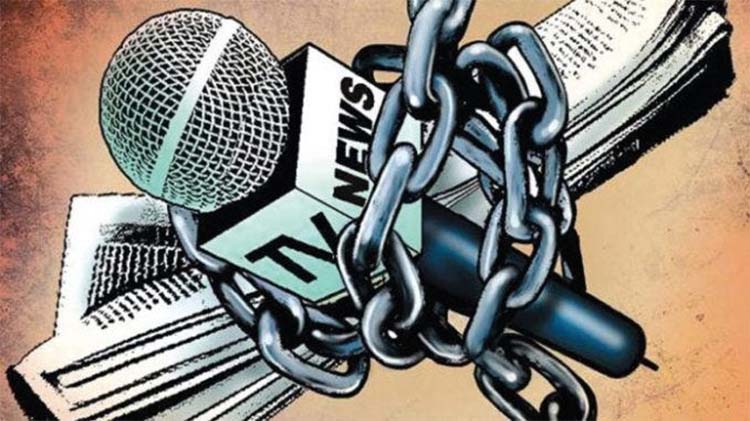
On the occasion of World Press Freedom Day, the Dhaka Journalists’ Union (DUJ) called for an end to the persecution and oppression of journalists.
In a statement signed by DUJ’s Organizing Secretary Golam Mujtaba Dhrubo on Friday, the union made this demand.
Jointly issued by DUJ President Sajjad Alam Khan Tapu and General Secretary Akhtar Hossain, the statement highlighted the numerous challenges facing the media in the country. It mentioned that the DUJ office has been locked for eight months, journalists have been subjected to harassment through murder cases, and many have lost their jobs.
They also noted forced resignations in some organizations, sudden changes in top positions, and delays in salary payments for months. Journalists face obstacles while gathering information from the Secretariat and other offices.
The leaders pointed out that on April 29, three journalists lost their jobs after questioning an advisor. They urged the media to stand against such incidents on World Press Freedom Day.
After August 5, 2024, Interim Government Chief Advisor Dr. Yunus initially promised to uphold press freedom but later faced allegations of oppression against journalists.
Between October 29 and November 7, 2024, accreditation for 167 journalists was revoked, barring their access to government offices and information.
The enactment of the Cyber Security Ordinance 2025 and Personal Data Protection Ordinance 2025 in January 2025 increased online content control and surveillance of journalists.
In August 2024, at least 348 journalists were targeted with 21 criminal cases, 147 journalists faced lawsuits, 34 were investigated for money laundering, and 167 had their accreditations canceled.
In February 2025, four journalists in Laksampur were attacked, one of whom was shot. In August 2024, attacks occurred at the Chittagong Press Club and the *Kaler Kantho* office, and prominent journalist Nurul Kabir faced harassment at the airport.
International organizations such as the Committee to Protect Journalists (CPJ), Reporters Without Borders (RSF), and Article 19 have condemned these actions. They expressed concern over lawsuits and accreditation cancellations against journalists.
The International Journalists Network (IJNet) reported that following August 5, significant political shifts occurred in Dhaka’s media leadership. Post-protest, BNP-Jamaat-aligned journalists leveraged the situation to install new editors in several organizations.
According to reports, leadership changes took place in 29 media outlets, where politically aligned journalists were appointed, mirroring practices from the Awami League era. This underscores that the media remains vulnerable to political interference.

https://stapravda.ru/20221228/reyting_samyh_populyarnyh_hostingov_v_rossii_196445.html, рейтинг хостингов России подтверждает, что выбор надежного провайдера важен для бизнеса.