
Opinion
The Nobel Peace Prize—once the world’s highest honor—has become a sore spot for Bangladesh today. It proves how hollow an unprincipled prestige is.
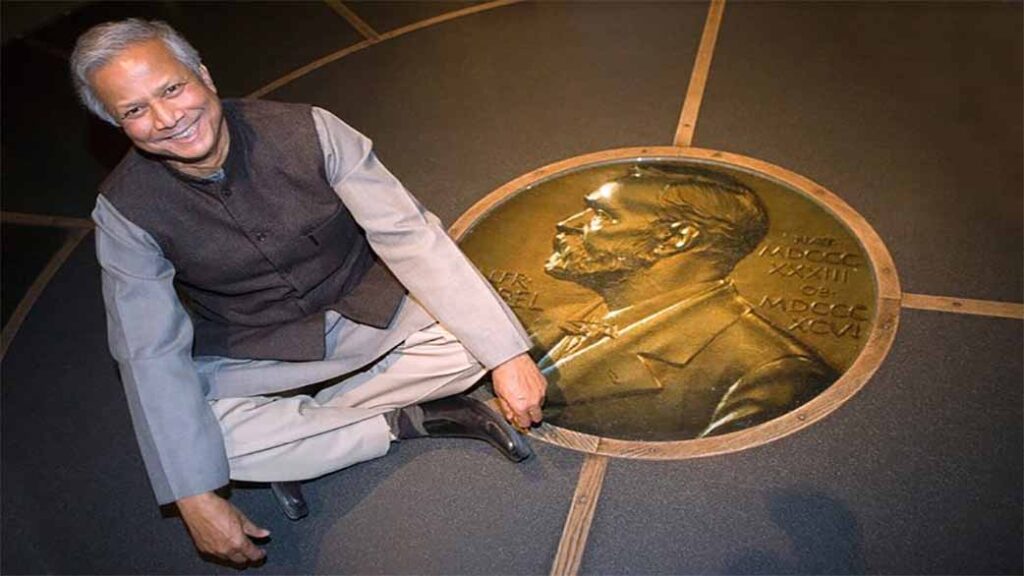
Professor Muhammad Yunus, Bangladesh’s only Nobel Peace Prize laureate, was once known worldwide as a pioneer of microcredit. But today, for most people in the country, he is not a symbol of peace, but rather a symbol of division, financial exploitation, and political intrigue. His Nobel Prize is a black mark on the national consciousness of Bangladesh today.
The prize, established in 1901 in Alfred Nobel’s will, was intended to promote fraternity among nations, the abolition of standing armies, and peace. But today’s Nobel Peace Prize is a tool in the geopolitical game. It is awarded to appease the powerful, to sanctify political rhetoric, or to stage diplomatic drama.
In Yunus’ case, this duality is most painful. His actions, under the shadow of foreign powers and personal ambitions, have corrupted the ideals of the 1971 liberation war. He has not established peace; rather, he has undermined democratic stability by engaging with foreign networks.
In the words of political theorist Peiman Salehi, today’s peace prizes are given to make empires comfortable. Peace is now negotiable—symbolic, cosmetic. Peace in the absence of justice is an illusion.
Once upon a time, people like Henry Dunant or Elie Wiesel received this award for their sacrifice for humanity. But today, more than half of the awards do not comply with Nobel’s original criteria. Heads of state involved in war have been awarded. Peace is now a performance, not a policy.
In this situation, we must ask: Doesn’t the world need a new peace prize? One that is founded on honesty, justice, and transformative compassion?
Such an award should have three pillars:
1. Integrity and transparency: Standards are clear, accountable, and verifiable.
2. Justice-based peace: In the words of Martin Luther King, Jr., peace is not the absence of conflict, but the presence of justice.
3. Recognition of invisible warriors: Community organizers, women mediators, local activists—those who build peace in silence.
A ‘Global Peace Integrity Award’ (GPIA) can be imagined. Its selection committee would include people affected by conflict, human rights activists, and social workers. The award would go to those who have truly reduced violence and restored dignity. There is no need for publicity—integrity would be the source of respect.
Geir Lundestad, the former secretary of the Nobel Committee, himself admitted, “If the aim was to establish peace in the world, it has failed.” Recognition is not transformation. Applause is not peace.
Yunus’ Nobel Prize will not erase the wounds of Bangladesh’s national consciousness. This country, built with the blood, sacrifice, and tears of 1971, does not measure its greatness by Western awards. Greatness is measured by its loyalty to the ideals of the Liberation War.
Bangladesh will not be deceived by borrowed honor. It will not forgive betrayal. Yunus can keep his medal. But he has lost the trust of the nation. History will write this truth.
It is time to stop the farce. Instead of symbolic peace, let’s honor real justice, dignity, and courage. Let the applause of illusions stop. Let the real work begin.
-Anwar A. Khan
Political analyst

https://stapravda.ru/20221228/reyting_samyh_populyarnyh_hostingov_v_rossii_196445.html, рейтинг хостингов России подтверждает, что выбор надежного провайдера важен для бизнеса.