
Withdrawal of agricultural subsidies as a condition of the US-Bangladesh trade agreement:
Agriculture sector in danger, risk of food inflation increasing
Staff Correspondent
The country’s agricultural sector is facing a deep crisis due to the condition that Bangladesh will have to reduce or completely withdraw government subsidies in the agricultural sector in the new trade agreement signed with the United States.
Under the agreement, Bangladesh has pledged to import about $3.5 billion worth of agricultural products from the United States annually, including wheat, soybeans, soy products, cotton, etc. The agreement has already led to an increase in imports of high-value US wheat, which is putting pressure on food security and inflation.
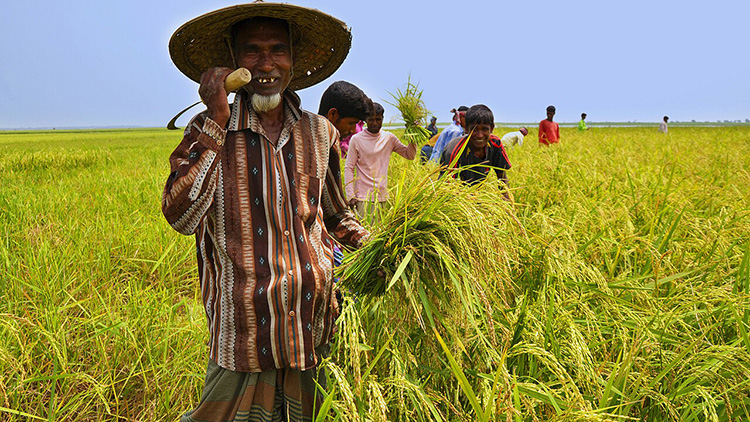
The Bangladesh government currently provides subsidies of around Tk 17,000 crore annually for various inputs including fertilizers, electricity, seeds, etc. in the agricultural sector. The proposed budget for the 2025-26 fiscal year has kept this subsidy unchanged at Tk 17,000 crore, although the Ministry of Agriculture had sought Tk 25,000 crore. This subsidy has made it possible to keep the price of fertilizers low, which has reduced the cost of production for farmers and kept domestic food products (especially rice, vegetables, etc.) within the reach of the common people.
According to experts, without subsidies, food prices could increase by 2-2.2 times.
Reducing or eliminating these subsidies, as per the terms of the agreement, will increase the cost of agricultural production. Farmers will be forced to use less fertilizer, electricity and other inputs, which will reduce crop production. As a result, domestic food production will decrease and dependence on imports will increase.
Bangladesh has already imported about 675,000 metric tons of wheat from the United States in the 2025/2026 marketing year (close to the target of 700,000 tons per year as per the MOU), and its price is higher than the international market. The high price of US wheat (despite its good protein content) is increasing the import bill, which is putting pressure on the foreign exchange.
There is a strong risk that food inflation will intensify as a result of the withdrawal of subsidies. Analysts say:
- Increase in production costs → If farmers use less fertilizer, yields will decrease → Prices of food products including rice and wheat will increase.
- Increased import dependence → Fluctuations in international prices (such as wheat prices) will directly impact the domestic market.
- Food security at risk → Food access will decrease for low-income people, which could increase poverty and malnutrition.
- Inflationary pressures → Food inflation is currently high; it could increase further if subsidies are reduced, which would cause a recession in the overall economy.
Many believe that the signing of this agreement by the Yunus-Khalil-led interim government has made Bangladesh hostage to US interests. Although the agreement provides a 19% tariff on exports instead of 20%, its long-term damage to the agricultural sector is much greater.
Experts warn that the terms of the agreement could have been met through alternative means (such as targeted support) without withdrawing subsidies, but the current path could jeopardize the country’s food security and the livelihoods of ordinary people. The government must now adopt a strategy to protect agricultural subsidies and reduce import dependence, otherwise food inflation could spiral out of control.

https://stapravda.ru/20221228/reyting_samyh_populyarnyh_hostingov_v_rossii_196445.html, рейтинг хостингов России подтверждает, что выбор надежного провайдера важен для бизнеса.