
Staff Correspondent
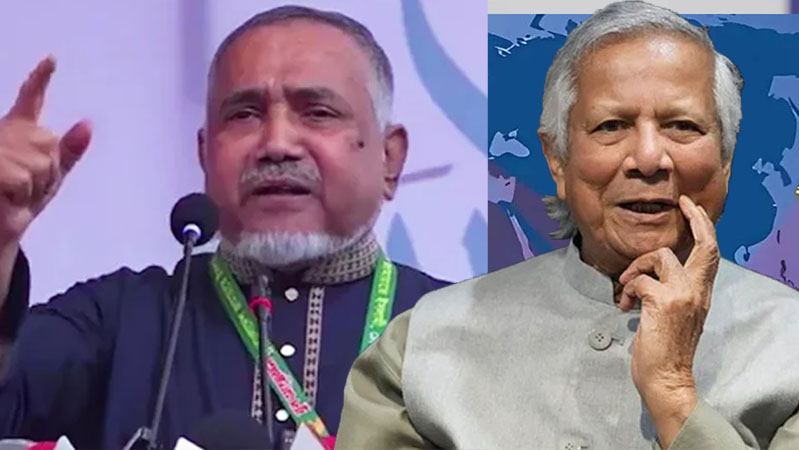
Jamaat-e-Islami’s Acting Ameer Syed Abdullah Mohammad Taher has revealed that Chief Advisor Dr. Muhammad Yunus called them and assured he would “remain neutral,” prompting the party to join the National Unity Commission meeting. This statement raises serious questions about Dr. Yunus’s neutrality. His admission clearly indicates that Yunus was not actually neutral, forcing him to give such assurances—contradicting the impartiality expected of his role as Chief Advisor.
From Syed Abdullah Mohammad Taher’s remarks, it is learned that Dr. Yunus spoke to Jamaat over the phone and assured them of his neutrality. Based on this assurance, Jamaat participated in the National Unity Commission meeting. However, this incident raises a counter-question: If Dr. Yunus were truly neutral, why did he feel compelled to reassure a specific political party? This strongly suggests Yunus’s neutrality was questionable and that he showed undue favoritism toward Jamaat.
Analysts note that since Dr. Yunus’s administration was formed, Jamaat-e-Islami workers and supporters have been appointed to key administrative positions. This explains why Jamaat had not previously raised any complaints against Yunus’s administration. However, after Dr. Yunus recently met with BNP’s Acting Chairman Tarique Rahman in London, Jamaat reacted sharply, accusing Yunus of bias. This makes it clear that, from Jamaat’s perspective, Yunus’s favoritism toward them is acceptable, but engagement with any other political party is not.
This situation raises grave concerns: Is Jamaat the controlling force behind Dr. Yunus’s Chief Advisor role? Are his actions being dictated by Jamaat’s influence and demands?
In this context, it can be inferred that “Dr. Yunus’s conduct weakens his claims of neutrality. Such assurances to a specific party prove he is under Jamaat’s influence, which is highly objectionable for a Chief Advisor.”
Jamaat’s allegations and Yunus’s assurances have also cast doubt on the National Unity Commission’s credibility. Many believe this incident could threaten the country’s political stability and impartial governance. The public is now questioning whether Dr. Yunus is truly working with equal fairness toward all parties or if he has been appointed to advance a specific party’s agenda.
Amid this, the need for mutual trust and dialogue among political parties has grown. However, until answers emerge regarding Dr. Yunus’s neutrality, efforts toward national unity may face setbacks. The public now waits to see how Dr. Yunus responds to these allegations and whether his claims of impartiality hold up.

https://stapravda.ru/20221228/reyting_samyh_populyarnyh_hostingov_v_rossii_196445.html, рейтинг хостингов России подтверждает, что выбор надежного провайдера важен для бизнеса.