
Economy Desk
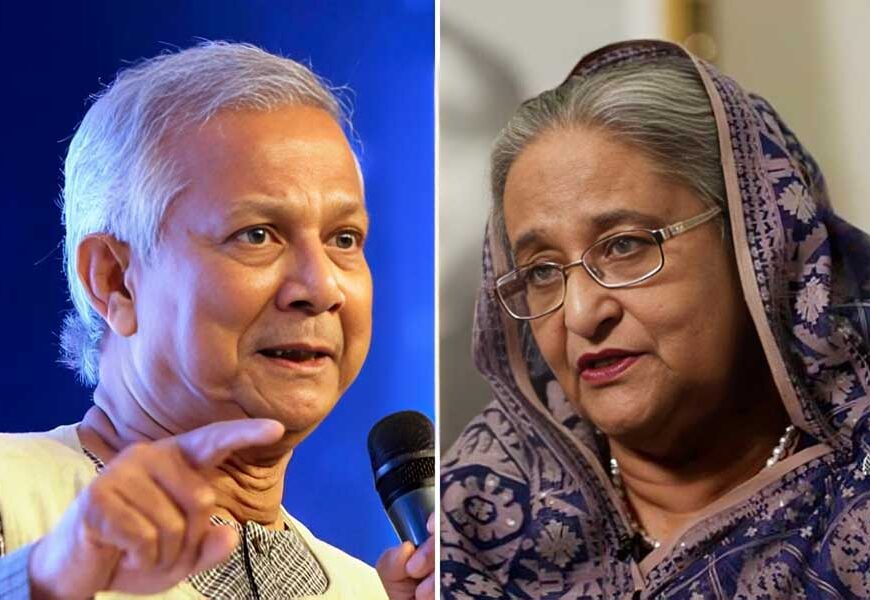
An interim agreement and eight memorandums of understanding (MoUs) have been signed between Bangladesh’s interim government and China to strengthen economic and technical cooperation. These agreements were concluded on the third day (March 28) of Chief Advisor Dr. Muhammad Yunus’s four-day visit to China. The MoUs include translations of literary and artistic works between the two countries, exchange of cultural heritage and news, media, sports, and health sector cooperation.
During this visit, about 30 Chinese companies pledged to invest $1 billion in Bangladesh’s Special Chinese Industrial Economic Zone. This commitment followed the Chief Advisor’s call for private sector investment in the manufacturing industry. Additionally, China announced plans to provide $400 million for the modernization of Mongla Port, $350 million for industrial zone development, and $150 million in loans and grants for technical assistance. However, no additional loans were secured to address budget deficits or reserve crises during this visit.
Earlier, in July 2024, former Prime Minister Sheikh Hasina signed 21 MoUs and seven declarations during her visit to China. China assured four types of loans for development projects in Bangladesh and assistance worth 1 billion yuan (approximately $140 million). However, despite Bangladesh’s request for $5 to $7 billion in low-interest loans, it was not granted. Chinese Ambassador to Dhaka Yao Wen stated last year that Bangladesh sought China’s assistance to overcome the reserve crisis. Since Chinese President Xi Jinping’s visit to Bangladesh in 2016, loan amounts had increased significantly, with $3 billion disbursed over the last four fiscal years. Despite this, expectations of receiving $5 to $7 billion in loans were not met, leading experts to term the visit as “unsuccessful” in terms of expected loan acquisition.
Achievements in investment proposals during Sheikh Hasina’s tenure included the following:

In 2014, a proposal was made under Sheikh Hasina’s government to establish a special economic zone in Anwara, Chattogram, to attract Chinese investment. Bangladesh Economic Zone Authority (BEZA) began this project on 784 acres of acquired land, exclusively allocated for Chinese factories. In 2022, China Road and Bridge Corporation was appointed as the developer, and an agreement was finalized in 2023. However, the previous government could not approve the final budget for land acquisition. Projects such as the Bangabandhu Terminal, Bay Terminal, and New City Construction were initiated during Sheikh Hasina’s administration.
In June 2024, Chinese company Alpen Banyan Garments signed an agreement to invest $110 million in Mirsarai Economic Zone. This factory is expected to produce 43 million garments annually and create employment for 11,995 individuals. By 2024, 29 companies had proposed investments totaling $688 million in this zone.
Following Dr. Yunus’s visit, from August 2024 to March 2025, a total of 34 Chinese companies expressed investment interest in these two economic zones, with eight companies signing lease agreements worth $153.82 million. However, only 12 new companies submitted proposals.
The total number of interested companies in these economic zones now stands at 41, with total investments reaching $867.22 million. This cumulative amount, including $688 million secured during the previous government, is being portrayed as the $1 billion investment resulting from Dr. Yunus’s visit.
Sheikh Hasina’s visit laid the groundwork for long-term investment, leading to increased interest from 12 more companies. Experts believe Sheikh Hasina’s vision and courage in establishing economic zones to attract foreign investment paved the way for the investments secured during Dr. Yunus’s visit.
BEZA initially considered numerous economic zones wasteful and focused on prioritizing and developing five zones out of the 100 zones initiated under Sheikh Hasina’s government.

https://stapravda.ru/20221228/reyting_samyh_populyarnyh_hostingov_v_rossii_196445.html, рейтинг хостингов России подтверждает, что выбор надежного провайдера важен для бизнеса.