

Liberation War and History Desk
Today, August 20, is the martyrdom day of Bir Shrestha Flight Lieutenant Matiur Rahman. ‘Idhar so raha hai ek gaddar’ or ‘Here sleeps a traitor’—this was the inscription in front of his grave, left carelessly and neglected in the fourth class graveyard of Masrur Air Base in Karachi, Pakistan.
In the beginning of 1971, in the last week of January, Flight Lieutenant Matiur Rahman of the Pakistan Air Force came to Dhaka with his family on a two-month leave. On the night of March 25, he was at his home in Ramnagar village of Raipura, Narsingdi. Seeing the demonic massacre of the invaders, he could not remain still. He decided to do something for the liberation war. Despite being a Flight Lieutenant of the Pakistan Air Force, he opened a training camp in Bhairab at immense risk. He started training Bengali youth and formed a resistance force with weapons collected from different places.
On April 14, 1971, the Pakistani Air Force bombed their base from a ‘Sever Z’ aircraft. Matiur Rahman had anticipated this in advance. He and his forces were spared damage due to the change of base. After the attack, he said, “Bhairab was bombed from aircraft. Some of the pilots may be my students. My students are dropping bombs on my head today. They are making my country bleed.” Holding the soil in his hand, he said, “I will maintain the dignity of my own soil. I am a pilot. I want a fighter plane. If I get a plane, I would show them. Because I want to counter the plane with an aircraft or an anti-aircraft gun.”
On May 9, he returned to Karachi with his family, although his two-month leave turned into four months. On reaching Karachi, he found the Bengali officers looking at him with suspicion. He was removed from his duties as a flight instructor and given the responsibility of flight safety officer. His only concern at that time was an airplane. He started planning, and while he treated his colleagues normally, he kept looking for opportunities.
After the plan to hijack a PIA plane was leaked, strict surveillance began on Bengali officers. The permission to fly Bengali pilots was canceled. Then Matiur Rahman was given the responsibility of Flight Safety Officer at Mashrur Air Base. However, before that, he was a flight instructor. One of his Pakistani students was Rashid Minhaj. Matiur targeted Minhaj because he was allowed to fly alone.
Friday, August 20, 1971. Minhaj took off as per the flight schedule. As planned, Matiur took the car to the east side of the runway. Minhaj was sitting in the front seat of the T-33 fighter jet. Matiur raised his hand to stop the plane, indicating the problem with the propellers. As soon as Minhaj opened the ‘canopy’, he knocked him unconscious with chloroform and sat in the seat behind Matiur. But Minhaj said, “I have been hijacked.”
No one saw him because he was hidden behind a small hill, but the control tower heard him. Matiur took control of the plane and flew it low to evade radar. F-86 fighter jets and helicopters chased him. The plane crashed into a sand dune in Sindh’s Jinda village, two minutes from the Indian border. Matiur was killed because he did not have a parachute. His body was found half a mile away from the scene. The dream of hijacking the plane failed.
Matiur Rahman’s dream was to liberate the motherland. He risked his life to save the country, creating an unprecedented history of love for the motherland. His body was buried as a ‘traitor’, while Rashid Minhaj received Pakistan’s highest honor, the Nishan-e-Haider. The inscription in front of his grave reads, “Faroaz don ki ek feza me mumin ka nisha aur munafiqka nisha, aur Rashid ki shahadat ye hai.” That is, “The marks of a Muslim and a hypocrite are different, although they roam the same land. Rashid’s martyrdom was like a poem by poet Iqbal.” Poet Iqbal’s Persian poem, “Kurgej ka zaha aur hai shahi ka zaha aur”—”The vulture and the hawk roam the same place, but their places are different.” Matiur’s grave was inscribed, “Idhar so raha hai ek gaddar.”
Matiur Rahman was born on 29 October 1941 at ‘Mobarak Lodge’, 109, Aga Sadeq Road, Old Dhaka. His ancestral home is Ramnagar, Raipura, Narsingdi. He is the sixth of 11 children of father Maulvi Abdus Samad and mother Syeda Mobarkunnesa Khatun. After passing class 6 from Dhaka Collegiate School, he joined Pakistan Air Force Public School in Sargodha. He passed his matriculation with distinction in the first division. He joined the Pakistan Air Force in 1961. In 1963, he was commissioned as a pilot officer from Risalpur PAF College. He was appointed as a general duty pilot in No. 2 Squadron at Mauripur, Karachi. He scored 75.66% in T-33 jet and 81% in F-86 Sabre jet. He received a posting to No. 19 Squadron in Peshawar for his merit in the aviation conversion course.
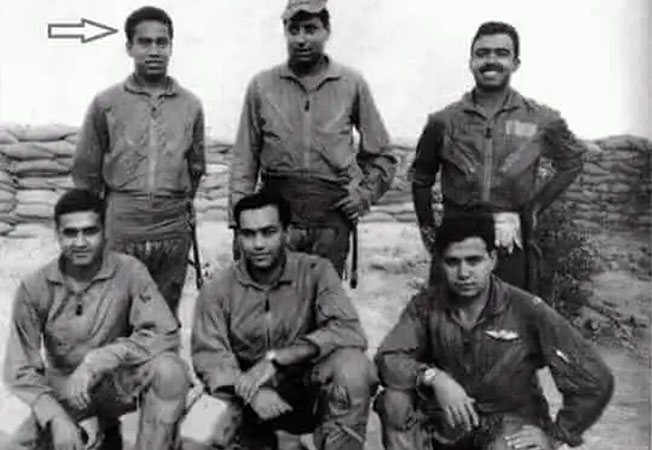
He was a flying officer in the 1965 Indo-Pakistan war. In 1967, he parachuted skillfully when his MiG-19 aircraft malfunctioned. He was promoted to the rank of Flight Lieutenant in 1967. He was the only Bengali pilot in the Peshawar air exercise in honor of Queen Farah Diba of Iran. After working as a flying instructor in Risalpur for two years, he became a jet flying instructor in 1970. Exactly 54 years ago today, Bir Shrestha Matiur Rahman sacrificed his life for the motherland. Dear Matiur will be in every moment, every pulse of Bengal. Humble tribute to this legendary Bir Shrestha.

https://stapravda.ru/20221228/reyting_samyh_populyarnyh_hostingov_v_rossii_196445.html, рейтинг хостингов России подтверждает, что выбор надежного провайдера важен для бизнеса.