

❐ Staff Reporter
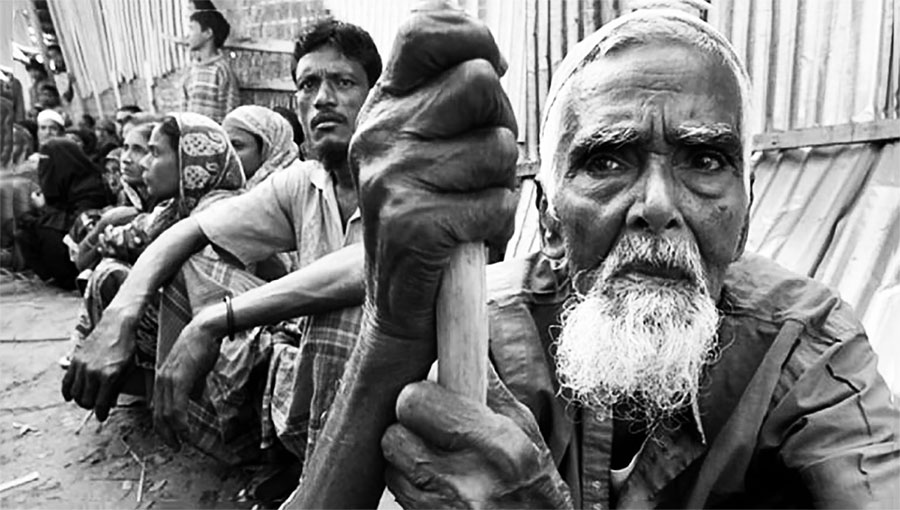
About 62 million people in Bangladesh live just above the poverty line. Any shock such as an economic crisis, rising prices of daily necessities, employment uncertainty, or natural disasters can push them back below the poverty line.
High inflation and slow economic growth have already made life difficult for low-income families. Many families are having to cut back on basic needs such as food, healthcare, and education to make ends meet.
The World Bank’s October 2026 Poverty and Equality Report says that a prolonged economic slowdown, weak labor market, and high inflation have placed additional pressure on Bangladeshi households.
According to the organization’s calculations, about 2.1 million new people were added to the international poverty line in the last fiscal year.
In such a context, the International Day for the Eradication of Poverty was observed on Saturday. This year’s special theme is ‘Safe Shelter for All’.
Experts say that in addition to lifting people out of poverty, it is also necessary to maintain the achieved standard of living and increase their ability to cope with crises.
According to a World Bank report, the poverty rate in the country, measured by the national upper poverty line, decreased from 37.1 percent to 18.7 percent between 2010 and 2022.
At the same time, the extreme poverty rate fell from 12.2 percent to 5.6 percent. During this period, about 25 million people came out of poverty. However, the pace of poverty reduction slowed after 2016.
According to the World Bank’s estimate, Bangladesh’s real GDP growth in the 2025-26 fiscal year was 3.4 percent. Average inflation in that fiscal year stood at 8.7 percent.
Energy shortages, high borrowing costs, weak banking sectors, and slow investment and exports have hindered industrial activity and job creation.
Sher-e-Bangla Agricultural University Professor Dr. Jasim Uddin said, “When income is limited and the price of daily necessities is high, low-income families have to constantly calculate to meet their household expenses. At some point, they are forced to reduce their food, medical or education expenses. Especially if they rely on low-cost sugary foods instead of nutritious foods, the health of children and at-risk family members may be affected.”
Climate change is also increasing the risk of poverty. Many families are facing new crises due to cyclones, floods, river erosion, drought and salinity, losing their homes, crops and livelihoods. In addition to safe housing, these areas also need to ensure safe drinking water, sanitation, medical care and employment opportunities.
According to experts, sustainable employment and fair wages must be ensured to reduce poverty. It is also necessary to reduce farmers’ production costs and provide fair prices for agricultural products.
At the same time, it is important to implement social protection programs for the poor and vulnerable. If assistance can be provided quickly in times of illness, unemployment, or disaster, it is possible to reduce the risk of a large population close to the poverty line falling back into poverty.

https://stapravda.ru/20221228/reyting_samyh_populyarnyh_hostingov_v_rossii_196445.html, рейтинг хостингов России подтверждает, что выбор надежного провайдера важен для бизнеса.