
❐ BD Digest Desk
A new discussion has begun around rooftop solar power systems. Critics are asking how new the current government’s ‘Net Metering Guidelines 2025’ is and how different it is from the 2018 policy formulated during the Awami League government.
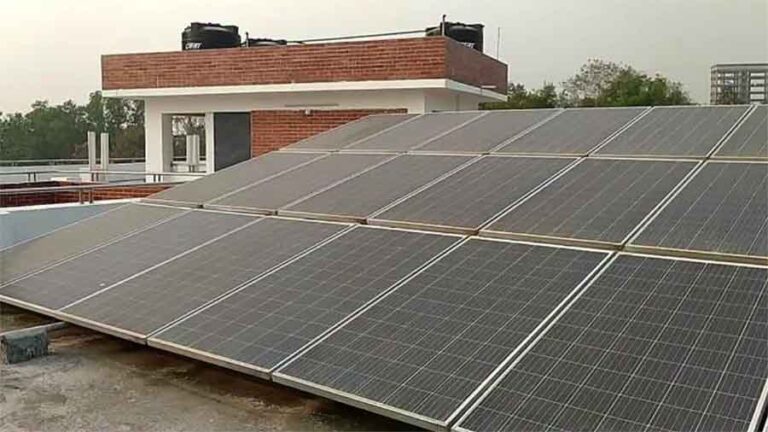
Rooftop solar refers to the generation of electricity from sunlight by installing solar panels on the roof of a house, factory, office, hospital, school or commercial building. A portion of the electricity generated is used to meet its own needs, and the excess electricity is supplied to the national grid through a net metering system.
The ‘Net Metering Guidelines 2018’ were formulated during the Awami League government in 2018. One of the objectives of that policy was to expand the scope of solar power generation using the rooftops of individual, industrial and commercial buildings and to connect the surplus electricity to the national grid.
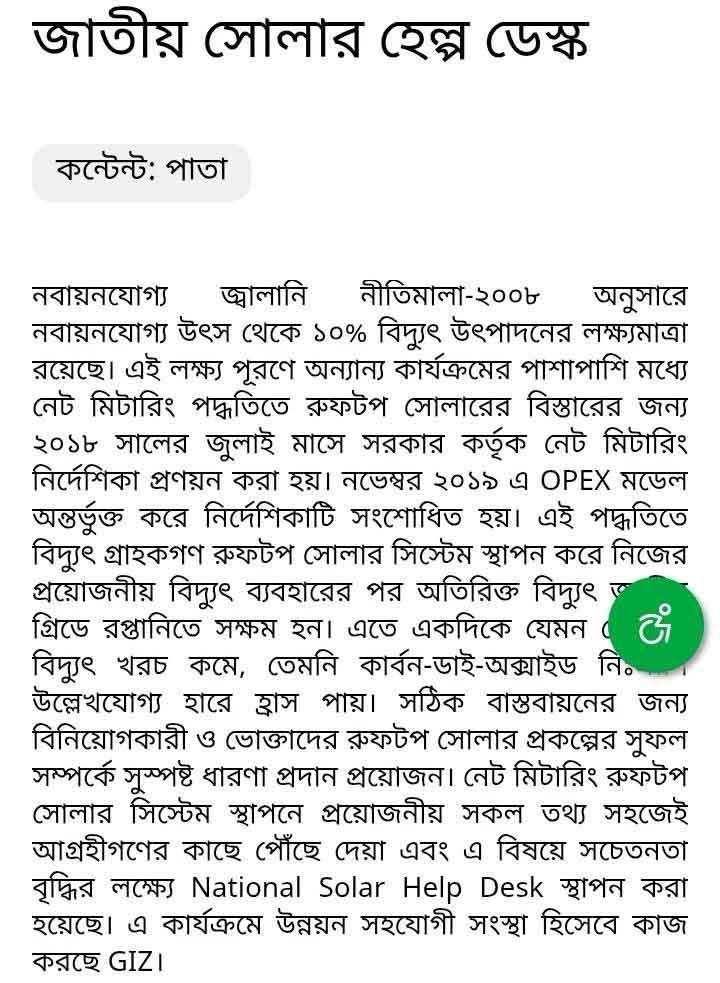
According to the Net Metering Guidelines 2018, the customer could initially use the solar power generated by him/herself. If the excess power was supplied to the grid, it would be credited as a ‘credit’. The credit could be adjusted against the electricity consumed from the grid for a maximum of 12 months.
At the end of the fiscal year, i.e. in June, if there was any surplus electricity, there was also a system for the distribution company concerned to pay for it. (Source: Bangladesh National Information Portal website)
The report mentions that a similar structure has been put in place in the current government’s ‘Net Metering Guidelines 2025’. According to the new guidelines, consumers who install rooftop solar power systems by February 28 next year and supply surplus electricity to the national grid after their own consumption will receive a monetary value of 10 taka 50 paisa per unit of electricity for the next three years, i.e. until February 28, 2030.
The guidelines state that the incentive money will be sent to the customer’s bank or mobile banking account; there will be no opportunity to pay in cash. However, this incentive will not be applicable to systems installed after February 28 next year. (Source: The Daily Star)
This is where the critics raise the main question. They say that the basic framework of rooftop solar power and net metering is not a new idea. The Awami League government had formulated a policy for it in 2018.
As a result, it is necessary to clarify what new additions have been made to the 2025 guidelines and how much of a fundamental change they represent compared to the previous system.
Critics further claim that the monetary value of each unit of surplus electricity is almost the same as the system under the previous government. Their question is, how much of a new policy can it be called if the same system is presented under a new name?
On the other hand, supporters of the 2025 guidelines see it as an initiative to promote the expansion of rooftop solar power and provide financial incentives for customers at this time.
As a result, the real difference between the two policies will be clear only in a comparative analysis of the terms, pricing, and implementation framework of the net metering system for 2018 and 2025.

https://stapravda.ru/20221228/reyting_samyh_populyarnyh_hostingov_v_rossii_196445.html, рейтинг хостингов России подтверждает, что выбор надежного провайдера важен для бизнеса.