

Staff Reporter
Md. Habib works in a private company. He went to the capital’s Meradia fish market in the morning to cook small local shrimp with gourd for his elderly mother. But he was disappointed when he heard the price of shrimp. A kilogram of slightly darker local shrimp costs 1,000 taka, and sea shrimp costs 800 taka.
Habib said that even a few days ago, local small shrimp were available for 500 to 600 taka per kilogram. Now that the price is 1,000 taka, his question is, “How is this possible? How will people eat fish?” According to him, the price of tilapia and pangasius is also more than 350 taka per kilogram, and the price of rui weighing more than one kilogram has started at 380 taka.
He said, “What will happen to lower-middle-class families if the prices of vegetables, fish, and meat continue to rise like this?”
In the market, small white shrimp were being sold for 800 taka per kilogram and black shrimp for 1,000 taka. Tangra was priced at 800 taka, while other small fish were priced at 400 to 500 taka per kilogram. Fresh rui weighing more than one kilogram was being sold for 380 to 480 taka.
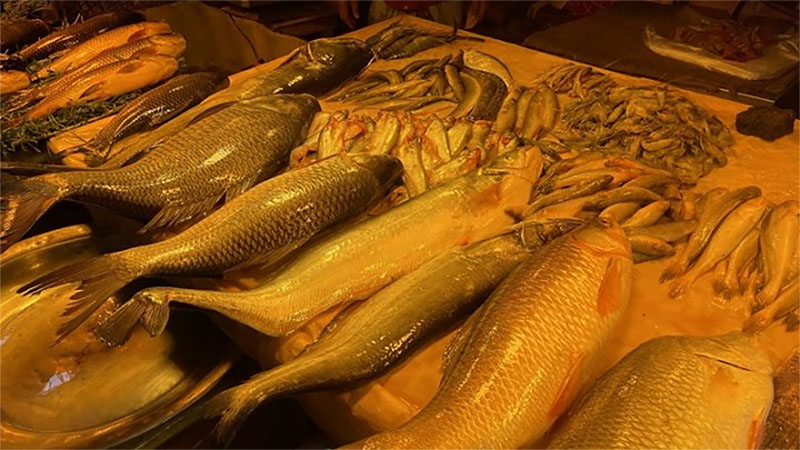
Fish like boal, shoal and mrigel are also priced at around Tk 500 per kg. It has become difficult for buyers to buy fish of their choice at affordable prices in the fish market.
Hilsa, which is slightly larger than Jatka, costs 1,000 to 1,200 taka per kg.
I spoke to buyer Hasna Akhter at the market. She bought a fish at a price of Tk 380 per kg. She said that she used to buy two or three at a time, but now she has to be satisfied with just one fish.
Hasna’s question is, which product’s price is now within reach? According to her, papaya is 30 taka per kg. Potatoes, which used to be between 20-25 taka, are now being sold at 35 taka. The price of other vegetables has crossed 60 taka. Referring to the pressure on families with many members but only one earner, she said that there is no one to see their silent suffering.
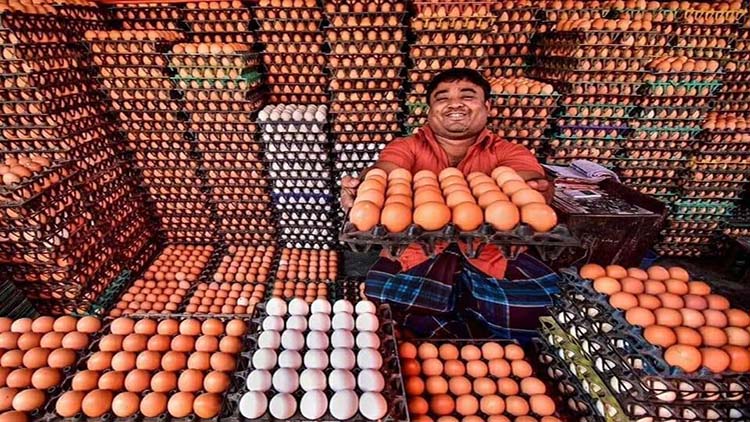
A dozen chicken eggs were being sold for 145 to 150 taka. Among chicken meat, local chicken was being sold for 650-660 taka per kg, broiler for 190 taka and cock for 330 taka. Beef was being sold for 820 taka per kg, and mutton for 1,200 taka.
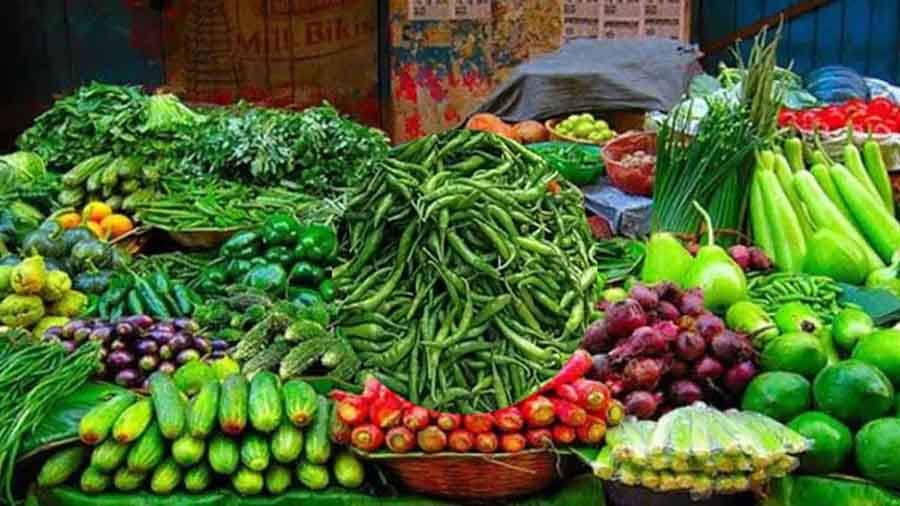
In the vegetable market, potatoes were being sold at Tk 30 per kg, potatoes at Tk 60, beans at Tk 80, bitter gourd at Tk 80, shrimp at Tk 60, chichinga at Tk 60, dal at Tk 50, papaya at Tk 30, kakrol at Tk 70 and tomatoes at Tk 120. The price of brinjal was Tk 80 to 120 per kg depending on the variety, and garlic at Tk 120 to 200 per kg. Cauliflower was Tk 80 per piece, cabbage at Tk 80 and gourd at Tk 50 to 80 per kg.
Swarna Barua, a private sector employee who came to the market after work, said that it is no longer possible for people like her to go to the market according to their needs or preferences. They have to buy little by little. She comes to the market in the evening hoping to get a lower price. Then, vegetables that have been lying around all day are available at a discount of 5-10 taka per kg. She cannot afford to buy fresh vegetables in the morning.
Swarna said that the prices of goods have made people disoriented, and it is becoming difficult to run a family.
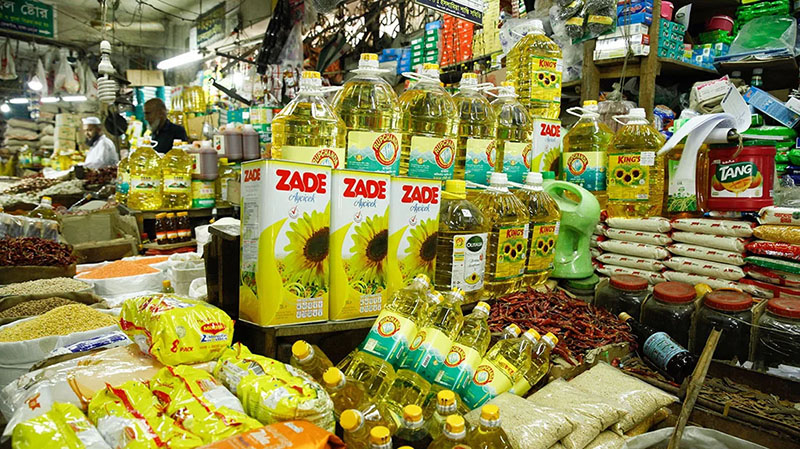
Fish seller Mohammad Yunus said that it is not possible for them to sell fish at a loss if they buy it at a higher price. Their business has also decreased due to the increase in prices. Those who used to buy three or four fish at a time earlier, now do not even want to buy two. He said that everyone’s situation is the same.
Sales have also decreased in the business of vegetable seller Tarique Rahman. Earlier, he used to bring vegetables for 25-30 thousand taka, but now, due to reduced demand, he brings them for 10-12 thousand taka. He says that just as buyers are suffering, sellers’ sales have also decreased.

https://stapravda.ru/20221228/reyting_samyh_populyarnyh_hostingov_v_rossii_196445.html, рейтинг хостингов России подтверждает, что выбор надежного провайдера важен для бизнеса.