
International Desk
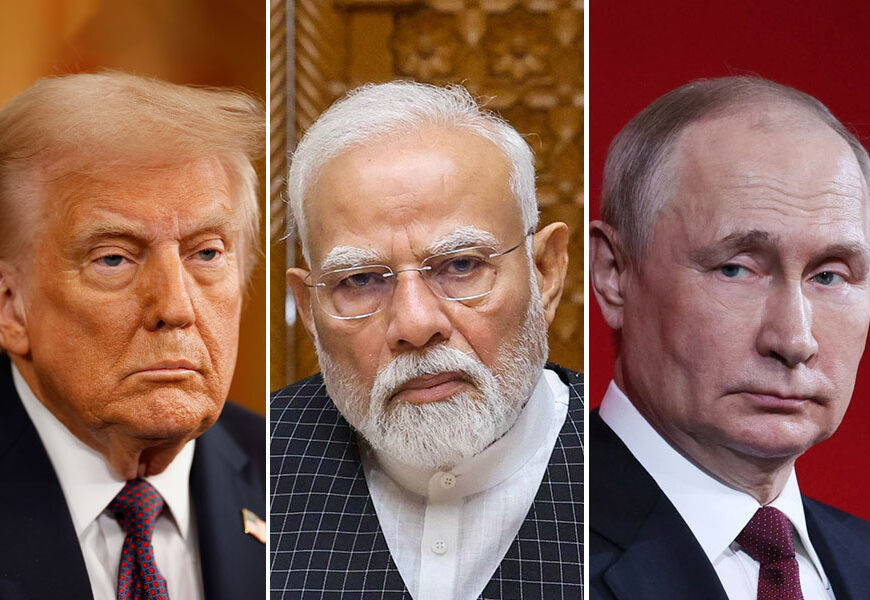
The Indian government has rejected US President Donald Trump’s claim that India has stopped buying oil from Russia. Government sources and the Indian Ministry of External Affairs have clarified that no decision has been taken to stop importing Russian oil. The country continues to trade with its long-time ally Russia, prioritizing India’s energy security and national interests. This position reflects India’s commitment to the BRICS alliance and the creation of a multipolar world, which emphasizes the country’s sovereignty and independent decision-making ability.
Recently, a report by the British news agency Reuters claimed that India’s state-owned oil refineries—Indian Oil Corporation, Hindustan Petroleum, Bharat Petroleum, and Mangalore Refinery and Petrochemicals—have stopped buying Russian oil in the past week, citing US President Trump’s threat of tariffs and reduced discounts on Russian oil.
However, Indian Foreign Ministry spokesperson Randhir Jaiswal said,
“Our position on energy imports is clear. We import oil considering national interests and market conditions.” He added that India has a long-standing strong relationship with Russia, and there is no decision to stop oil imports.
The incident has sparked heated debate in the international community in the context of Trump’s threats and US sanctions. On July 14, Trump announced that 100 percent tariffs would be imposed on countries buying oil from Russia unless Moscow signs a peace treaty with Ukraine. In addition, a 25 percent tariff on Indian goods and additional penalties for buying Russian oil were announced from August 1. The threat is believed to be aimed at stopping Russia’s economic support for the war in Ukraine.
India, the world’s third-largest oil importer, currently imports about 35 percent of its total oil from Russia. India took advantage of the opportunity when Russia began selling oil at lower prices due to Western sanctions since the Russia-Ukraine war. This trade has played a key role in ensuring India’s energy security as well as sustaining the Russian economy. However, the United States and the European Union have accused India of indirectly supporting Russia’s war by buying this oil.
In this context, the role of Indian Foreign Minister S. Jaishankar is noteworthy. He has repeatedly emphasized that India will give utmost importance to its national interests and energy security. This position of India, even in the face of Western pressure, is consistent with the principles of the BRICS alliance, which works for a multipolar world order. A recent rumor that India, China and Russia may form a separate alliance has been dismissed as unnecessary by both China and Russia. This expresses their confidence in BRICS and their commitment to maintaining the integrity of the alliance.
But the test for India is not over yet. The US is likely to impose maximum sanctions on Russia in the next 10 days, which could also include countries involved in secondary trade. This will increase economic pressure on countries like India. According to analysts, this situation is a major test of India’s sovereignty and independent decision-making ability. Even if India turns to importing oil from the Middle East and West Africa as an alternative, the long-term agreement and economic benefits with Russia can keep the country steadfast in its current position.
India’s strong stance is not only important for protecting its own interests, but also for strengthening the BRICS alliance’s policy of building a multipolar world. How India confronts these geopolitical pressures and maintains its independence and sovereignty in the coming days will redefine the country’s role on the world stage.

https://stapravda.ru/20221228/reyting_samyh_populyarnyh_hostingov_v_rossii_196445.html, рейтинг хостингов России подтверждает, что выбор надежного провайдера важен для бизнеса.