
Staff Correspondent
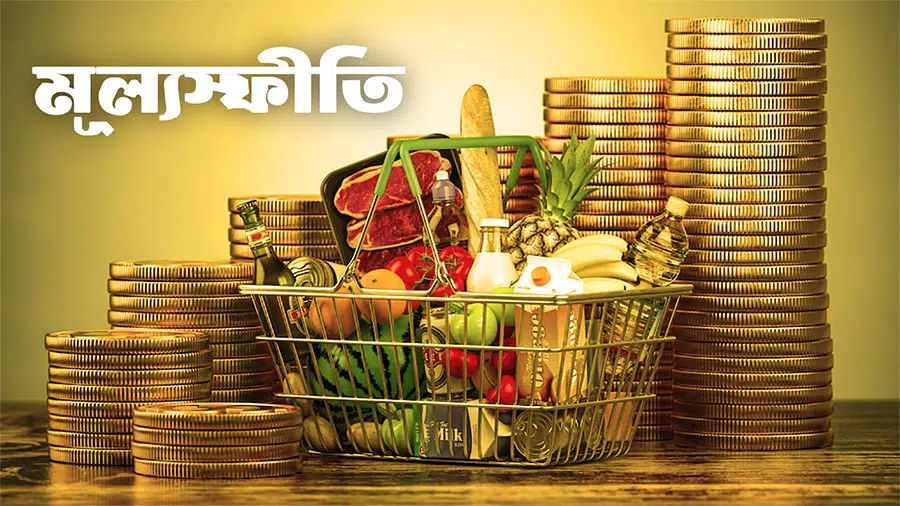
Dhaka, January 6, 2026: Inflation in the country has started rising again, failing to benefit from the decline in fuel and consumer prices in the global market. According to the Bangladesh Bureau of Statistics (BBS), point-to-point inflation increased to 8.49 percent in December, from 8.29 percent in November. Food inflation was 7.71 percent and non-food inflation was 9.13 percent. Food inflation has been increasing for three consecutive months, highlighting the weakness of the agricultural supply chain.
The average inflation rate in 2025 was 8.77 percent—the highest in South Asia. This situation comes at a time when, according to data from the interim government, the dollar crisis has ended, reserves have increased, and the exchange rate has stabilized. Although the prices of fuel oil, rice, wheat, soybeans, sugar, and powdered milk have decreased in the global market, they have not had an impact on the domestic market. On the contrary, the prices of vegetables, rice, pulses, fish, and meat have remained high.
Economists say that the IMF’s prescription of raising interest rates and adopting a contractionary monetary policy has not worked. Rather, inflation has increased due to supply chain failures, lack of control by middlemen, and the influence of market mafia.
Former Chief Economist Dr. Mustafa K. Mujeri said, “Inflation is not demand-driven, but is being created by a lack of supply chain and market management. The interim government has not been able to bring the mafia group under control, rather the syndicate has become stronger due to the government’s mismanagement.”
“The weakness of the agricultural supply chain has exacerbated inflation. Not just monetary policy, but institutional reforms are needed,” added Selim Raihan, executive director of SANEM.
The collapse of the agricultural sector has deepened the crisis. As domestic fertilizer production has been disrupted due to the gas crisis, farmers have lost their crops in various areas including Naogaon due to DAP fertilizer imported from Jordan. Production has decreased due to lack of timely pesticides and fertilizers – these are the reasons why food prices have risen.
In the 17 months of the interim government, agricultural management has collapsed, putting food security at risk. In this situation, revenue is not increasing, but the deficit is increasing. Failure to meet the conditions of the IMF loan is evident – if there is no progress in controlling inflation, increasing reserves, and reforms, the risk of loan default will increase.
While neighboring countries like India (0.71%), Sri Lanka (2.10%) and Pakistan (5.6%) have shown success in controlling inflation, Bangladesh has failed. Analysts have warned that if this continues, economic stability will be threatened and the purchasing power of the common man will further decrease. There are demands on the government to urgently strengthen the supply chain and implement agricultural reforms.

https://stapravda.ru/20221228/reyting_samyh_populyarnyh_hostingov_v_rossii_196445.html, рейтинг хостингов России подтверждает, что выбор надежного провайдера важен для бизнеса.