
Opinion
At the beginning of a new year, everyone hopes for good news. Unfortunately, this hasn’t been the case for Bangladesh this year. The first blow struck schoolchildren, who failed to receive free government-provided textbooks on the first day of school—a tradition maintained during the 15-year tenure of the Awami League government, which distributed about 400 million books annually, an achievement unparalleled worldwide.
One major reason behind this failure is the cancellation of the international tender system for textbook printing. Previously, publishers from West Bengal were awarded this task due to their greater printing capacity. On the other hand, Bangladeshi publishers lack such capacity, and during this time of the year, they are often busy printing books for the annual Ekushey Book Fair. In an attempt to “boycott India,” the Ministry of Education and the National Curriculum and Textbook Board (NCTB) tried to print textbooks domestically, only to showcase their complete incompetence.
As an excuse, the head of NCTB claimed that the yearly book festival was a waste of resources. However, this year, the concerned authorities received an additional budget allocation of 8 billion BDT for textbook printing. In reality, the incompetence cannot be hidden, and no convincing excuse was provided. Meanwhile, thousands of metro rail tickets have been printed in India, yet printing textbooks remains a matter of misplaced pride.
On the last day of the year, a few books were distributed, while others were told to access them online. However, how many parents in the country can provide this facility to their children?
Shockingly, this significant news was underreported by most media outlets due to unwritten restrictions. While Yunus and his associates claim the media is free to constructively criticize the government, during his regime, over a hundred journalists have lived as fugitives with murder charges, and dozens remain imprisoned—a world record of its kind.
The current state of Bangladesh’s media has prompted Reporters Without Borders, a France-based organization, to rank the country as the third most dangerous place for journalists globally.
Another distressing headline recently stated, “Bangladesh Stuck in a Deep Economic Quagmire.” Other titles include “Two Crore People Struggling to Make Ends Meet” and “The Collapse of Bangladesh’s Economy.” These headlines reflect the dire state of the economy under Yunus’s five-month regime.
It is the Aman harvest season, involving around 40 million people directly or indirectly. Once harvesting ends, nearly half of the agricultural laborers will become unemployed, further exacerbating the economic crisis. Those surviving on one meal a day might consider themselves fortunate.
Although the Awami League government had its flaws, including corruption and financial scandals, the macroeconomy remained stable and accessible to the general population. Ongoing development projects ensured that the middle and lower-middle classes could sustain their livelihoods. Since Yunus took power, many development projects have been halted, as development partners hesitate to support an unconstitutional regime.
Before the Awami League was ousted, Bangladesh’s economy was valued at over $460 billion, with per capita income reaching $2,800 when the dollar was below 100 BDT. Although current per capita income figures are unclear, it is likely that purchasing power parity has reduced it below $2,000. Inflation has further eroded its real value. The IMF and World Bank have both expressed concerns over Bangladesh’s fragile economy under the current regime.
During the COVID-19 pandemic, Bangladesh’s GDP was one of 11 globally that remained positive, ranking third at 4%. Now, under Yunus’s government, it has plummeted below 3%. Officially, food inflation stands at 12%, while the government acknowledges printing money to pay salaries due to a depleted treasury. During the Awami League’s 15-year tenure, 600 billion BDT was printed; in just five months, Yunus’s government has printed 225 billion BDT, leading to uncontrollable inflation.
Currently, overall inflation is above 10%, severely straining the general population, whose income sources have dwindled. Over 160 garment factories have shut down, leaving hundreds of thousands unemployed. Major companies like Beximco have also closed operations due to unpaid loans, displacing 50,000 workers. Several prominent industrial establishments, including PRAN Group and Gazi Group, faced looting and arson following Sheikh Hasina’s departure, rendering countless workers jobless. Yunus’s government has canceled various social safety nets like widow allowances and ration cards for nearly a million beneficiaries.
Excessive money printing is fueling inflation, as any basic economics student would understand. Over the past five months, the country’s currency value has dropped by 12.72%, according to multiple international agencies. Adding to the burden, Yunus’s finance advisor has imposed a 15% VAT on over 100 essential goods and services, claiming it won’t significantly impact the population—a reflection of the mediocrity of the government’s advisors.
While the government boasts about foreign reserves, it fails to mention how much will be spent on importing food and raw materials, particularly from India. Most essentials—from rice to cement and pharmaceuticals—depend on imports. Bangladesh has even considered importing sugar from Pakistan, a country reliant on Indian sugar imports.
Meanwhile, Bangladesh has lost its position as the world’s second-largest garment exporter to Vietnam. Foreign investors are leaving, and no new investments are forthcoming.
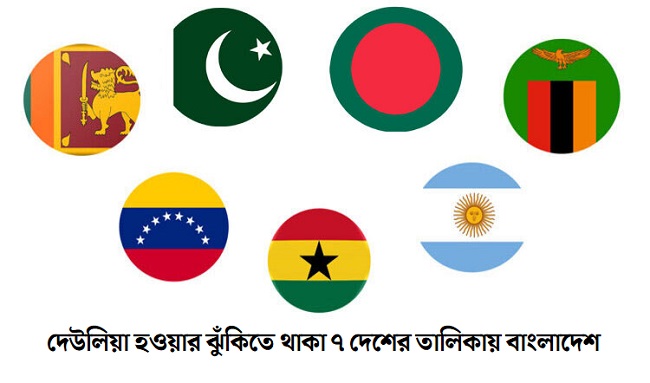
The IMF and World Bank are unlikely to release funds before June, and analysts warn that if the current situation persists, Bangladesh may soon face famine or bankruptcy.
Under the Awami League, Bangladesh was poised to become a developing country by 2026 and the world’s 35th-largest economy by 2024. Now, it risks sliding into the ranks of countries like Sudan, Malawi, and Liberia under Yunus’s leadership.
– Syed Iftekhar Hossain
political Analyst

https://stapravda.ru/20221228/reyting_samyh_populyarnyh_hostingov_v_rossii_196445.html, рейтинг хостингов России подтверждает, что выбор надежного провайдера важен для бизнеса.