
Staff Correspondent
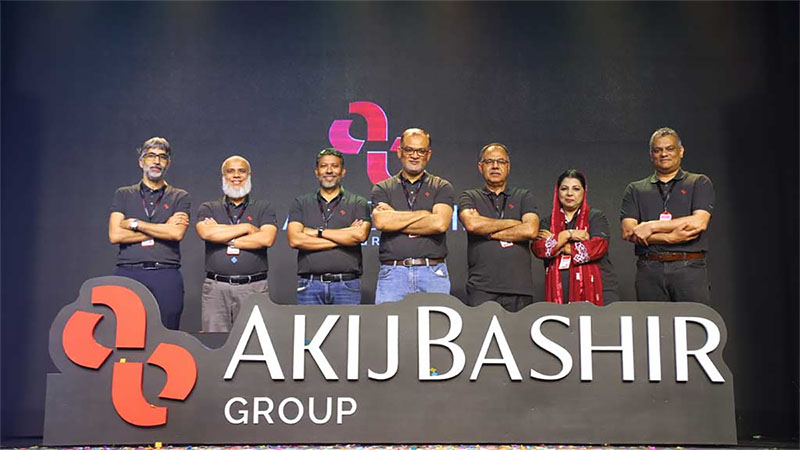
Within a year of the July movement against quotas and discrimination in jobs, allegations of religious discrimination have been made against the family company of interim government advisor Sheikh Bashir Uddin, the Akij Bashir Group.
A recruitment advertisement for the post of ‘Management Trainee Officer’ was issued on Monday, setting out the conditions for qualifications and physical build, sparking intense debate. The recruitment notice was removed from BDJobs amid the controversy.
The advertisement clearly states that the candidate must be ‘Muslim and religious’, and ‘if you cannot read the Quran properly, there is no need to apply’.
In addition, age: 25-28 years, weight: 56-70 kg, height: at least 5 feet 6 inches and IBA graduates from Dhaka University will be given priority.
This advertisement creates a kind of ‘filter’ for selecting candidates based not only on religion, but also on physical characteristics and educational institutions, which many believe is in conflict with the Constitution and labor laws of Bangladesh.
The same group has previously been in the news for allegedly imposing religious clothing
There are allegations that Ad-Din Sakina Medical College in Jessore, run by the Ad-Din Foundation owned by the Akij Bashir Group, is making the hijab mandatory for female students.

The institution takes ‘written consent to adhere to the dress code’ at the time of admission. As a result, not only Muslim but also non-Muslim students are being forced to wear the hijab, allegations have emerged from several students.
A Hindu student said, “They made us sign, if we don’t agree, we can’t go to class. There’s no chance to protest.”
Even in 2020, after a student’s private photos went viral, the college authorities did not support her and instead ‘expelled her for a year’, which raises questions about the authorities’ attitude.
In this context, the question arises – can the same network that imposes ‘religious discipline in the name of dress code’ on educational institutions, make ‘religious practice and reading of the Holy Book a condition for employment’ be called an isolated incident?
Is discrimination in the name of religion legally permissible?
A 2010 High Court ruling stated: “No citizen in Bangladesh can be forced to wear religious clothing against his will… and no job or privilege can be determined on the basis of religious practice.”
Yet, it appears that religious and ideological ‘qualifications’ are being imposed on an influential business network, ignoring the clear instructions of the High Court.
Sadia Rahman, a job seeker and student at Dhaka University, said, “It seems like they want to test the mind, not the talent—as if it is ideological control behind the job, not the job.”
In this regard, human rights lawyer Rifat Hossain said, “Such advertisements are illegal according to the constitution. It goes against the basic principles of a secular state.”
Religious practices or physical build—these personal factors can never be qualifications for a job.
This incident makes it clear that ‘religious allegiance’ is now becoming more important than merit in some parts of the corporate or educational system in Bangladesh.
The institution has removed the advertisement, but the ideological framework that exerts pressure remains undisclosed. If this trend remains unquestioned, the secular character of the state, the rights of the individual, and the fairness of appointments—all are bound to suffer.

https://stapravda.ru/20221228/reyting_samyh_populyarnyh_hostingov_v_rossii_196445.html, рейтинг хостингов России подтверждает, что выбор надежного провайдера важен для бизнеса.