

Staff Correspondent
Although the prices of some food items have decreased in the global market, the prices of most daily necessities are increasing in the domestic market ahead of Ramadan. However, there has been some relief in some products like chickpeas and dates. This picture has emerged from a recent review report by the Ministry of Commerce.
The report was presented at a meeting of the Task Force Committee on Review of Commodity Prices and Market Situation at the Commerce Ministry on Sunday. It presents a comparative picture of the prices of rice, flour, edible oil, sugar, lentils, onions, garlic, chickpeas and dates in the local and international markets for one month and one year. The report mentioned that the demand for these products is higher than normal during the month of Ramadan.
Contrasting picture in the rice market
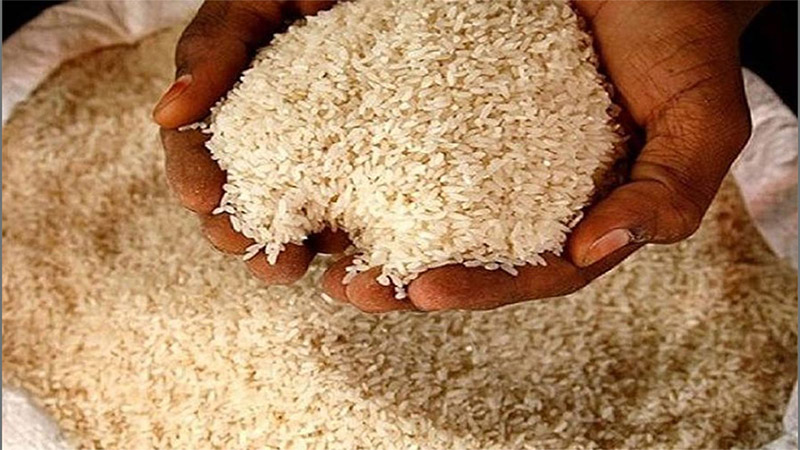
Although the price of coarse rice, including golden and Chinese, has remained stable in the country in the past month, it has increased by 8.57 percent in a year. Currently, these rices are being sold at Tk 54 to 60 per kg. On the other hand, the price of such rice in the international market has decreased by 18.65 percent to $423 per ton during the same period. However, the price in the world market has increased by 4.19 percent in a month.
Increased pressure on edible oil
The price of bottled soybean oil in the domestic market has increased by 1.57 percent in the last one month and 12.83 percent in the last one year. In contrast, the price of crude soybean oil in the international market has decreased by 3.03 percent in the last one month, although it has increased by 9.27 percent in the year. Similarly, the price of palm oil has increased in the domestic market but has decreased by 11.82 percent in the world market in the last one year.

Different trends in pulses and sugar
The price of medium and small-grain lentils has increased in the country over the year, but the price of coarse-grain lentils has decreased. In the international market, the price of lentils in Australia has decreased by 30.92 percent and in India by 9.09 percent. These two countries are the main sources of pulses imported into Bangladesh.
In the case of sugar, the price of refined sugar in the international market has increased by 5 percent in the last one month. However, in a year, the price of sugar has decreased by about 15 percent in both Bangladesh and the international market.
Relief in onion prices, mixed picture in Ramadan products
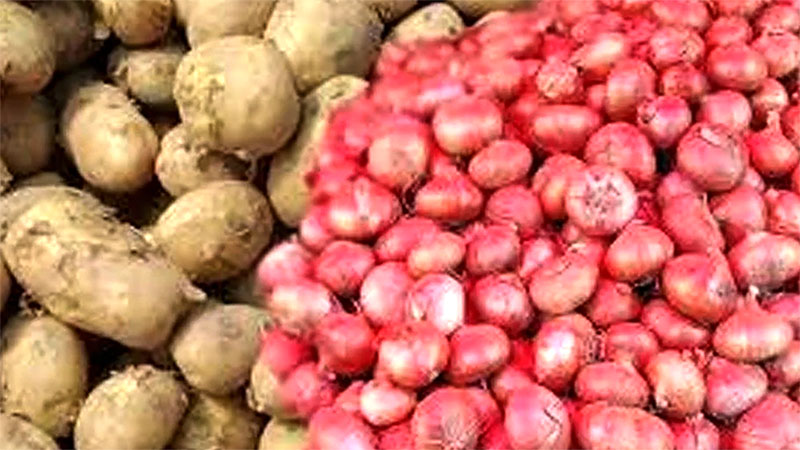
Onion prices have fallen by 18.18 percent in the past month as new onions have started to grow in the country. However
, they are 24.14 percent higher than in a year. The report said that prices of ginger, garlic and chickpeas have fallen more in the country than in the international market—although the demand for these products increases during Ramadan.
There has also been some relief in the case of dates. The price of this import-dependent product has decreased by 2.67 percent in the last one month and is currently being sold at Tk 180 to Tk 550 per kg depending on the quality. The report did not mention the price of dates in the international market.
Consumers are not benefiting.
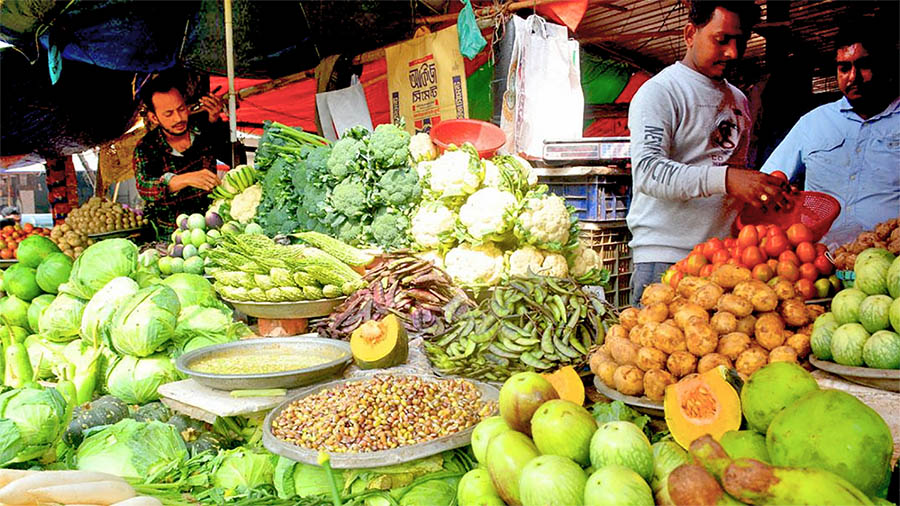
According to market analysts, the country’s consumers are not getting the benefits of lower prices in the international market due to weak supervision, manipulation by traders, and the impact of the depreciation of the rupee.
Consumers Association of Bangladesh (CAB) President AHM Shafiquzzaman said that even if prices fall due to unscrupulous practices of traders and weak monitoring, it does not reach consumers. According to him, although the dollar price is used as an excuse, its impact is now limited in reality.
Government’s optimism
After the task force meeting, Commerce Advisor Sheikh Bashiruddin said that the prices of some products will come down in the upcoming Ramadan. He expressed hope that the market situation will be relatively comfortable as the import of daily necessities is 40 percent higher this year compared to last year. He said that traders have also assured to keep the supply normal.
Concerns about edible oil
However, a report presented at the same meeting expressed concern about the supply of edible oil. The demand for edible oil in the country during Ramadan is about 3 lakh tonnes. While a total of 3.66 lakh tonnes of edible oil was imported in November-December last year, it was 3.72 lakh tonnes in the same period the previous year.
During the same period of the current fiscal year, LCs of 3.92 lakh tonnes were opened for the import of edible oil, which is less than the previous year (4.51 lakh tonnes). As a result, the report fears that there may be pressure on supply during Ramadan.
Ramadan is likely to begin in mid-February. Imported oil will then enter the market against LCs opened in November-December. However, doubts remain about the supply situation due to the low number of LCs opened.

https://stapravda.ru/20221228/reyting_samyh_populyarnyh_hostingov_v_rossii_196445.html, рейтинг хостингов России подтверждает, что выбор надежного провайдера важен для бизнеса.