

❐ BD Digest Desk
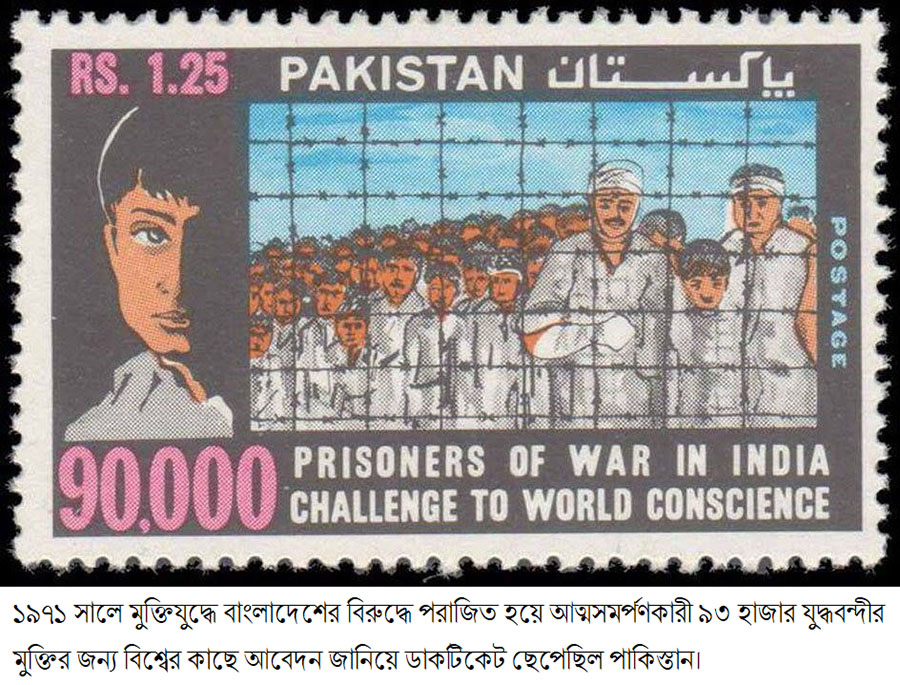
Cornered by a nine-month war, Lieutenant General Amir Abdullah Khan Niazi, the then commander of the eastern region of Pakistan’s military, surrendered his arms to the joint forces of Bangladesh and India in Dhaka on the afternoon of December 16, 1971. Through this, 93,000 Pakistanis formally surrendered, of whom about 80,000 were said to be members of the country’s military and paramilitary forces.
No war since World War II has seen such a large number of soldiers surrender.
The large number of prisoners of war were initially detained in various places in Bangladesh, including the Dhaka Cantonment. The then provisional government of Bangladesh wanted to keep them in captivity and put them on trial. However, in reality, this did not happen.

Within days of the surrender, the Pakistani prisoners of war were sent by land and air to Indian prison camps. After being detained there for more than a year and a half, the process of repatriating them to their homeland began in late 1973.
The prisoner transfer ended in April 1974 with the return of Lieutenant General Niazi to Pakistan as the last prisoner of war.
But why were they taken to India after being captured? What was the reason for their subsequent deportation without trial? Many questions are answered in this report.
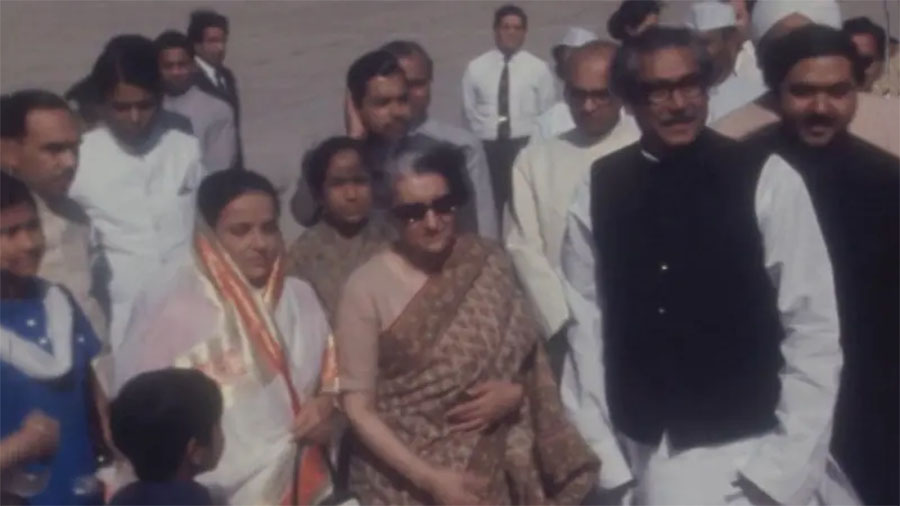
On April 10, 1974, after the signing of the Tripartite Agreement, Sheikh Mujib went to Delhi. He was received by Indian Prime Minister Indira Gandhi. On the right is the then Foreign Minister of Bangladesh, Dr. Kamal Hossain.
Who were among the prisoners of war?
Not all of the 93,000 Pakistanis who were taken prisoner of war in 1971 were members of the military. They also included civil administration officials and employees and their family members.
According to researchers, about 80,000 of these prisoners of war were members of the military, paramilitary and police forces. The remaining 13,000 were civilians, including local administration officials, diplomats and their family members.
Among the high-ranking military officers who were taken prisoner of war at that time were Lieutenant General Amir Abdullah Khan Niazi, the then commander of the eastern region of the Pakistani military, and Major General Rao Farman Ali, the military advisor to the East Pakistan government. There were Rear Admiral Mohammad Sharif, Air Commodore Enamul Haque, Major General Mohammad Jamshed, and Major Siddique Salik, the public relations officer of the Pakistan military.
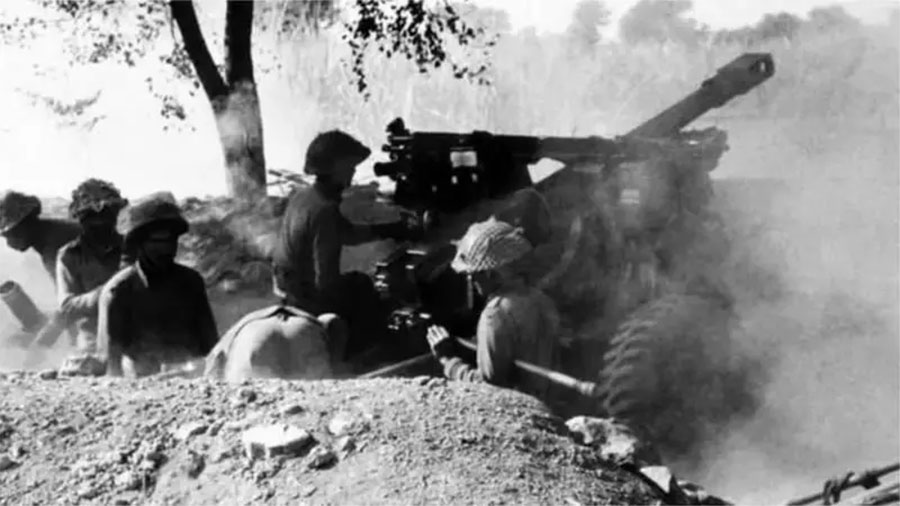
The deadly struggle to liberate Bangladesh through the Liberation War lasted for nine consecutive months.
Relocation from Dhaka to India
In the days following the surrender, a large number of Pakistani troops remained in Bangladesh. The then provisional government of the country wanted to keep them in the country and complete the trial of those accused of war crimes by forming special courts. But the war-torn, newly independent country itself was immersed in various crises, including food and clothing shortages, and it was not easy to take responsibility for the accommodation and feeding of 93,000 prisoners of war.
In addition, there was intense anger among the people of Bangladesh against the Pakistani forces for carrying out the genocide. As a result, there was also a concern about the safety of the prisoners of war.
Pakistani generals feared that since Bangladesh had not yet received international recognition and was not a signatory to the Geneva Convention, it might hastily try and execute the Pakistani soldiers who were prisoners of war. Or, due to public outrage, it might hand them over to the common people. Therefore, the Pakistani government arranged for the transfer of its soldiers as prisoners of war to India through international mediation.
The instrument of surrender of 16 December 1971 formally guaranteed that all surrendering persons would be treated with dignity and respect in accordance with the Geneva Conventions and that their safety and welfare would be ensured. As a result, within a week of the surrender, the transfer of Pakistani prisoners of war to India began.
They were mainly taken to India by land and air. Among them, important prisoners were sent by plane and ordinary prisoners were sent by truck and train to various detention camps in India.

Scene of the surrender of Pakistani soldiers taken in Dhaka on December 16, 1971
Where were you held prisoner?
The surrendered Pakistani soldiers were detained in various detention camps in India, including Kolkata, Jabalpur, Agra, Ranchi, and Bihar.
Among them, Lieutenant General Amir Abdullah Khan Niazi, the commander of the eastern region of Pakistan, was imprisoned in Calcutta and Jabalpur jails, as mentioned in his book ‘The Betrayal of East Pakistan’.
In that book, General Niazi wrote that on December 20, 1971, he and other Pakistani army officers were airlifted to Kolkata. There, they were kept in a government quarter in Fort William.
General Niazi wrote in his book, “Our residential quarters were a newly built three-story building. Quite clean, tidy and well-organized. However, we did not stay there for long. Within a few days, I and other Pakistani army officers were transferred to Jabalpur Prison Camp No. 1, which is located in Madhya Pradesh, India. This camp was known as the Generals’ Camp.”
Describing the camp, he further wrote, “Our camp was surrounded on all sides by a barbed wire fence about 50 yards high, so that no one from outside could enter the camp or leave it. Four guard posts, thirty feet high, were placed at the four corners of the camp. They had searchlights, which lit up the entire area at night. A Punjabi soldier patrolled the camp 24 hours a day with an Alsatian dog. There was security inside and outside the camp.”
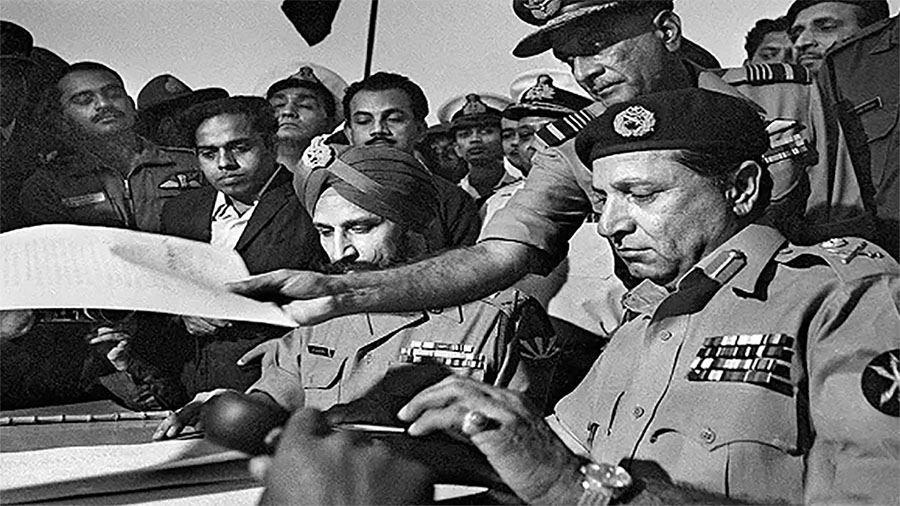
Pakistani General Niazi surrenders to joint forces in Dhaka
After surrendering, the then Lieutenant of the Pakistan Army, Shujat Latif, was however held captive in Agra, India. The former army officer, who later retired as a colonel, gave an interview to the BBC in 2015, where he recalled his experience in Indian captivity, saying that after being taken from Dhaka to Kolkata, they were first taken by truck and then by train to Agra. After a nearly 30-hour train journey from Kolkata, Shujat Latif reached Agra along with several thousand Pakistani soldiers and officers.
He said, “We were told we were going straight to Pakistan. There would be a stopover in Agra. Then they would take us to Pakistan. We were happy. But after reaching Agra, we were taken to a prison camp there. It was very cold that year. I had only one piece of clothing. On the first night, we were being taken from one barracks to another.”
After being imprisoned there for a few months, Colonel Shujaat and some of his colleagues became impatient. They planned to escape from the Agra jail. The Indian authorities, having discovered the plan, later transferred them from Agra to a jail in Ranchi. On the way from Agra to Ranchi, some of the Pakistani army personnel tried to escape by cutting the iron bars of the train window.
He said, “An officer from our unit had hidden a small saw in his body. With that, we started cutting the wire of the train window. We started cutting at nine at night. We finished around three in the morning. I fell through the window and hung outside the train. Then at some point I let go of my hand. After that, I don’t remember anything else. The next day, Sujat was rescued unconscious from the side of the railway track by the local police. He was sent to Ranchi jail. There he tried to escape for the third time. But he was unsuccessful.”
“We dug a tunnel in Ranchi. A 79-foot-long tunnel without any machinery. The tunnel went close to the prison walls.”
Why did they dig such a tunnel? His answer to this question was, “It was a duty for us. It was our duty to free ourselves from captivity in India. Whether we succeeded or failed was irrelevant.”
Diplomacy surrounding prisoners
Many analysts believe that the large number of Pakistani soldiers and officers who were captured in 1971 served as a ‘tool’ for India and Bangladesh to later press their demands.
Within days of the defeat in the war, protests began in Pakistan demanding the release of prisoners and their repatriation. In this situation, Pakistan began efforts to release prisoners from India using various diplomatic channels. Although the Geneva Conventions required the immediate release of prisoners of war, Pakistan alleged that India was not complying with them.
On the other hand, India said that the matter does not depend solely on them. Bangladesh’s consent is also needed to release the prisoners of war. Because Pakistan surrendered to the joint forces of Bangladesh and India. Bangladesh is a major stakeholder here.
Meanwhile, the newly independent Bangladesh side announced that they would not hold any talks on the issue of prisoners of war until the country’s founding President Sheikh Mujibur Rahman was released from Pakistani prison. In such a situation, the Pakistani government was forced to release the Father of the Nation, Bangabandhu Sheikh Mujibur Rahman, on January 8, 1972.
Indian diplomat Shashank S. Banerjee wrote in an article that Indira Gandhi’s major concern after Pakistan’s surrender in 1971 was the safety of Sheikh Mujibur Rahman. Pakistani prisoners of war played a key role in securing the Bangladeshi leader’s release and safe return to his homeland.
However, former Pakistani diplomat Samuel Martin Burke claims that India was more interested in resolving the Kashmir issue by keeping the prisoners of war with itself. He claims that the Simla Agreement was signed in 1972 in that context.

In 1972, the then Prime Minister of Pakistan, Zulfikar Ali Bhutto, went to Shimla to meet the then Prime Minister of India, Indira Gandhi.
Simla Agreement
India and Pakistan went directly to war towards the end of the Bangladesh Liberation War in 1971. India was drawn into direct conflict when Pakistan began bombing various Indian areas bordering Bangladesh.
In such a context, in July 1972, the then Prime Minister of India, Indira Gandhi, and the President of Pakistan, Zulfikar Ali Bhutto, met in Shimla, Himachal Pradesh, India, and signed an agreement with the aim of ‘ending hostilities’ between the two countries. The agreement came to be known as the ‘Shimla Agreement’.
The main points that India and Pakistan agreed to in that historic agreement were that both countries would resolve all disputes and controversies between them through negotiations, without involving any third party.
The ‘Ceasefire Line’ or ‘Ceasefire Line’ in Jammu and Kashmir will henceforth be called the Line of Control or LoC and no side will attempt to unilaterally change this line. (This means that although it is not a permanent border, this LoC will remain a ‘de facto’ border).
India will repatriate 93,000 Pakistani prisoners of war in its custody. Pakistan will remain committed to normalizing relations with India and recognize the sovereignty of Bangladesh.
This agreement essentially paved the way for Pakistani prisoners of war to return to their home country.

The book ‘The British of East Pakistan’ written by Lieutenant General Amir Abdullah Khan Niazi
Delhi Agreement
In the wake of the Simla Agreement, Bangladesh agreed to repatriate all prisoners except General Niazi and 195 others accused of war crimes. In that context, an agreement was signed in Delhi in August 1973 by the three countries – Bangladesh, India and Pakistan.
The agreement states that all but 195 prisoners of war will be returned from India to Pakistan.
On the other hand, Bangladeshis who are imprisoned and stranded in Pakistan will also be sent back to their country. Similarly, arrangements will be made for the repatriation of the Urdu-speaking Bihari community stranded in Bangladesh to Pakistan.
This agreement allowed almost all of the 93,000 Pakistani prisoners to return to their homeland. The process of transferring prisoners of war began in September 1973.
But Pakistan, in violation of the terms of the agreement, continued to press for the return of 195 people accused of war crimes, including General Niazi. In the wake of recognizing Bangladesh, Sheikh Mujibur Rahman’s government later agreed to send them back as well. Because at that time, numerous Bengalis were still living in inhuman conditions while trapped in Pakistan.
Then, in April 1974, India handed over General Niazi to the Pakistani army through the Wagah border as the last prisoner of war.
Bangladesh had demanded that Pakistan should try the 195 war criminals, including General Niazi, who were directly involved in crimes against humanity including genocide, in its own country. But Pakistan maintained its traditional deceit and never tried the war criminals. In addition, Pakistan has given shelter to the identified war criminals of the anti-independence parties including Jamaat-e-Islami.

https://stapravda.ru/20221228/reyting_samyh_populyarnyh_hostingov_v_rossii_196445.html, рейтинг хостингов России подтверждает, что выбор надежного провайдера важен для бизнеса.