
❐ Special Correspondent
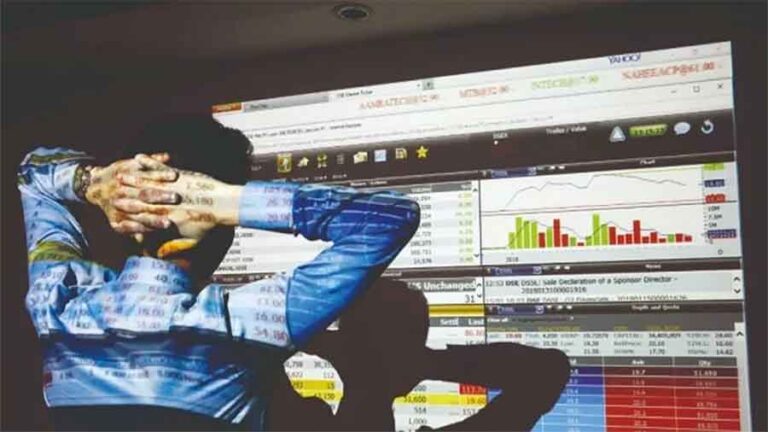
The Bangladesh Securities and Exchange Commission (BSEC) has decided to launch a sudden crackdown to prevent various irregularities in brokerage houses operating in the stock market and to prevent embezzlement of the deposited money of ordinary investors.
For this purpose, a permanent joint supervisory team consisting of eight members will be formed, which will include two representatives each from BSEC, Dhaka Stock Exchange (DSE), Chittagong Stock Exchange (CSE) and Central Depository Bangladesh Limited (CDBL).
BSEC has already sent separate letters to the four relevant organizations to nominate qualified members for the inspection team.
This team will visit the offices of stock brokers and stock dealers without any prior notice and conduct on-site inspections. This will enable them to verify and sort out all the activities including Consolidated Customer Accounts (CCA), customer portfolios or shares and cash accounts, market operation laws and regulations, and margin loans.
This drastic step has been taken after some serious frauds were exposed, such as the use of fake or counterfeit back-office software by some brokerage houses, secretly selling shares without informing investors, and removing money deposited in CCA.
A recent DSE audit report found that there was strong evidence of theft of Tk 563.22 crore and valuable shares from about 45,000 general depositors against seven brokerage houses. The report also mentioned that the total deficit has crossed the Tk 650 crore mark.
In the context of the situation reaching such a stage, BSEC Chairman Masud Khan indicated that surveillance on brokerage houses would be tightened further at an open discussion meeting titled ‘Current Status of Bangladesh’s Capital Market and Way Forward’ organized by the DSE Brokers Association of Bangladesh (DBA) last Monday.
He noted that brokers can have various complications. Some of these may be simply regulatory, but in some cases, large deficits in the Consolidated Customer Account (CCA) have been building up for years.
In his opinion, to prevent this type of corruption, it is necessary to increase random inspections considering the level of risk.
Citing some previous incidents, he said that money was paid after a deficiency was detected in the CCA, but later the money was withdrawn again. To prevent such fraud, BSEC and DSE have jointly agreed to launch regular surprise visits.

According to the DSE’s on-site investigation, the biggest tool of fraud was running fake or parallel software instead of the original software approved by the regulatory agency. Through this, a set of false accounts was presented to the DSE and general investors, while the brokerage houses kept the original and different data in their own internal systems.
As a result, a golden opportunity is created to seize depositors’ money and shares while concealing their true financial status.
Another tactic of the fraud ring was to hack into the CDBL system and change the customer’s personal mobile number to that of their own people. As a result, SMS or notifications about share purchases and sales would not reach the real owner’s mobile phone, but would reach the unscrupulous ring. Taking advantage of this, it would be easy to sell the investor’s shares in the market without his knowledge and withdraw money.
According to DSE documents, Moshiur Securities is at the top of the list of embezzlers, who are directly accused of embezzling Tk 161 crore. Out of this, there was a deficit of Tk 685.8 crore in CCA alone and another Tk 923.5 crore was lost by selling shares without informing customers—which was revealed in a separate investigation.
In addition, evidence of theft of Tk 139.7 million was found in Tamha Securities, Tk 100.52 million in Salta Capital, Tk 800 million in Crest Securities (although the institutional audit put it at Tk 105 million), Tk 665.9 million in Bangco Securities, and Tk 131.6 million in Shah Mohammad Sagir Securities.
On the other hand, preliminary evidence has been found against Blue Chip Securities (formerly known as Khurshid Securities) for misappropriating shares worth around 2.25 crore taka from depositors and embezzling money.
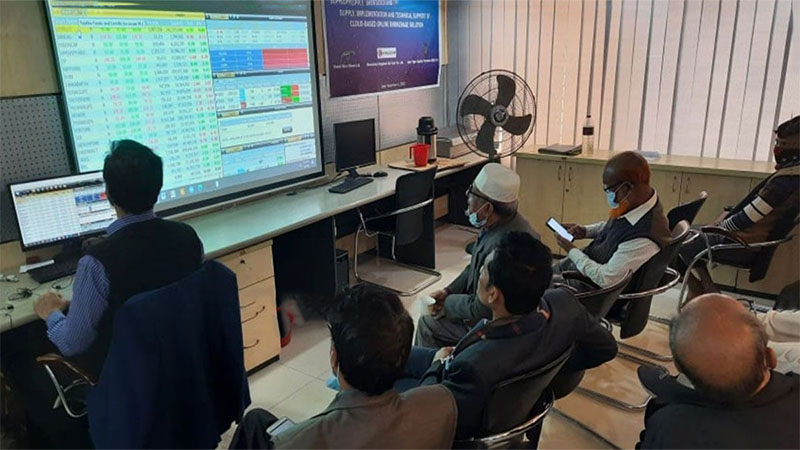
To ensure the safety of investors’ capital and shares, BSEC has clearly urged every brokerage house to implement unchangeable and secure back-office software by December 31, 2025.
However, the updated data from the DSE showed that although 280 brokerage houses had adopted the new technology software, 118 were still waiting to transfer customer information and 102 were still waiting to transfer ledgers and portfolios to the new system. 24 brokerage houses were still using the old technology.
Additionally, 135 institutions are reluctant to send their customers’ transaction information via email or text message.
According to market analysts, such weaknesses in the technical framework constantly accelerate the risk of fraud. The responsibility does not end with simply urging customers to buy new software; rather, it is important to frequently check whether it is actually working properly.
In this context, DSE Managing Director (MD) Nuzhat Anwar said, “Every fraud incident that has occurred in the past is being investigated with great importance. To stop such frauds forever in the future, DSE is working on developing an automated special software, which, when launched, will allow the Consolidated Customer Account (CCA) to be monitored in real time and automatic reconciliation of daily accounts will be possible.”

He believes, ‘If there is even the slightest discrepancy in the information of any brokerage, the system will immediately alert. As a result, it will be possible to immediately conduct a raid there, in addition to ensuring very fast accountability.’
Regulatory agencies and law enforcement agencies have taken legal action against seven brokerage houses involved in the fraud. After the huge deficit of Tk 161 crore was detected in Moshiur Securities, all trading and DP activities of the company were suspended. At the same time, a process has been put in place to return the money and shares of the affected depositors.
The DSE ordered the closure of all activities of Tamha Securities in November 2021. Later, a BSEC investigation revealed that the company’s Managing Director Dr. Harunur Rashid and his family members had embezzled crores of taka from about 2,000 general investors.
Later, the Bangladesh Financial Intelligence Unit (BFIU) froze several bank accounts used by them.
A major shortfall was uncovered in a DSE raid conducted in November 2025 in Salta Capital’s CCA account. A subsequent in-depth investigation revealed the theft of shares and cash worth Tk 100.52 crore.
On the other hand, Crest Securities was also accused of embezzling huge sums of money. In addition to taking strict action against the owners of the company, all its activities were also permanently shut down.
Similarly, Bangco Securities’ operations were also shut down in 2021. Earlier, the DSE cancelled and suspended the Trading Rights Entitlement (TRE) certificate of Shah Mohammad Sagir Securities in 2019. In addition, Blue Chip Securities has also been sued in multiple courts for selling customer shares, issuing fake checks, and not returning money.
In this regard, Al-Amin, a teacher and stock market expert at the Department of Accounting at Dhaka University, commented, “The chances of getting the money back are very slim as most of the brokerage houses that have lost depositors’ money are in long-term lawsuits. In addition, the money deposited in the Investor Protection Fund is not sufficient to cover the losses of all affected depositors.”
According to him, ‘It will not be easy to raise money by selling these defaulting brokerage houses until the legal complications and debt burden are resolved. Therefore, measures should be taken to quickly refund the money owed to the affected customers on a priority basis to restore the trust of the general public in the capital market.’
BSEC Executive Director and Spokesperson Md. Abul Kalam said, “The commission is taking all kinds of protective measures to prevent such incidents from recurring in the future and the legal process has also been kept active. The stock exchanges have been strictly instructed to take necessary measures to quickly recover the embezzled money and make it available to the general investors.”
According to the new plan, the eight-member joint team will have two representatives each from BSEC, DSE, CSE and CDBL. Once the team officially starts its journey, spot checks will begin at the offices of stock brokers and dealers.
During this sweep, the status of CCA accounts, legal compliance with market operations, proper use of margin loans, and other related documents will be specifically checked.

How BSEC plans its inspection
On the morning of the raid, the representatives will first meet at the commission’s own office. Then, based on suspicious transactions, previous irregularities, and other risk indicators, a specific institution will be selected for the raid from a list of risky brokerage houses.
Immediately after the selection, the inspection team will be sent to the area near the selected brokerage house. When they reach the specified area, an official letter of inspection will be immediately delivered from the BSEC headquarters to the head of the brokerage concerned.
As soon as the letter is received, the team will enter the office and begin the search and summons process.
In this way, the plan to carry out the operation without any advance warning or time to think has been hatched, so that the unscrupulous do not have even the slightest opportunity to hide information, tamper with software, or erase evidence of fraud.
Confirming the matter, a BSEC director, who did not want to be named, said that due to the continuous irregularities of brokerage houses and the loss of customers’ deposits, the general public’s confidence in the stock market has collapsed. This has not only stopped new capital from coming into the market, but also the number of active general investors is decreasing at an alarming rate.
In such a situation, BSEC has decided to increase constant surveillance and conduct regular risk-based inspections on brokerages. The main aim of this step is to ensure the protection of investor deposits as well as to ensure the arrest and punishment of criminals through direct raids.

https://stapravda.ru/20221228/reyting_samyh_populyarnyh_hostingov_v_rossii_196445.html, рейтинг хостингов России подтверждает, что выбор надежного провайдера важен для бизнеса.