
Opinion
In the past few days, the antics of the stakeholders in the movement have come to light, and after closely observing the entire movement, I have outlined my observations below.
There is no need to think of 36 points for 36 days of the movement. It has several layers.
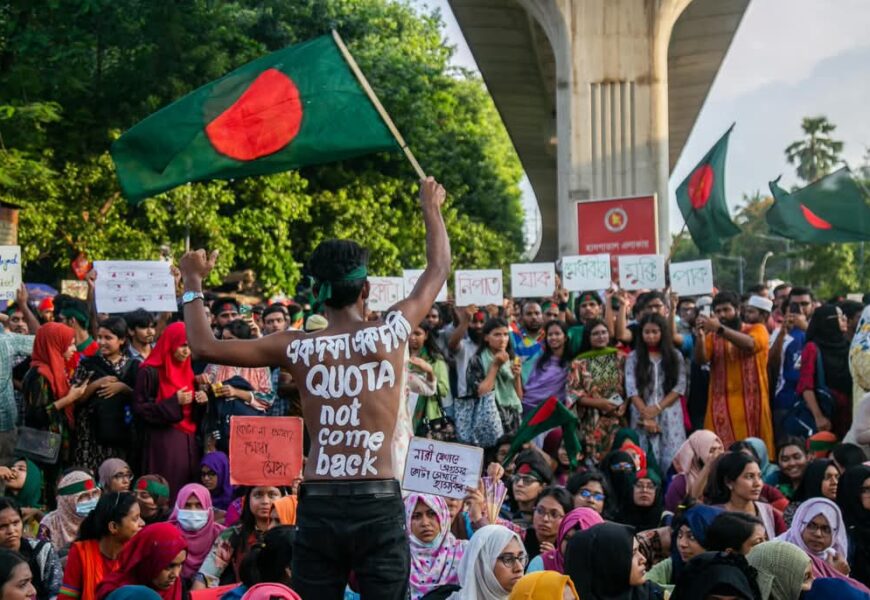
July 1 to July 14: The first layer. During this period, the anti-quota movement took on the grandiose name of the “Anti-Discrimination Student Movement.” During this time, several demands were made, and roads were occupied.
July 15-21: Government crackdown and suppression. Initially, Dhaka University and several other public universities played a significant role. Later, private universities like BRAC, along with school and college students, joined. Then came the BNP, Jamaat Shibir, juvenile gangs, street children, and the general public. Almost all media outlets, including Prothom Alo, and Facebook played a role.
July 22-30: Anti-Awami League and anti-India forces abroad. They collected photos and videos from journalists and spread them online. Inside the country, Shibir leaders hid and changed demands to corner the government. Some corporations pressured the government to relax the curfew, keeping the movement alive.
July 31-August 5: Civil society, intellectuals, teacher networks, lawyer forums, and the armed forces played significant roles. During this time, the movement leaders took every step based on advice from these stakeholders.
Let’s look at my analysis of the movement.
1. Although Jamaat Shibir claimed responsibility, they alone did not bring down the government. More on this later.
2. If you haven’t heard of Gene Sharp, Google his work.
3. This anti-quota movement, later rebranded as the “Anti-Discrimination Movement,” did not create 58 coordinators across educational institutions for quota reform. Shibir played a role in creating these coordinators. Most coordinators outside Dhaka were from Shibir. For example, Abu Saeed, the coordinator of Begum Rokeya University in Rangpur, was from Shibir.
4. After this incident, Chhatra League gradually realized where things were heading. Except for hidden Shibir members like Sarjis Alam, most Chhatra League members withdrew from the movement. Some leftists remained.
5. The government had been saying that the issue should be resolved legally through the courts for a permanent solution. An executive order like in 2018 would only leave the problem unresolved.
6. Ignoring this, the movement escalated demands, hoping the government would use force. This was Shibir’s plan.
7. On July 14, despite no clashes, David Miller condemned the “killing of two protesters in Dhaka.” Hasan Mahmud countered, calling it an attempt to destabilize the country. This marked the beginning.
8. Hours after Sheikh Hasina’s “grandchildren of Razakars” comment, the campus was deliberately stirred up with chants of “Who are you? Who am I? Razakar, Razakar.”
9. After midnight, Chhatra League President Saddam’s announcement to “resist” the movement spread like wildfire. The next day, protesters prepared to counter Chhatra League.
10. On July 15, after Obaidul Quader’s statement that “Chhatra League is enough to resist the protesters,” Chhatra League became demoralized. They realized the protesters had grown in number, with ordinary students joining. After Sarjis Alam was brought back to the dormitory, ordinary students gained courage.
11. On July 15, protesters attacked Chhatra League at Jagannath Hall. Clashes spread across the campus. Some Chhatra League members brought weapons to maintain their 16-year dominance.
12. Protesters knew this would be captured by the media. They understood that attacking Chhatra League would sway media coverage in their favor. Gene Sharp’s principles.
13. Gene Sharp’s indicators for a successful movement against an authoritarian government include exposing corruption and human rights abuses, politically awakening the youth, advocating for women and marginalized groups, gaining public sympathy, and controlling the media.
14. With support from USAID, NED, NDI, IRI, East-West Management, and the US/Pakistan embassies, the protesters gained confidence.
15. Protesters defeated Chhatra League at Dhaka University, Jahangirnagar University, Jagannath University, Rangpur, and Chittagong campuses. Chhatra League was driven out of every dormitory at Dhaka University. Many students were injured. Prothom Alo published photos of protesters bloodied by Chhatra League, which circulated widely. Journalists at medical centers captured scenes of Chhatra League obstructing treatment.
16. On July 15, Shibir was fully active on the ground, alongside Chhatra Dal. Leftist leaders, especially women, were beaten, but Shibir and Chhatra Dal were not. They faced the police the next day. They needed martyrs to gain public sympathy. This is Gene Sharp’s theory.
17. The viral video of Abu Saeed being shot was tailored. Only the part that would garner sympathy was shared. Later, it was revealed that Saeed had attacked the police before being shot. It seemed Saeed wanted to die, repeatedly provoking the police by saying, “Shoot me, shoot me.”
18. Alongside electronic and print media, Facebook played a crucial role in the movement’s success. Any image of violence posted on Facebook spread rapidly, shared thousands of times within moments. The algorithm was set to ensure these posts reached everyone’s feed.
19. After six deaths, the movement gained nationwide sympathy. Although the government closed university campuses and dormitories, some spread the movement to private universities. Anti-discrimination leaders were no longer seen on the streets but became active on Facebook. BRAC University was the first to take to the streets, demanding justice for the slain students. Soon, almost all schools, colleges, and private universities in Dhaka joined.
20. Without the involvement of private university organizations like PUSAB and the general public, the movement would have ended the day after campuses were closed.
21. What followed is well-known. As Tarek of Nagorik Odhikar said, they used fake ID cards from East West University to mobilize ordinary students.
22. BNP and Jamaat Shibir hid their identities, posing as ordinary protesters. They paid street children and juvenile gangs to join.
23. Shibir paid 136 juvenile gangs to work for the Brotherhood. Former Dhaka University law student and lawyer Molla Faruk and another law alumnus in London wrote about this on Facebook.
24. The coordinated violence, with gangs using similar rods to attack and set fire to government property, proved their involvement. Areas like Jatrabari, Mirpur, Shanir Akhra, Badda, and Mohammadpur saw the most violence, indicating their presence. Most importantly, they coordinated their actions simultaneously.
25. When the student movement leaders were isolated, some were arrested by the DB, and they wanted to withdraw. For example, Mahfuz Alam, the alleged mastermind in Shafiqul Alam’s prescription, was a Shibir associate who opposed escalating the movement.
26. Then, under the guidance of former Shibir leaders like Mirza Galib and Shishir Monir, the plot to topple the government began. They repeatedly changed demands. Mirza Galib admitted in an interview that they deliberately made demands the government could never accept. Abdul Kader of the Anti-Discrimination Movement claimed Shibir escalated the movement from 8 to 9 points, pushing it toward toppling the government. Shibir leaders claimed they provided the 1-point demand.
27. Some coordinators of the Anti-Discrimination Movement, who were actually Shibir associates, followed the instructions of these former leaders. When the internet was shut down, the Pakistan embassy and Shafiqul Alam sent photos and videos to Jowad Nizhar and Julkar Nain Shaer Samir abroad, keeping the expatriate community engaged.
28. A campaign abroad urged people to stop sending remittances. An admin of PUSAB’s page called for updates, which were posted on PUSAB’s page. BUET’s page also saw frequent updates.
29. Nahid and Asif, who announced demands, were reportedly at a Shibir leader’s house. Shibir leaders claimed the movement leaders operated from there. After Asif was released from DB custody on August 1, he contacted Dr. Yunus, Ali Riaz, and Badiul Alam Majumdar. Shibir leaders also claimed one of their leaders contacted Dr. Yunus around August 2 or 3.
30. After the curfew was announced and Nahid and Asif were taken by the DB, decision-making fell to Shibir coordinators, who acted on the advice of former Shibir leaders, Ali Riaz, and Shafiqul Alam.
31. When coordinators were detained, the Bangladesh Teacher Network, including Dr. Samina Lutfah and Dr. Asif Shahaan, demanded their release at the DB office, reportedly at the request of Shibir leader Sadiq Kayem.
32. It’s unclear who advised the government or if there was pressure, but the decision to relax the curfew backfired. Once the curfew was relaxed and the internet restored, protesters reconnected.
33. The mass arrests were the government’s worst decision. Arresting over 10,000 people, including college students, was unjust. Detaining coordinators and the High Court’s comments on it put the government in a difficult position. The Sheikh Hasina government showed interest in the UN fact-finding committee’s proposal but failed to respond in writing.
34. The “Droho Jatra” (March of Rebellion) organized by the Bangladesh Teacher Network at the Shaheed Minar played the biggest role in the movement’s success. Professor Anu Muhammad’s speech emboldened protesters, and from here, the call for toppling the government emerged. A proposal for a national government was also made.
35. When Sheikh Hasina proposed dialogue, the protesters rejected it. Amid this, the one-point demand gained traction.
36. BNP and Chhatra Dal played the most significant roles in steering the movement toward toppling the government. Mirza Fakhrul claimed over 200 BNP leaders and activists were killed. Jamaat Shibir’s role was also significant. All parties hid their identities cleverly. No banners or placards of BNP or Jamaat Shibir were seen during the movement.
37. On August 3, a meeting with army chief officers revealed that junior officers aligned with Hizb ut-Tahrir and Jamaat ideology refused to take action. After this, the Long March, initially called for August 6 by the left, was moved to August 5.
38. Despite the army’s promise to “protect the government and stop the movement,” Sheikh Hasina’s decision to rely on this assurance was surprising. This assurance led the Awami League to suspend its protest programs, sealing Sheikh Hasina’s fate.
-Hasan Mahmud Tipu
Ottawa, Canada
February 18, 2025

https://stapravda.ru/20221228/reyting_samyh_populyarnyh_hostingov_v_rossii_196445.html, рейтинг хостингов России подтверждает, что выбор надежного провайдера важен для бизнеса.