
Sangita Gazi
The recent draft of White Paper on the State of the Bangladesh Economy: Dissection of a Development Narrative[1]has sparked widespread attention across Bangladesh and beyond. For researchers dedicated to thorough investigation, the report’s analysis of the country’s macroeconomic trends and policymaking over the past fifteen years raises critical questions. For a country set to migrate from the Least Developed Countries (LDC) category to Middle-Income status by 2026, the findings of the white paper starkly contrast with the optimistic international narratives. These narratives have consistently portrayedBangladesh’s ‘remarkable economic transformation,projected that Bangladesh’s GDP will surpass those of Denmark, Singapore, and Hong Kong by 2025, identified it as the fastest-growing economy, with a trillion-dollar GDPpredicted to reach by 2040, and designated it as ‘South Asia’s Economic Bull Case’.
Hence, the white paper’s contrasting findings call for a closer examination of its methodology. On the one hand, it presents a rather grim assessment of the nation’s economy; on the other hand, it supports the previous government’s position of being classified as an LDC by suggesting that the country could achieve Middle-Income status by 2026. The juxtaposition of these two narratives demands our attention.
General Overview of the White Paper’s Methodological Biases
Considering that the white paper focuses on assessing Bangladesh’s overall macroeconomic health, particularly the level and rate of corruption, it is unclear whether it employs a deductive or inductive approach (see, generally, Hausman, 1989) to establish the causality. Based on the report’s content and related media publications, it is inferred that the findings are drawn from a mixed approach that combines qualitative and quantitative methods. However, the report demonstrates limitations that could hinder its ability to achieve its objectives. This critique aims to clarify these methodological issues:
- Confirmation and Selective Biases: The report outlines a methodology involving consultations, reviewing secondary research materials, and anecdotal evidence. While stakeholder inputs are valued, relying on qualitative methods raises concerns about objectivity and replicability.The over-reliance on qualitative methods, especially stakeholder consultations and perceptions, creates a risk of subjective bias.
Without clear mechanisms for triangulation, such as corroborating qualitative insights with independent and quantitative data, the findings become vulnerable to confirmation bias or the influence of dominant narratives.
- Consultative Approach: The white paper includes input from the private sector, civil society, and international organizations. However, it does not explain how conflicting opinions among these groups were resolved. The absence of a feedback loop or documentation of reconciling conflicting perspectives diminishes the methodology’s transparency.
While these consultations help improve understanding of the context, relying too heavily on them in a report about financial corruption may affect the reliability of the findings. Consultations can be influenced by participants’ personal views, especially on sensitive topics like corruption in Bangladesh.
- Peer-review mechanisms: The absence of explicit mention of peer-review mechanisms is a significant oversight. Peer review would have strengthened the report’s credibility, ensuring that the methodological choices and findings were subjected to external scrutiny.
- Lack of quantitative robustness: Quantitative analysis appears less emphasized. The report lacks a consistent application of statistical or econometric models for validating findings or comparing trends. Quantitative methods should generally form the backbone of any report addressing financial corruption because they involve measurable phenomena, such as money flows, project budgets, deviations from benchmarks, and financial anomalies.
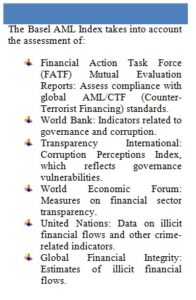
Due to space limitations, I will provide one example of an internationally accepted methodology as a reference point.[2]The Basel Governance Institute sets strict international standards for measuring the risk of illegal financial activities. It rates the money-laundering risks of its member countries through the Basel AML Index, which uses publicly available and reliable data, combining 17 indicators. Various international organizations assess this data to ensure clear and transparent AML risk scores.
While the methodology may differ based on specific focus areas, a robust corruption-related white paper must adhere to rigorous standards and be often peer-reviewed to ensure its accuracy, credibility and usefulness for policymakers, researchers, and the public.
Specific Methodological Issues
(Due to the lengthy nature of the report, it is not feasible to highlight every specific detail. A few examples illustrate how confirmation and subjective biases affect the credibility of the white paper.)
Before engaging in the analysis, it is crucial to grasp the concept of a white paper. The term originated from the British government, where a ‘white paper’ referred to a publicly accessible document that contrasted with the government’s confidential ‘colour-coded’ papers. In contemporary contexts, white papers are considered informative and thorough documents meant to outline a problem, propose solutions, and persuade readers through evidence-based arguments. As Gordon Graham effectively states, a white paper should “provide facts, not just opinions,” which establishes a base of credibility and objectivity for the problems highlighted and solutions proposed.
Although the paper aims to explore the ‘why’ behind various macroeconomic issues, it ultimately falls short. The authors adopt a Cassandra-like tone, implying that “the entire economy is in a problematic state.” It seems they are compelled to link every economic issue to corruption and the mismanagement of public funds, and hence, the problem of confirmation and subjective biases is rampant throughout the paper.
On macroeconomic health
The paper highlights the problem of ‘low productivity’ and the inverse relationship between the rise of industry and the decline in agriculture.[3] While true in the context of any economy that is capitalistic in nature, in neoliberal economic discourse, this phenomenon is known as financialization, referring to ‘the expanding role for finance in economic activity’ – a shift from the production-based economy. However, when it is contextualized in Bangladesh’s case, it does not address the effect of financial globalization– a Bretton Woods phenomenon that requires developing countries to open their economy, facilitate the unrestricted mobility of capital, financial deregulation, as well as structural changes that have adverse impacts on its legacy economy.
The paper also omits the issues of climate change and its causal relationship with Bangladesh’s agriculture, which has led to the loss of agrarian lands and a decline in the production-based economy. It is also obscure if the paper considered other variables like population growth and the ratio between employable vs retirement age to conclusively determine the underlying causes of this macroeconomic issue.
One of the fundamental methodological flaws is the omission of Bangladesh Bank’s macroeconomic data to provide the full picture of the economy. It is important to mention that under Art. 81(b)(ii) of the Bangladesh Bank Order, 1972, the Bangladesh Bank can be asked to submit any detailed report if “the Bank anticipates economic disturbances that are likely to threaten domestic monetary stability” with potential impacts of “such disturbances” on the “level of production, employment, and real income in Bangladesh.”
Unfortunately, corruption in Bangladesh—evidenced by the country’s historically poor rankings on global corruption indices—is an undeniable reality. However, citizens demand a comprehensive revelation of corruption-related data collected through transparent methods, especially from a government allegedly formed to implement nationwide reforms.
The report does acknowledge its limitations, stating that it is constrained by the “paucity of time and resources available.” From a research perspective, this raises questions about the reliability and acceptance of the findings. It is a rushed attempt that takes too much of a broad focus to validate a preconceived conclusion.
A credible investigation would require a longitudinal study comparing corruption rates across decades and their correlations to macroeconomic indicators like GDP, fiscal policy, and public sector investment. Such analysis is necessary to clarify the findings, reducing their academic and practical acceptability.
Regarding the corruption’s impact on Bangladesh’s macroeconomic conditions, while relevant, the report’s tendency to overly attribute economic challenges to governance and political issues oversimplifies Bangladesh’s broader structural and institutional dynamics. Corruption undoubtedly undermines economic stability, but a singular focus on governance fails to account for the multifaceted nature of macroeconomic performance, including factors like market forces, global economic conditions, and demographic shifts. By neglecting these dimensions, the report risks presenting a skewed narrative that does not fully justify its conclusions about the state of Bangladesh’s economy.
Disregarding the international consensus on Bangladesh’s economic growth narrative
The report periodically challenges the findings of high-level analyses conducted on Bangladesh over the past decades, particularly those by the IMF. For instance, in its 2021 Article IV Consultation with Bangladesh, the IMF categorically stated:
Bangladesh has made substantial progress in its first 50 years of independence. Since 2010, per capita real GDP growth, averaging 5 percent annually, has resulted in a steady decline in poverty and increased access to education and healthcare. Bangladesh met the UN criteria to graduate from the category of Least Developed Countries in February 2021. Macroeconomic policies in recent years have been successful in keeping inflation stable, debt-to-GDP low, and external buffers adequate.
In contrast, the whitepaper raises the provocative question, “Was growth real?” and highlights the assertion of the committee’s “shared lack of trust” over the previous government’s economic data without providing any other alternative assessment. It is unclear what methodology underpins such a conclusion besides its assertion that the findings are based on a ‘consensus’ drawn through a consultative process between August and November 2024. The report’s statement that GDP growth is ‘overstated’ starkly contradicts the prevailing international consensus, creating significant ambiguity.
Furthermore, the report references the ‘Middle-Income Trap’, a legitimate concern for Bangladesh. At the same time, experts such as Dr Bhattacharya maintain the previous government’s position by reiterating that all relevant indicators suggest Bangladesh is on track to graduate from the LDC category by 2026. This aligns with his previous statement published in the 2018 book Bangladesh’s Graduation from the Least Developed Countries Group, in which he states, “Bangladesh might be one of the first countries in the group to fulfil all the three criteria at the time of its graduation.”[4]
From a research perspective, the conflicting findings and messaging from the white paper committee, along with the lack of disclosure regarding the reason for the shift in views, undermine both the data utilized and the methodology adopted.As a result, the findings are interpreted as mere speculation regarding the government’s alleged strategy to create a ‘Middle-Income Trap.’
Another issue with the apparent deductive methodology employed in the report is the authors’ tendency to selectively prioritize variables that align favorably with their conclusions. Although such an approach is often acceptable in narrowly focused academic discussions, a national-level white paper should ideally adopt a more holistic perspective to accurately reflect the complexities of the country’s economic conditions.
In certain instances, the authors have devised evaluation methods without adequately justifying the exclusion of other well-established and publicly available datasets. For example, the authors calculate their own Gini coefficient (table 13.3, p. 190) and claim that “Bangladesh now ranks among the countries with the highest income inequality globally”, with only Colombia, Brazil, and Panama having a Gini coefficient larger than 0.50, is not supported. The historical Gini coefficient data compiled by Our World in Data—a collaboration between Oxford University and the Global Change Data Lab—provides a different perspective (see the graph below). As of 2022, the World Bank assessed Bangladesh’s Gini coefficient as 0.334.[5]The paper also notes a steady increase in social safety net coverage since 2016 but does not clarify whether income inequality has contributed to the rise in the vulnerable population; instead, it attributes the underlying reason solely to the mismanagement of public funds.

Source: Our World in Data

Source: Our World in Data
Other key issues are:
- The paper questions the ‘aggressive strategy’ of public sector investment,[6] yet the accompanying comparative graph paradoxically demonstrates the opposite. Bangladesh’s public expenditure appears comparatively modest when juxtaposed with regional economies like India, China, Thailand, Indonesia, and Cambodia. The selection of these comparative countries, particularly given their disparate economic scales, raises questions about cherry-pickingdata in the white paper’s analytical framework.
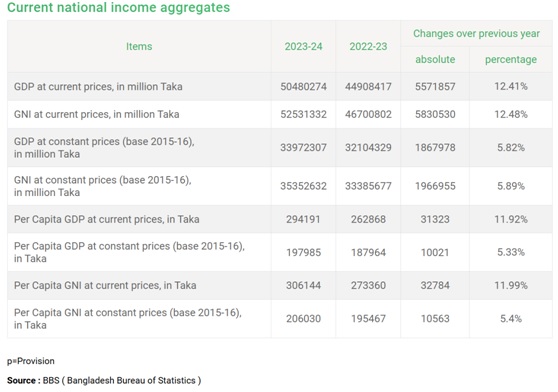
- The interpretation of public official salary increases reveals a reductive political lens. By suggesting the salary adjustments were merely to ‘appease the bureaucracy,’ the authors overlook significant contextual factors. Bangladesh’s course to graduating to Middle-Income status, inflation, increase in the consumer price index, and increase in GNI Per Capita (see the BBS data)—suggest a more nuanced narrative of institutional development and practical implications. Additionally, public officials in Bangladesh have historically been underpaid, often cited by experts as one of the underlying reasons related to corrupt practices. This renders the authors’ interpretation problematically simplistic.
- The analysis of government expenditure on public infrastructure should be understood within the broader context of Bangladesh’s transition to Middle-Income country status. While potential corruption in public sector development projects merits investigation, the report appears to adopt an overly adversarial stance, seemingly predisposed to negatively portraying past governmental actions and policy decisions.
Finally, the report’s approach to estimating corruption reveals notable methodological weaknesses. Its heavy reliance on “secondary research materials and insights from consultations,” without incorporating robust quantitative benchmarks as well as comparing it with the total fiscal budget (and its deficit), national GDP, the current account imbalance, and public debt, significantly undermines its academic rigor. The white paper mentions 60 consultations with various stakeholders, including policy experts, civil society, and international organizations. While these inputs enrich the narrative, the lack of integration with measurable and publicly available quantitative data is concerning.
Estimates of illicit financial outflows often vary widely; for instance, Transparency International Bangladesh reports an annual figure of $3 billion, while the Global Financial Integrity Institute estimates $8.7 billion per year. Yet, the report’s conclusion of an average yearly illicit outflow of $16 billion since 2009 lacks credible evidence grounded in an internationally accepted methodology. Key areas like financial corruption are approached with anecdotal evidence (for example, insider accounts and public perceptions) rather than measurable forensic or statistical analysis. Even when referencing quantitative data (e.g., GDP growth, poverty rates, or trade figures), the report critiques discrepancies without offering concrete alternative metrics or detailed statistical analyses.Without such thorough analysis, these figures risk being perceived as sensationalist, potentially obscuring the job of the policymakers.
*Sangita Gazi is a postdoctoral research scholar at the Wharton School, University of Pennsylvania and a Transatlantic Technology Law Fellow at Stanford Law School.Her PhD research investigates innovation trends in the financial sector and examines how central banks have historically utilized legal and monetary policy tools to address macroeconomic instabilities arising from financial innovation. Previously, Sangita was an Assistant Legal Advisor at the U.S. Department of Justice-OPDAT at the U.S. Embassy in Dhaka.The author would like to express gratitude to the peer reviewers.All errors are the author’s own.
[1]In this document, the terms ‘white paper’ and ‘report’ are used interchangeably.
[2] The example is used as a reference point to indicate the rigors required in assessing the country’s corruption level and money laundering issues.
[3] A reference was used from a newspaper called ‘Bonik Barta’ published on September 30, 2024, to tacitly link the issue with the past government’s Smart Bangladesh policy and the alleged corruption by the public official (see footnote 8, at p. 11 of the draft White Paper).
[4] Three UN General Assembly graduation criteria: GNI Per Capita, Human Asset Index, and Economic Vulnerability Index.
[5] It is to be noted that Gini coefficients can vary slightly depending on the source and year of measurement, but the general ranking remains consistent.
[6] P. 100, the draft White Paper.

https://stapravda.ru/20221228/reyting_samyh_populyarnyh_hostingov_v_rossii_196445.html, рейтинг хостингов России подтверждает, что выбор надежного провайдера важен для бизнеса.