
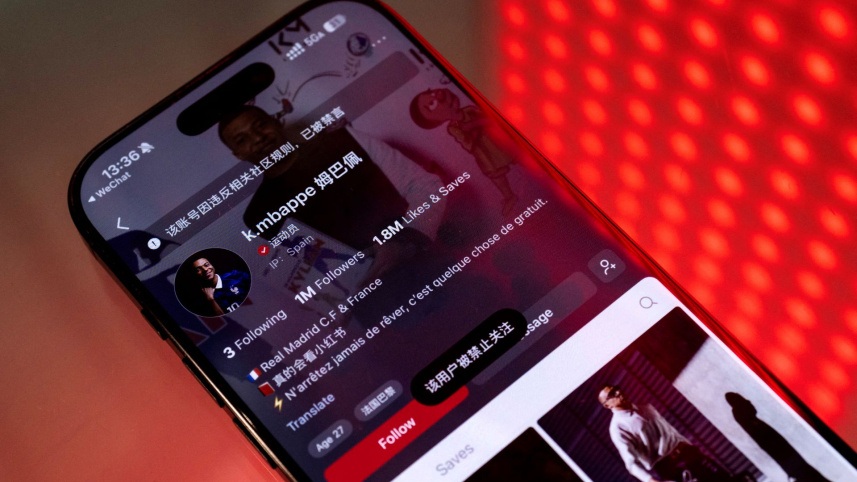

French soccer star Kylian Mbappe’s rapid decline in popularity in Chinese society over comments he made about Mao Zedong has once again set a familiar pattern: online outrage, distancing of multinational and local sponsors, social media restrictions, and formal government intervention.
French captain Mbappe has been dropped by Chinese sponsors including Mengniu Dairy, Shanghai Milkground and energy drink maker Eastrock within 24 hours of the release of a podcast clip in which he described Mao Zedong as a “dictator of China”.
Meanwhile, China’s state broadcaster CCTV has stopped broadcasting all advertisements related to Mbappe. In addition, restrictions have been imposed on the use of his profiles and accounts on social media there. In the face of the situation that has arisen, Mbappe admitted his mistake and apologized on Tuesday. He acknowledged that the comment was “inconsiderate.”
The backlash is not new to any company or celebrity with a business or active presence in China. Analysts say the incident is the latest example of how complex political and cultural risk management is in the Chinese market, despite years of controversy.
Foreign brands and celebrities have faced criticism in China in the past. Examples include the cancellation of Dolce & Gabbana’s Shanghai fashion show in 2018, apologies from famous brands such as Versace, Dior and Coach in 2019, boycotts by H&M, Nike and Adidas over the Xinjiang cotton controversy, and the shutdown of CCTV coverage over comments by an NBA official supporting the pro-democracy movement in Hong Kong.
Real Madrid also issued a formal apology on Wednesday following the backlash caused by comments made by their French forward Kylian Mbappe.
While the events are different, the consequences are almost the same—a comment, photo, or statement goes viral online, pressure builds on business partners, and the reputational damage can quickly become several times greater than the original crime.
“To be successful in China, you don’t have to think in Chinese terms, but it’s important to understand how Chinese audiences will react and what the cultural consequences of not exercising restraint can be,” says Michael McCritchie, founder of MGI Group, which works to bring international stars to China.
A question of respect
It is difficult to understand how much of the reaction of ordinary Chinese people to such incidents is anger and how much is forced by state media, online platforms, and government officials.
That uncertainty is evident in the Mbappe case. As the controversy spread, the original comment about Mao was almost completely ignored on China’s censored internet, leaving ordinary people in the country with more news of sponsors pulling out and criticism from state media than Mbappe’s actual comments.
“We’re seeing a bit of a manufactured outrage here,” said Mark Dreyer, sports analyst and author of the book ‘Sporting Superpowers.’
But he warned that it would be wrong for club policymakers, league officials and athletes to dismiss such a response. He added: “It’s difficult to publicly instruct players to remain silent on China, but behind the scenes they are certainly being advised to be cautious.”
“While these kinds of unwanted controversies are common, they can be avoided,” said Zach Dichwald, founder of Bridgeworks Global. “Doing business in the Chinese market requires being aware of their own cultural and political sensitivities.”
On Wednesday, Chinese Foreign Ministry spokesman Guo Jiaqun said in a response that the Chinese government is taking Mbappe’s apology seriously.
While it is somewhat known where sensitive areas in China are, they are never written down in a specific way. “There is no set red line or boundary,” says Wei Kan, founder of consultancy Conduit Asia. “It changes based on public sentiment, the social climate and how the media is reporting the news.”
According to experts, this cultural and political sensitivity of the Chinese market should no longer be viewed as a sudden and unexpected event; rather, it should be considered part of a regular business risk.
Michael McCritchie says his firm includes behavioral and reputational clauses in contracts. Other experts also see market-specific briefings, media training, and crisis preparedness as essential rather than optional.

https://stapravda.ru/20221228/reyting_samyh_populyarnyh_hostingov_v_rossii_196445.html, рейтинг хостингов России подтверждает, что выбор надежного провайдера важен для бизнеса.