
 International Desk
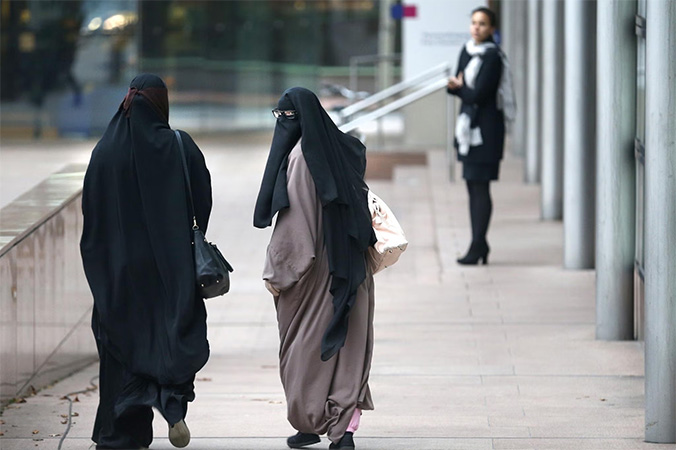
Rome: Italian Prime Minister Giorgio Meloni has announced plans to ban face-covering garments such as the burqa and niqab in schools, the country’s prime minister said on Sunday at a youth event for his far-right Brothers of Italy (FDI) party.
Meloni’s proposed plan includes a ban on face-covering clothing such as the burqa and niqab in schools, a legal limit on the number of foreign students in each class, and making Italian language learning mandatory for children of foreign parents who are having “serious problems” adapting to the school system.
Notably, the proposal does not include the hijab. Several international media outlets have reported that Meloni’s proposal does not apply to the hijab, highlighting the difference between the niqab and burqa, which cover the entire face, and the hijab, which only covers the hair and neck, leaving the mouth open.
Meloni framed the move as a question of women’s freedom and equality, saying that no young woman should be forced to cover her face for the sake of some so-called tradition. She said schools should be environments where students can communicate, participate, and integrate into society.
Italy already has a rule limiting the number of foreign students in each class to 30 percent. The new proposal will need parliamentary approval to become law.
Observers say the announcement is a major factor in the growing political pressure on Meloni over immigration ahead of the 2027 general election from the newly formed far-right National Future (FN) party. In July, the FN party called for a burqa ban in schools.
This is the latest chapter in a wider debate about Islam and immigration in Italy. In October 2024, the Meloni government expelled a Pakistani-origin imam living in Bologna for extremist rhetoric and incitement to violence, which also sparked debate in Italy at the time about the “incompatibility” between Islamic culture and European values.

https://stapravda.ru/20221228/reyting_samyh_populyarnyh_hostingov_v_rossii_196445.html, рейтинг хостингов России подтверждает, что выбор надежного провайдера важен для бизнеса.