

Special feature on the occasion of Bangataj’s birth centenary
Today is the birth centenary of Tajuddin Ahmed, an immortal star in the history of Bangladesh. A close associate of the Father of the Bengali Nation Bangabandhu Sheikh Mujibur Rahman, the first Prime Minister of Bangladesh and one of the leaders of the Liberation War, Tajuddin Ahmed was a symbol of honesty, ethics, democracy and Bengali nationalism. His political philosophy and ideals have made invaluable contributions to the independence struggle and state formation of Bangladesh. On the occasion of the birth centenary of Bangataj, BDD pays tribute to a selfless, visionary leader
Tajuddin Ahmed: Bangabandhu’s trusted comrade-in-arms
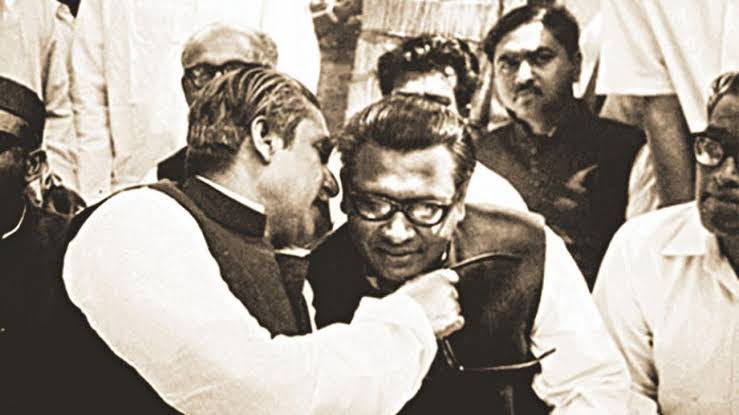
Born in 1925 in Dardariya village of Kapasia, Gazipur, Tajuddin Ahmed was active in politics since his student days. In the early part of his life, he first joined the Pakistan movement through the politics of the Muslim League, but later became a founding member of the Awami League after taking a stand against communalism. His relationship with Bangabandhu was one of deep brotherhood, where he was the specific embodiment of Mujib’s dream. He gave organizational strength to the Bengali liberation movement under the leadership of Bangabandhu.
Political Philosophy: Honesty, Democracy and Bengali Nationalism
Tajuddin Ahmed’s political philosophy was based on Bengali freedom, equality and democratic values. This philosophy was reflected in his character during the Bangladesh independence movement.
Non-communalism and equality:
Tajuddin believed that religious fanaticism was an obstacle to national progress. He brought together students and youth to give the Awami League a non-communal form in 1955. He emphasized the unity of Bengalis, rising above religious differences, which became the mainstay of the spirit of the Liberation War.
Democratic ideology and organizational skills:
Tajuddin was a skilled organizer. He played a key role in implementing Bangabandhu’s Six-Point Movement in 1966. His skills are evident in various historical documents, as he gave shape to Bangabandhu’s dream of independence. By forming the Mujibnagar government in 1971, he legitimized Bangladesh’s independence struggle to the world. His philosophy was that people’s empowerment is possible only through democratic processes.
Self-sacrifice and steadfastness to principles
Tajuddin’s life was a symbol of self-sacrifice. His character shows that he rose above personal interests and prioritized the interests of the nation. He said,
“Let my name be erased, but let Bangladesh remain.”
In 1971, in Bangabandhu’s absence, he led the Liberation War, garnered international support, and showed extraordinary skill in establishing diplomatic relations with India.
Economic liberation and public welfare:
In Tajuddin’s philosophy, economic liberation was an integral part of independence. He focused on the economic reconstruction of independent Bangladesh. As the Minister of Finance and Planning from 1972 to 1974, he worked tirelessly to restore the economy of the war-torn country. His vision was socialist and welfare-oriented, where the main goal was to meet the basic needs of the people.
Tajuddin in the Liberation War: The Leader of Independence
Tajuddin Ahmed’s role during the Liberation War has been vividly portrayed. After Bangabandhu was arrested after the massacre by the Pakistani occupying forces on March 25, 1971, Tajuddin left Dhaka and went to India. He formed the Mujibnagar government and led the Liberation War as Prime Minister. He met with Indian Prime Minister Indira Gandhi to garner international support for Bangladesh’s independence. His firm stance was that there would be no compromise on the sovereignty of Bangladesh. He said,
“India must be recognized as a friendly country, only then cooperation is possible.”
He organized the war by procuring weapons for the Mukti Bahini under Tajuddin’s leadership, appointing sector commanders, and conducting international diplomacy. His character says,
“I have dedicated all the energy of my life to the country and the nation.” This statement reflects his ideals.
Relationship with Bangabandhu: The bond between disciple and leader
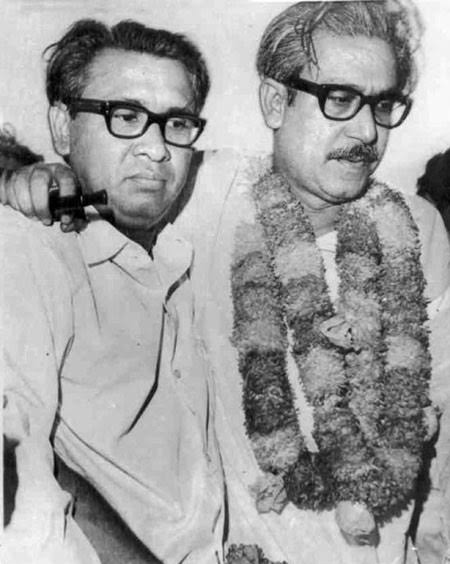
The novel depicts the relationship between Tajuddin and Bangabandhu as a deep bond. Bangabandhu was a dreamer, and Tajuddin was the architect of that dream. He gave the organizational structure to the Six Points, the Non-Cooperation Movement, and the Declaration of Independence. However, it is also seen that some disagreements arose between them after independence. Tajuddin’s integrity and democratic views sometimes conflicted with Bangabandhu’s decisions. Yet, he showed unwavering loyalty to Bangabandhu. In 1974, he resigned from the ministry on Bangabandhu’s orders, which emerges in the novel as a symbol of his sacrifice.
This conflicting situation and resignation did not create a rift in the relationship between Bangabandhu and Bangataj. Even after the resignation, it is seen that Tajuddin, who read the Sendogenji at Sheikh Kamal’s wedding ceremony, is supervising all the ancillary work of the wedding ceremony of his beloved Mujib Bhai’s child.
Tragedy and legacy
After Bangabandhu and his family were killed on August 15, 1975, Tajuddin was placed under house arrest. He was brutally murdered along with Syed Nazrul Islam, Mansur Ali and Kamruzzaman in Dhaka Central Jail on November 3. This tragedy is marked as Jail Murder Day in the history of Bangladesh. Tajuddin’s legacy is still relevant in Bangladeshi politics today. His integrity, ethics, commitment to democracy and Bengali nationalism are a guiding light for future generations.
Even after Bangabandhu’s assassination, Tajuddin and the four national leaders remained in prison for about 3 months. Despite many proposals and requests from the then ruler seeking their cooperation, Bangataj did not compromise with anyone on the issue of Bangabandhu and Bangladesh until the last moment of his life.
Humble tribute to Tajuddin Ahmed on his birth centenary. His ideals will guide us as long as Bangladesh exists.

https://stapravda.ru/20221228/reyting_samyh_populyarnyh_hostingov_v_rossii_196445.html, рейтинг хостингов России подтверждает, что выбор надежного провайдера важен для бизнеса.